* * * *
July 21, 2017 – Hearing last Sunday’s sermon a phrase hit me. “Comfort zone.” As in the zone many Conservative Christians prefer. Which in turn led to this thought: Such Comfort Zone, Too-literal Fundamentalist Christians are “missing out on the magic…”
 I’ve used many terms to try and describe that type of Christian; the kind this blog tries to challenge. To get them to “explore their full potential.” Terms like Boot-camp Christian, illustrated at left. The kind of Christian who never wants to leave the boot camp where he “learned the fundamentals.”) I’ve also tried Carbon Copy Christians. (As have others, who describe the Christians who seem to go to church only to become “mass produced carbon copies of each other.*”) But Comfort Zone Christian seems to hit the spot.
I’d say God wants us to live lives of abundance. And wants us to do even greater miracles than Jesus. Or as I said in Reading the Bible, “you’re only cheating yourself if you choose to read and study the Bible only in a strict, narrow, or fundamental way.” I.e., you “miss the magic.”
For more on this topic, see 7 Reasons Why [the] Comfort Zone is Dangerous.
The article – subtitled Live Life to the fullest – described the term as that “situation where you feel completely secure, comfortable and relaxed to what you currently have.” Which is one thing many people look for when reading the Bible. And which is generally a desirable place to be. However, if you stay in your Comfort Zone too long, you don’t grow. You stagnate.
Also, being too comfortable – in life or in Bible study – “causes negative mindset and attitude.” And that – unfortunately – is what many Christians are known for. (As noted in Latest from a “None,” I Googled the term “negative Christians” and got 12 million hits.)
Last of all the article said staying in your Comfort Zone limits your chance to “Live Life to the Full.” And that would be a violation of John 10:10. Then too, if you want to even try to follow the mandate of John 14:12, you need to remember this: “We cannot become what we want to be by remaining what we are.“ That is, you can’t come close to doing greater miracles than Jesus if you read and study the Bible only in a strict, narrow, or fundamental way. Which doesn’t mean you never read the Bible that way.
Sometimes it pays to go back and get a refresher course in the “fundamentals” of the Bible. The danger comes when you only read the Bible strictly and narrowly. Which brings up the concept of “mysticism,” a term – like mystic – that drives Conservative Christians crazy:
Mysticism is when you get into a mystical state and it’s something you cannot understand, you’re out there in “la-la” land, it’s an “oooh” experience and you’re really not thinking.
See What is Christian mysticism? – GotQuestions.org. (But see the term as discussed in On the Bible and mysticism, which noted: “The terms ‘mystic‘ or ‘mysticism‘ seem to throw Southern Baptists and other conservative Christians into apoplexy. (‘Try it sometime!!!‘)”
But as first used the term “referred to the Biblical liturgical, spiritual, and contemplative dimensions of early and medieval Christianity.” See Mysticism – Wikipedia, and On originalism. In other words, mysticism – connecting with God – was what the Bible was originally about. For another example – of thinking outside the box – see also The Bible’s “erotic love poem.” That post discussed the Bible book Song of Songs. (Also called the “Song of Solomon”):
The Song of Solomon is a love poem, frankly erotic, apparently composed to celebrate a wedding. This, too, is appropriate, for Solomon had numerous wives and was, presumably, an experienced lover. (E.A.)
The irony is that Bible literalists and/or fundamentalists insist on not giving the Song of Songs its literal meaning. Instead, such Comfort Zone Christians read this book – and this book alone – “allegorically, as having to do with God’s love for his people.” In the alternative, they interpret the book as “treating the love that it celebrates as an analogy for the love between God and the Church.”
In other words, the idea of a “frankly erotic love poem” in the Bible is something Conservative Christians can’t handle. (Or choose not to, as in “You Can’t Handle the Truth!”) But the better course – aside from interpreting all the books of the Bible “strictly and literally” – is to treat the Bible as both simple enough for a child and yet “full of mysteries:”
In other words, you could say that the Bible message is both simple enough for a child to understand, yet so full of subtle mysteries that a lifetime can be spent on its study, yet still leave myriads of lessons yet to be learned. (See 1st Corinthians 4:1: “This then is how you should regard us, as servants of Christ and stewards of the mysteries of God.”)
That’s from Snake-handling “redux,” which made the point that the Bible is best approached on two levels: A literal level where you “learn the fundamentals,” and a more spiritual level “where the magic happens.” Or as Paul said in 2d Corinthians 3:6, Jesus “made us competent as ministers of a new covenant – not of the letter but of the Spirit; for the letter kills, but the Spirit gives life.” (Which is another way of saying, “If Jesus was a Conservative, we’d all be Jewish.”)
Snake-handling “redux” raised another danger of reading the Bible too literally: The danger that some people tend to take isolated passages out of context, and way too literally.
Which means that they could end up like “Stumpy” in the picture below…
* * * *

A snake handler – “Stumpy?” – taking Mark 16:18 “out of context…”
* * * *
The lower image is courtesy of Snake handling in Christianity – Wikipedia.
Note from 2025: The article Comfort Zone is Dangerous is “now defunct.”
Note that an asterisk in the main text indicates a statement supported by a reference detailed further in this “notes” section. Thus as to Carbon copy Christians, see Paul describes an out-of-body experience, which included the link, How to Break the Cookie-Cutter, Carbon Copy Christian Cycle:
Churches, wittingly or otherwise, often taken on the role of mass producing assembly lines. Each Christian is instructed in the same way, given the same set of rules, a particular sanitized clothing lines of music selection, and specific speculative interpretations of scripture which they must abide by. Churches such as these are not interested in creating unique Christians but mass produced carbon copies of each other.
 July 12, 2017 – Back in 2008, Republican presidential candidate
  At this point it should be noted, “
 “Note” also that an asterisk in the main text indicates a statement supported by a reference detailed further in this “notes” section. Thus as to
 I recently became
  Basically, his mother
  So, just to keep things straight: Zilpah and Bilhah both bore two sons to Jacob. Rachel also bore two sons for Jacob. But the “winner” clearly was Leah, who gave Jacob six sons. (Or, to borrow a phrase from
 An irreverent view of an
  The
The  Which makes this the perfect time to mention that June 15 is also the
  Which is another way of saying that in reading the Bible, you don’t want to be one of those

 On June 6, 2017, it will have been 73 years since the
  In other words, the “negative” concepts of sin, repentance and confession are just tools to help us get closer to the target “next time out,” even if we know we can never be perfect.
 Which is just the kind of Bible study and interpretation this blog is all about. (One example: Before D-Day the Allies’ created the fictitious “
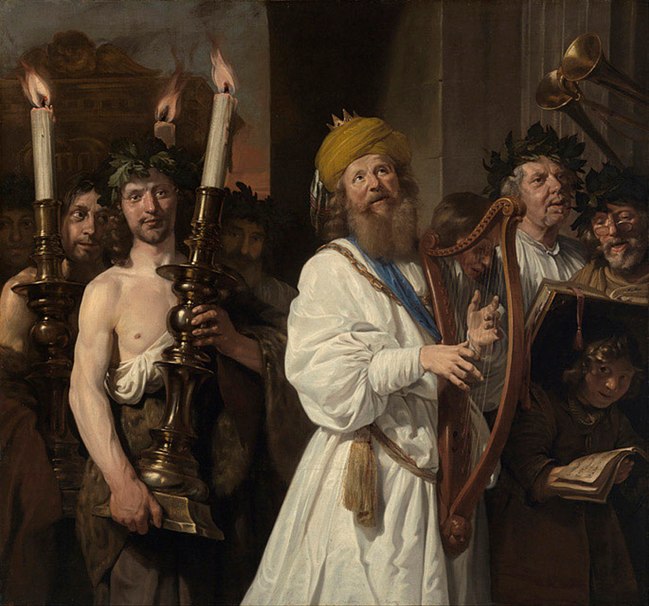 On the other hand, the Bible itself tells us many times to “sing to the Lord a new song.” In other words, you are not – with your life – supposed to sing to God a “stale, warmed-over

 But ultimately, he became popular. Or as
  The story there is that one day the
  When he was young – and after first entering the service of the Church – he got appointed to the court of King
  But wait, there’s more! That is, for more on this saint, see

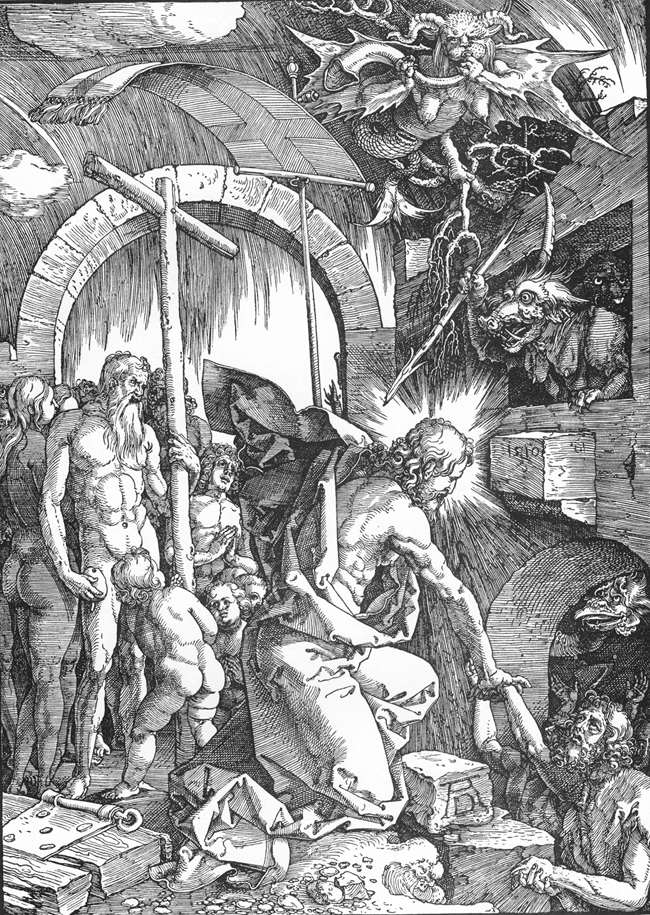 The next major
  And just as an aside, the title of Hemingway’s memoir was a “play on words for the term used for a
 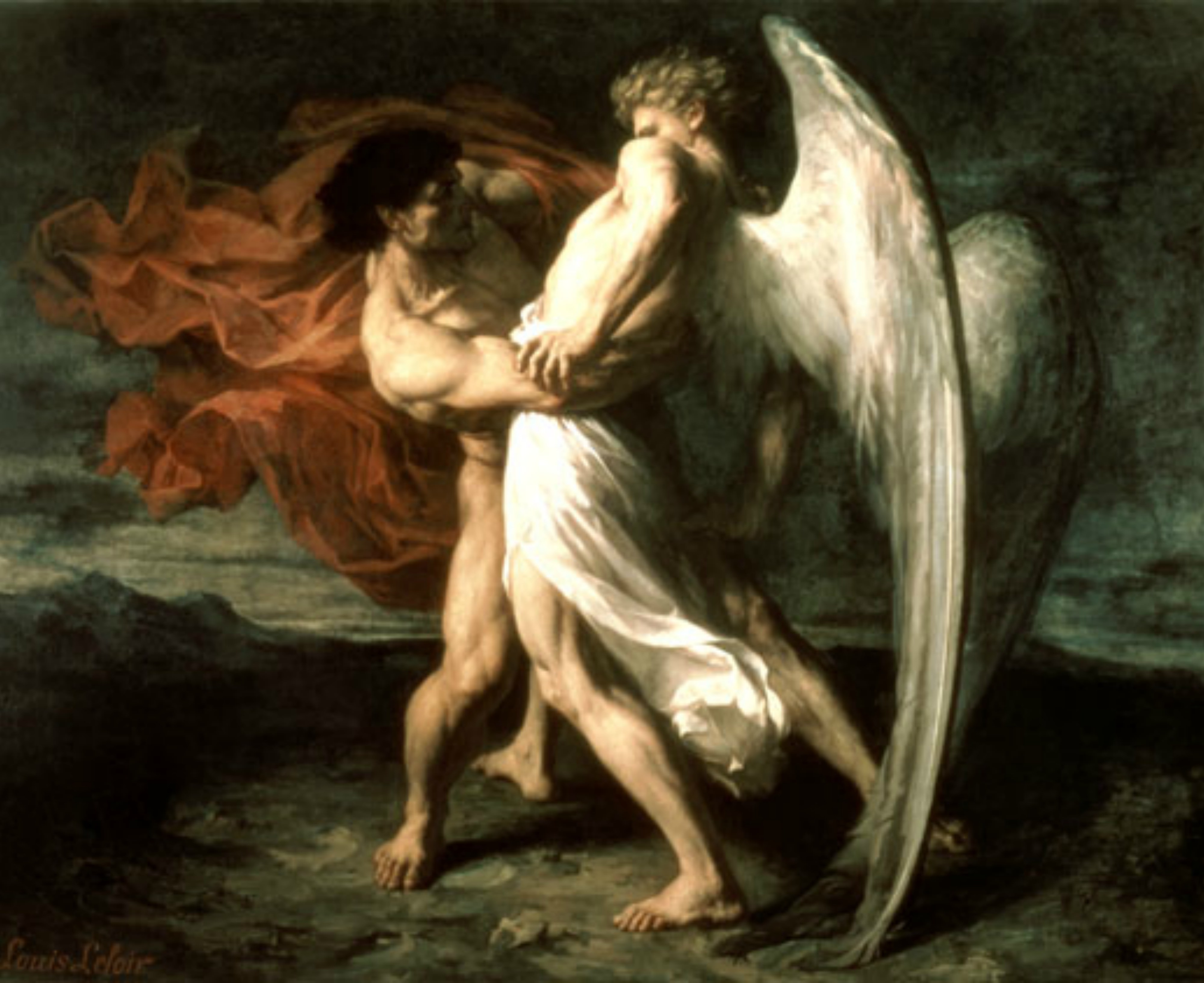 All of which may be pretty hard to believe, but that’s also addressed in 2014’s

 Monday, May 1, was the
  But again, even though we don’t know exactly which James is being celebrated on May 1, we do know which “Philip” is being celebrated.
 (2) JAMES THE LESS: James the son of Alphaeus (Alpheus) appears on lists of the Twelve Apostles (usually in the ninth place), but is never mentioned otherwise. He is called James the Less, or James Minor, or James the Younger. (See M 10:3; P 3:18; L 6:15; A 1:13)
 Today is officially the
  Finally, it’s known as “Quasimodo Sunday.” But that’s not because of
  As
As