* * * *
* * * *
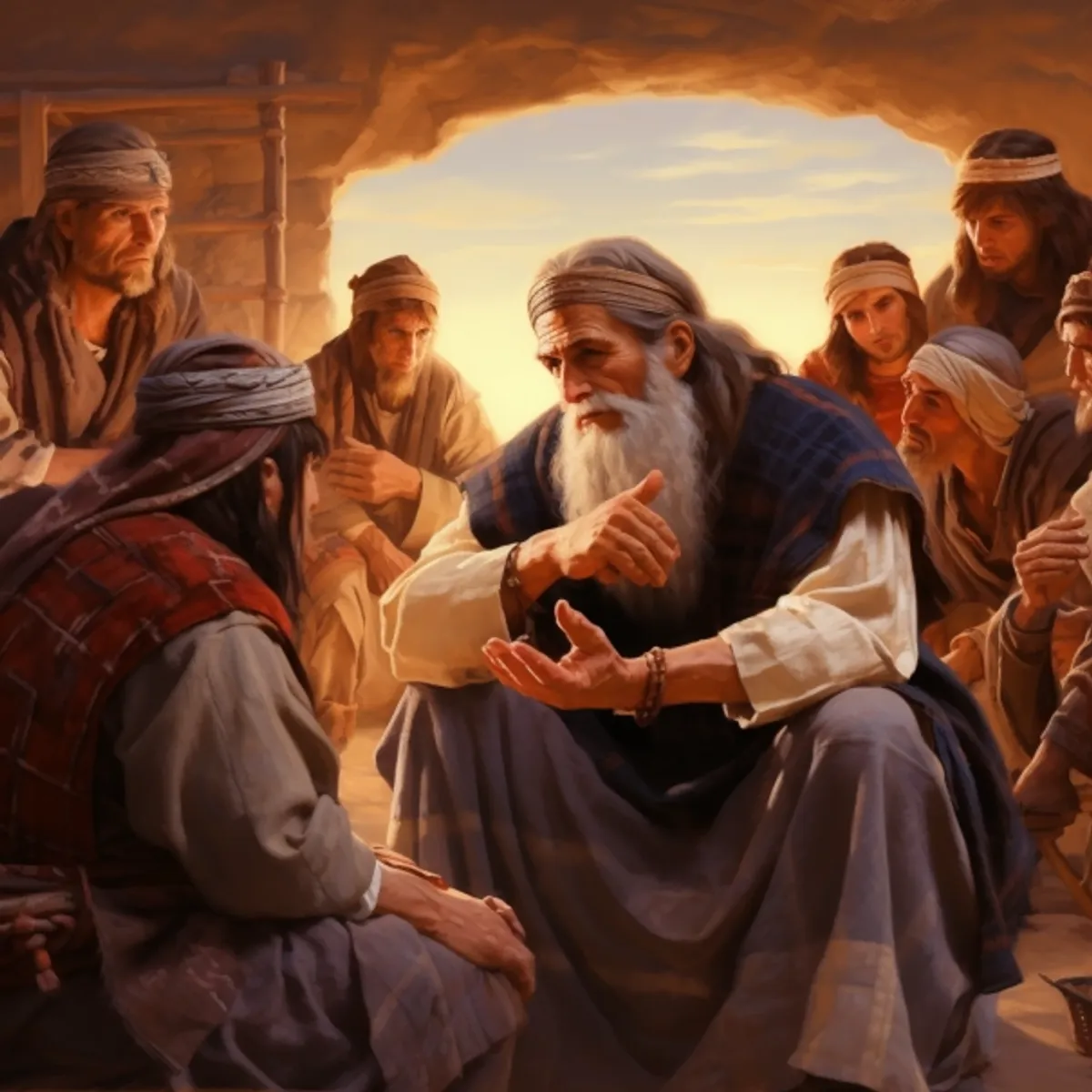
April 22, 2026 – And no, it wasn’t Jethro Bodine from the TV show “Beverly Hillbillies” who invented the idea of a Supreme Court. And it wasn’t Jethro Tull either. (The British rock band formed in Blackpool, Lancashire in 1967.) Instead, it was Jethro, the father-in-law of Moses, as detailed in the Daily Office readings for last Monday, April 20. But first, a note.
The last post told how this Blog‘s name came from the Daily Office Readings. (The set of readings by which you can read the whole Bible in two years, and the Psalms and Gospels three to four times.) But that post also noted that in recent years I’ve written mostly about Feast Days, those days set aside to remember people and things “important in the life of the Church.” Then came the part, “Until yesterday.” Meaning the DOR Old Testament reading for Saturday, April 18, was Exodus 17, about Moses at the Battle of Rephidim. Which meant for the first time in a long time I did a post about a Daily Office reading, instead of a Feast Day.
Anyway, Exodus 17 details how Moses became the first guy in history to say, “It’s only weird if it doesn’t work.” So again, I broke the pattern and wrote about a “DOR” for the first time in years. Then it happened again on Monday, April 20. The DOR OT reading was Exodus 18:13-27, and it talked about how Jethro invent[ed] the supreme court. The link refers to a post I did back in May 2014, so figured it was time to revisit, and once again be a “DOR Scribe.”
But first a bit of background.
For starters, Moses had been a Prince of Egypt for the first 40 years of his life, before he killed the overseer who was beating an Israelite slave. Then he had to hightail it out of Egypt after: 1) learning that he was not a prince of Egypt, as he’d been led to believe all his life, 2) learning that he was actually a member of Hebrew people, who were then slaves in Egypt, and 3) after killing that Egyptian overlord. He ended up in Midian, somewhere in the deserts of the Sinai on the Arabian Peninsula. That’s where he met Jethro, a priest of Midian in his own right, and here Moses married Jethro’s daughter Zipporah.
But in the fullness of time Moses went back to Egypt after a ten-year exile. Then eventually – after persuasions including the Ten Plagues – he got the Pharaoh to “let my people go.” In Exodus 18, the Children of Israel are still wandering in wilderness before getting to The Promised Land. (After incidents of God providing water-from-the-rock at Massah and/or Meribah, and manna and quail to eat.) Then Moses – upon his return to the land of Midian – “told his father-in-law all that the Lord had done to Pharaoh and to the Egyptians for Israel’s sake, all the hardship that had beset them on the way, and how the Lord had delivered them.” In plain words, Jethro welcomed his son-in-law back to Midian with open arms.
Then, in last Monday’s reading, Jethro watched as Moses tried to settle all the disputes coming up as the Children of Israel were still wandering (near Midian, with tempers no doubt getting extremely short). And he could see that Moses was wearing himself out in the process. In today’s lingo, Moses was suffering burnout, referring to “someone who has become very physically and emotionally tired after doing a difficult job for a long time.” So, Jethro told Moses:
“What you are doing is not good. You will surely wear yourself out, both you and these people with you. For the task is too heavy for you; you cannot do it alone.”
He advised Moses to appoint officers – in effect, lower-court judges – to settle the easier cases after teaching them the basic tenets of the law. (The law that was even then evolving in the wilderness, either as conditions dictated or as Moses had the law revealed to him by God, or perhaps a combination of both.) The passage continues: “Let them sit as judges for the people at all times; let them bring every important case to you, but decide every minor case themselves. So it will be easier for you, and they will bear the burden with you:”
“So Moses listened to his father-in-law and . . . chose able men from all Israel and appointed them as heads over the people, as officers over thousands, hundreds, fifties, and tens. And they judged the people at all times; hard cases they brought to Moses, but any minor case they decided themselves.”
In other words, Jethro advised Moses on the idea of delegating authority. And that is the basic idea behind the Supreme Court of the United States, as set out in Article III, section 1 of the Constitution: “The judicial power of the United States, shall be vested in one Supreme Court, and in such inferior courts as the Congress may from time to time ordain and establish.”
In other words, the U.S. Supreme Court – like Moses – was designed to deal with “hard cases,” leaving minor cases for lower courts. Which brings up the question of judicial interpretation. How does our Supreme Court interpret the Constitution, and for that matter: “How do we as Christians interpret the Bible as we read it from day to day?”
Some think of the as Bible “frozen in time.” Others think of it as a living breathing document whose story continues “even to this day.” Put another way: Is the Bible “grand and eternal” because it provides us with an anchor in a sea of shifting values? Or is the Bible great because of its flexibility and ambiguity, which to some people attests to its ability to “grow and progress” along with society’s evolving sense of justice?
Put yet another way, does the Bible provide us with a set of “rock-ribbed rules” that must be followed every single day, on pain of suffering hellfire-and-damnation? Or does the Bible provide a set of general principles that provide guidance from the past, and which should be adapted to the challenges of the present? Or put simply, does the Bible inspire fear, or hope?
I asked those questions back in the original 2014 post but ended it with this: That’s a subject for future posts. So, this is a future post, and since 2014 I’ve added the “four main themes” paragraph above, which I suppose answers the question, at least partly. Then too I’ve re-discovered Romans 10:9, “if you confess with your mouth that Jesus is Lord and believe in your heart that God raised him from the dead, you will be saved.” No ifs, ands or buts. Case closed. And if I took 11 years to resolve that issue, “I’m not the only one slow to answer those hard questions!”
* * * *
* * * *
The upper image is courtesy of biblepics … Bible AI Chat and Inspiring Images. Captions: “Exodus 18 Jethro Visits Moses in the Wilderness.” Also, “Moses‘ father-in-law Jethro visits him and advises him to appoint leaders to help him govern the Israelites.” See also Jethro (biblical figure) – Wikipedia, which includes a painting, “Detail from Jethro advising Moses by Jan Gerritsz van Bronckhorst, 1659.” (And just as an aside, the Bronckhorst link added that “Unlike his work for churches, his secular paintings show the influence of Caravaggio, and also show a striking appeal to sensuality.”) For the full painting see Jethro advising Moses – Artvee, and compare it with the “detail” in Wikipedia.
The Book of Common Prayer reference: The “corporate-mystical” prayer is on page 339, the post-communion prayer for Holy Eucharist, Rite I.
Feast days are designated days on the liturgical (church) calendar “set aside to commemorate events, saints, or doctrines that are important in the life of the Church. These can range from Solemnities, which are the highest-ranking feast days like Easter and Christmas, to optional memorials that celebrate lesser-known saints.” Feast Days … the Church’s Calendar. See also Wikipedia’s Calendar of saints. “The calendar of saints is the traditional Christian method of organizing a liturgical year by associating each day with one or more saints and referring to the day as the feast day or feast of said saint. The word ‘feast’ in this context does not mean ‘a large meal, typically a celebratory one,’ but instead ‘an annual religious celebration, a day dedicated to a particular saint.’”
The Book of Common Prayer, at page 934, explains that the Daily Office Lectionary is arranged in a two-year cycle, meaning that if you read the Daily Office on a daily basis you will cover the entire Bible in those two years, and the Psalms and Gospels three to four times. See also Daily Office (Anglican) – Wikipedia. See also Daily Office (Anglican) – Wikipedia.
The full Daily Office readings for Monday, April 20, 2026: “AM Psalm 25; PM Psalm 9, 15; Exod. 18:13-27; 1 Pet. 5:1-14;” and Matthew (1:1-17),3:1-6. See also The Lectionary – Satucket.
Re: Jethro inventing the supreme court, from May 2014. I went back and tried to correct it – dress it up a bit – but the interested reader can see the difference between posts then and now. Like those two “disappearing images” in the middle, one long and skinny as a bean pole. See also Life of Moses Timeline! – Bible Study, on his being 40 years oldwhen he whacked that Egyptian.
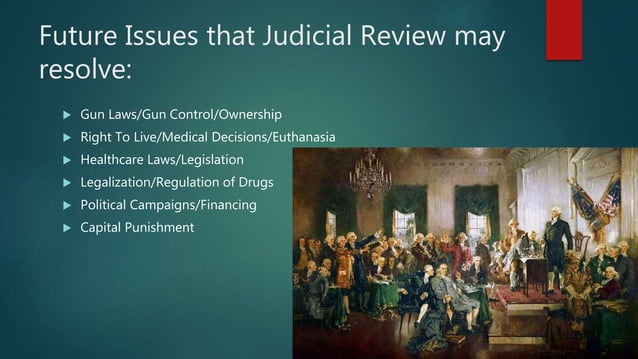
The lower image is courtesy of Images. “Judicial interpretation images.)
* * * *