Monthly Archives: March 2026

On the Annunciation – 2026

*   *   *   *

Did Mary react with “a look almost of horror at what she has just been told?”

*   *   *   *

March 25, 2026 – Today is the Feast of the Annunciation. The full title is the Annunciation to the Blessed Virgin Mary, and it all started with the birth of Jesus. The early Church Fathers decided first that the birth of Jesus would be celebrated on December 25, then figured back nine months. And since they said Jesus was born on December 25, He had to have been conceived the previous March 25. That’s where the Annunciation comes in.

It celebrates “the announcement by the angel Gabriel to Mary that she would conceive and become the mother of Jesus … marking his Incarnation.” From there it’s not much of a leap to say that the Annunciation and Conception had to have happened on the same day. (She would conceive” became in effect “she did conceive.”) But there’s a fly in the ointment.

These days there are theories “all over the place” about which day, which month or indeed which year was Jesus born. For example, some say June, some say March, or some other date somewhere between 4 and 6 Anno Domini. (“The Year of Our Lord.”) But for the sake of tradition this post will use December 25 as the starting point. (Since Tradition is second only to Scripture in the Wesleyan Quadrilateral.) So, back to the Annunciation.

Which leads to the question: Were there any other reasons why the early Church Fathers picked December 25? Answer: Yes, there is: Nowadays we know all about the winter solstice, which marks the shortest day and the longest night of the year. We also know that from that date onward, the days do start getting longer and the nights start getting shorter. But back before the Church got started “there was never any certainty that the sinking Sun would ever return.” (As Isaac Asimov noted.) So around mid-December those old-time people kept worrying the days would keep getting shorter and shorter, until there was nothing but eternal night.

But then around December 25 they noted the cycle had stopped and the days started getting slightly longer and longer. They always felt great joy and gladness at the return of more and more hours of sunlight. So they made a “great feast in honor of what one might call the ‘birth of the sun.’” In Roman times that raucous celebration became known as Saturnalia.

At the Saturnalia, joy was unrestrained, as befitted a holiday that celebrated a reprieve from death and a return to life… It was a season of peace and good will to all men… Naturally, the joy easily turned to the extremes of licentiousness and debauchery, and there were, no doubt, many pious people who deplored the uglier aspects of the festival.

Those “pious people” included early Church Fathers. They felt the festival was “a great stumbling block to conversions to Christianity.” So, the Church “adapted itself to pagan customs” like Saturnalia. In essence they transmogrified the pagan feast. They said Christians needed only “to joyfully greet the birth of the Son rather than the Sun.” (Emphasis added. See the Notes.)

Incidentally, for a traditional view of the Annunciation – and Mary’s “Faithful Response” – see 10 Things to Know About the Solemnity of the Annunciation and Its Significance.

For an alternate view consider what Garry Wills said. (And Wills has been a devout Catholic for 90 of his 92 years.) “For me, the most convincing pictures or sculptures of the Annunciation to Mary show her in a state of panic … shrinking off from the angel, looking cornered by him.” He noted especially some 14th century paintings “where Mary is made so faint by the angel’s words that she sways back and must grab a pillar to keep herself upright.”

On that note see Luke 1:29, which in most translations has Mary “deeply troubled” by the announcement. Other translations have her “confused and disturbed,” or agitated, perplexed or alarmed. Which led Wills to ask – about Mary’s hearing that she had “found favor” with God – “Did she know already how dangerous is such a favor? God’s chosen people are commonly chosen to suffer.” (Certainly a sobering thought for good and proper Christians.)

This reaction seems supported by what Simeon said when Mary presented the newborn Jesus to the Temple. She heard him say, “you, Mary, will suffer as though you had been stabbed by a dagger.” (Luke 2:35.) Or that “a sword will run through this woman’s heart.” Thus, in some views, Mary’s “look almost of horror at what she has just been told.” Which brings up Dante Gabriel Rossetti‘s interpretation of the event, shown above. We might meditate on that during this Lent 2026. If we feel alarmed, agitated or perplexed at the world events going on around us…

Just know that we are in good company.

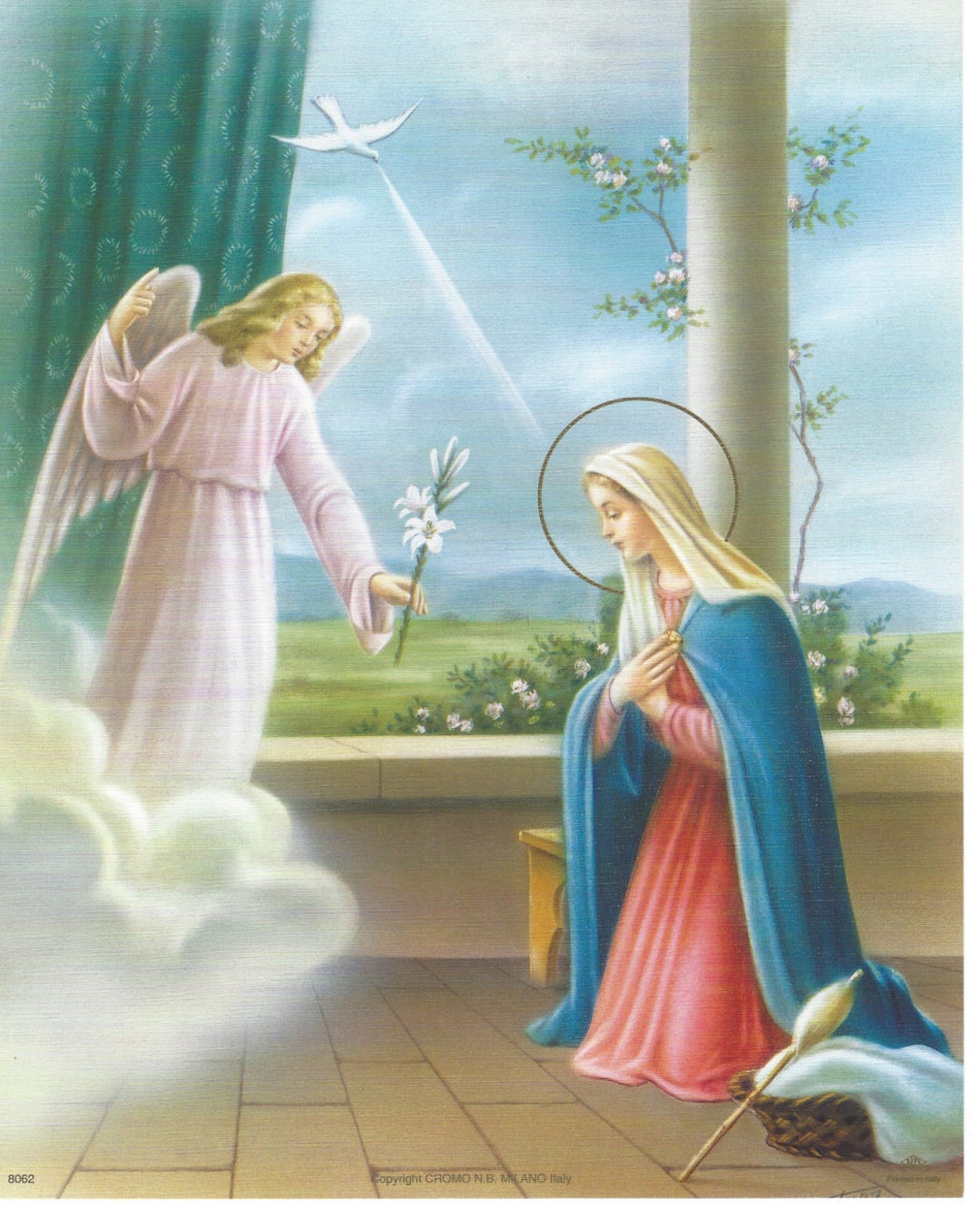
In the meantime, since tradition is second only to Scripture in the Wesleyan Quadrilateral, here’s a traditional view of how Mary reacted to Gabriel’s message.

*   *   *   *
*   *   *   *

The upper image is courtesy of Rossetti Annunciation – Image Results. See also The Annunciation by Dante Gabriel Rossetti – my daily art display:

Take a while and look at Mary’s expression. How do you read Rossetti’s depiction of this young woman? Look at her facial expression. This is not one of acquiescence or pleasure. This is a look almost of horror at what she has just been told. This terrified look adds a great deal of power to Rossetti’s painting. Mary herself … looks much younger than we are used to seeing in similar scenes. She exudes a youthful beauty but only seems to be a mere adolescent with her long un-brushed auburn hair contrasting sharply with her white dress. She is painfully thin and her hesitance and sad look tinged with fear endears her to us. 

The Book of Common Prayer reference: The “corporate-mystical” prayer is on page 339, the post-communion prayer for Holy Eucharist, Rite I.

Feast days are designated days on the liturgical (church) calendar “set aside to commemorate events, saints, or doctrines that are important in the life of the Church. These can range from Solemnities, which are the highest-ranking feast days like Easter and Christmas, to optional memorials that celebrate lesser-known saints.” Feast Days: Celebrating the Church’s Calendar. See also Wikipedia’s Calendar of saints. “The calendar of saints is the traditional Christian method of organizing a liturgical year by associating each day with one or more saints and referring to the day as the feast day or feast of said saint. The word ‘feast’ in this context does not mean ‘a large meal, typically a celebratory one,’ but instead ‘an annual religious celebration, a day dedicated to a particular saint.'”

For this post I borrowed from 2015’s The Annunciation “gets the ball rolling,” On the Annunciation (2022) – and Mary “shrinking back,” and On the Annunciation and the end of Lent – 2023.

On when was Jesus born, see Christianity, Christmas, Calendar, When Was Jesus Born? Here’s What The Evidence Says, or When Was Jesus Christ Born? – CBCG.

The Wesleyan Quadrilateral is the method of theological reflection credited to John Wesley. It uses four sources as the basis of theological and doctrinal development, Scripturetraditionreason, and Christian experience. (Wikipedia.)

Re: Isaac Asimov. The quotes about the dating of Christmas and the “olden days” are from Asimov’s Guide to the Bible (Two Volumes in One), Avenel Books (1981), at pages 930-34. 

And as an aside, Asimov (1920-1992) was an author and professor of biochemistry at Boston University, best known for his works of science fiction and for his popular science books. He was one of the most prolific writers of all time, having written or edited more than 500 books and an estimated 90,000 letters and postcards.” His list of books included those on “astronomymathematics, the BibleWilliam Shakespeare’s writing, and chemistry.” He was a long-time member of Mensa, “albeit reluctantly;  he described some members of that organization as ‘brain-proud and aggressive about their IQs.’”  See Isaac Asimov – Wikipedia.

Re: “What Garry Wills said.” See What Jesus Meant: Wills, the 2007 book, an “illuminating analysis for believers and nonbelievers alike … a brilliant addition to our national conversation on religion.” (Said Goodreads.) The quote is from page 1 of my Penguin Books edition, “The Hidden Years.” Also, the Wikipedia article notes that up until 2024 he prayed the rosary every day and wrote a book about it.” He now calls himself an “Augustinian Christian.” As for public appraisal:

The New York Times literary critic John Leonard said in 1970 that Wills “reads like a combination of H. L. MenckenJohn Locke and Albert Camus.” The Catholic journalist John L. Allen Jr. considers Wills to be “perhaps the most distinguished Catholic intellectual in America over the last 50 years” (as of 2008). Martin Gardner in “The Strange Case of Garry Wills” states there is a “mystery and strangeness that hovers like a gray fog over everything Wills has written about his faith.”

Re: Luke 2:35. The “sword will run through this woman’s heart” quote came from the translation Wills used. Most other “Bible Hub” translations say the sword will pierce Mary’s “own soul;” that includes the King James Bible. (The one God uses.) As to feeling alarmed, agitated or perplexed at world events, see 1st Corinthians 10:13, “The temptations in your life are no different from what others experience. And God is faithful. He will not allow the temptation to be more than you can stand. When you are tempted, he will show you a way out so that you can endure.” (Well, almost “no different from what others experience.” Mary was after all in a class by herself.)

The lower image is courtesy of Annunciation Mary Image – Image Results.

*   *   *   *
On St. Paddy and St. Joe – 2026

*   *   *   *

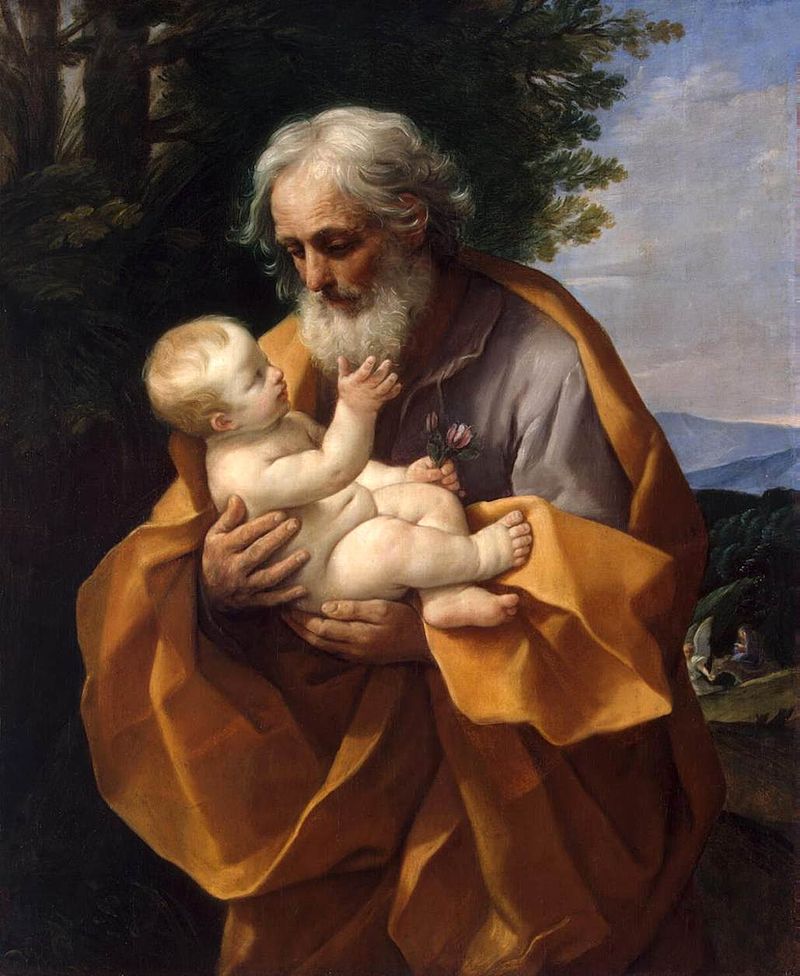
Saint Joseph, “with the Infant Jesus.” His feast day comes on March 19

*   *   *   *

March 19, 2026 – From today’s Daily Office: “You who seek God, your heart shall live.”

A pretty good thing to remember in this time of Lent, preparing for a joyous Easter Sunday on April 5. (To go along with John 6:37 and Romans 10:9.) I read that just this morning, part of the Daily Office readings. Specifically, Psalm 69:32. (You could look it up!”)

But seriously, on Thursday, March 19, we celebrate the Feast of St Joseph, “earthly” father-figure of Jesus. Two days before that, on Tuesday, March 17, we celebrated another saint, St. Patrick, and it seems like a whole lot more people know and celebrate his day, maybe because of the Green Beer? (The “minor” festival is the far better-known of the two.) I wrote about these two saints in 2015’s St. Paddy and St. Joe, and 2016’s St. Joseph and the “Passover Plot.”

A note: The Passover Plot is a 1965 book by Hugh Schonfield saying the Crucifixion was a “conscious attempt by Jesus to fulfill the Messianic expectations rampant in his time,” but the plan went unexpectedly wrong. (Jesus really died.) And the book was made into a movie in 1976:

Dramatization of the controversial best-seller that posits an alternate version of the birth of Christianity. In this version, Jesus planned for His crucifixion by taking a drug that would simulate death. After His unconscious body was placed in the tomb, a religious sect known as the Zealots would secretly steal Christ’s body from the tomb, then spread the rumor that He had risen, thus fulfilling Biblical prophecy.

Needless to say, the book created quite a stir. One site said it was “lucidly written and carefully documented, but As For Me and My House, I’ve always felt that personal faith is not a matter of scientific proof. Faith is more a matter of the ongoing interactive walk to Jesus. Then there’s the Wesleyan Quadrilateral, that apart from scripture, “experience is the most substantial proof of Christianity.” And my 74 years of experience has convinced me of the truth of Romans 10:9.

But getting back to Joseph: “Whatever happened to him?” For possible answers check out Question of Faith: What happened to St. Joseph – Catholic Telegraph, or – for a lot of Bible passages – What ever happened to Joseph, Jesus’ stepfather? One thing we do know: Joseph is the patron saint of workers – specifically, carpenters – along with fathers in general and “the dying.” (Those at or approaching death.) See also St. Joseph – Saints & Angels – Catholic Online, which added that assuming he died before Jesus’ public life, he died with Jesus and Mary close to him, “the way we all would like to leave this earth.” And this:

Christian tradition places Joseph as Jesus‘ foster father [but] represents Mary as a widow during the adult ministry of her son. Joseph is not mentioned [at] the Wedding at Cana at the beginning of Jesus’ mission, nor at the Passion at the end. If he had been present at the Crucifixion, he would under Jewish custom have been expected to take charge of Jesus’ body, but this role is instead performed by Joseph of Arimathea. Nor would Jesus have entrusted his mother to the care of John the Apostle if her husband was alive. 

Now a bit about St. Patrick. We don’t know when he was born, but he is said to have died on March 17, now celebrated as his Feast Day. (And in Irish his name would be Padraig.) And about the celebration, see How America Invented St. Patrick’s Day | TIME:  “Immigration and nativism transformed a quiet religious celebration into a day of raucous parades and shamrock shakes.” And that transformation began in America. In Ireland – up to about 1904 – March 17 was a “quiet day with no parades or public events.” But in America the holiday became a means for all Americans to become Irish for the day. “It’s the closest thing in America to National Immigrant Day, a tribute not only to the Irish, but to the idea that Americans are all part “other.” (Emphasis added.) Or as Jesus said “that we all may be one.”

In honor of those noble sentiments, I believe I’ll go out tonight and hoist a pint.

*   *   *   *

*   *   *   *

The upper image is courtesy of Saint Joseph – Wikipedia, which also noted that the “Pauline epistles make no reference to Jesus’ father; nor does the Gospel of Mark.”  The caption for the painting: “Saint Joseph with the Infant JesusGuido Reni (c. 1635).”

The Book of Common Prayer reference: The “corporate-mystical” prayer is on page 339, the post-communion prayer for Holy Eucharist, Rite I.

The Daily Office readings for today included “AM Psalm 69:1-23(24-30)31-38; PM Psalm 73; Exod. 1:6-221 Cor. 12:12-26;” and Mark 8:27-9:1. Also the readings for St. Joseph: “AM: Psalm 132Isaiah 63:7-16Matthew 1:18-25[;] PM: Psalm 342 Chronicles 6:12-17Ephesians 3:14-21.” A note: I read that in the Book of Common Prayer psaltery. There it’s the second line of Psalm 69:34.

Feast days are designated days on the liturgical (church) calendar “set aside to commemorate events, saints, or doctrines that are important in the life of the Church. These can range from Solemnities, which are the highest-ranking feast days like Easter and Christmas, to optional memorials that celebrate lesser-known saints.” Feast Days: Celebrating the Church’s Calendar.

The lower image is courtesy of Green Beer St Patrick’s Day – Image Results. One page explained that Green Beer is an American invention, not Irish. “Thomas Curtin was an American physician and the man credited with the invention of green beer. He made green beer for a St. Patrick’s Day party at the Schenerer Club of Morrisania located in the Bronx in 1914 and the rest is history.”

Here’s the scoop – the Irish, in their homeland, don’t typically go for green beer. They have a rich tradition of stouts, ales, and lagers that don’t need a hue change. In my years behind the bar, I’ve had my fair share of Irish patrons shaking their heads at the sight of the neon green concoctions… For those who want to keep it authentic, there’s a treasure trove of traditional Irish beers to explore. Guinness, Murphy’s Stout, and Smithwick’s Red Ale are staples on St Patrick’s Day. These brews carry the spirit of the Emerald Isle, and let me tell you, serving a perfectly poured Guinness on St Paddy’s Day feels like winning a pot of gold.

And a note on the name “Paddy” as an alternate to “Patty,” for Patrick. Some sources say it’s a slur, other say it’s a cause for pride. See Negative terms used to describe Irish everywhere – IrishCentral, ” More common in Britain, where ‘Paddy’ was used as a derogatory catch-all name to describe anyone male and Irish.” Or this, Origin of the Name Paddy (Complete History) – Lets Learn Slang: ” The origins of Paddy can be traced back to Ireland, where it holds a special place in the hearts of the Irish people. This name not only acts as a shorthand for the popular Irish name Patrick, but it also carries a sense of identity and pride.” Urban Dictionary: paddy wagon, about the “police vehicle used to transport prisoners.” Finally, paddy wagon — Wordorigins.org: “A paddywagon is a police van used to transport criminals. The name is commonly thought to come from an association with the Irish, because in the nineteenth and early twentieth centuries a disproportionately large number of Irish were police in North American cities.”

*   *   *   *

A 2026 Lenten contemplation…

*   *   *   *

undefined
Did this guy – Hezekiah – really say “Keep it in your knickers?”

*   *   *   *

Welcome to “read the Bible – expand your mind:”

The Book of Common Prayer says that by taking part in Holy Communion, Christians become “very members incorporate in the mystical body” of Jesus. The words “corporate” and “mystical” are key. They show that a healthy church has two sides, with the often-overlooked “mystic” side asking the question, “How do I experience God?” This blog tries to answer that.

It has four main themes. The first is that God will accept anyone. (John 6:37.) The second is that God wants us to live lives of abundance.(John 10:10.) The third is that Jesus wants us to read the Bible with an open mind. (As Luke 24:45 says: “Then He [Jesus] opened their minds so they could understand the Scriptures.”) The fourth theme – another one often overlooked – is that Jesus wants us to do even greater miracles than He did. (John 14:12.) 

And this thought ties them together:

The best way to live abundantly and do greater miracles than Jesus is: Read, study and apply the Bible with an open mind. For more see the notes or – to expand your mind – see the Intro.

In the meantime:

March 12, 2026 – The last post talked about contemplation as a Lenten discipline. (As opposed to giving up things like rye whisky and two-dollar cigars.) In a religious context, contemplation “seeks a direct awareness of the divine which transcends the intellect, often in accordance with religious practices such as meditation or prayer.” And over the past week or so I’ve been contemplating some unexpected things, based on recent readings from the Daily Office.

For example, the Daily Office New Testament reading for Thursday, March 5, was 1st Corinthians 6:12-20. It included verse 19. That’s where Paul warned, “Don’t you realize that your body is the temple of the Holy Spirit, who lives in you and was given to you by God? You do not belong to yourself.” Which brought back a memory from my early teen years.

Specifically, a memory from a church youth-group weekend when I was 14, in 1965. One of the adults was giving a lecture to us boys and cited that passage.

We all knew what he meant.

It was pretty much the same message set out in the 1986 Georgia Satellites song, “No huggee no kissee, keep yo’ hands to yourself.” Though that song came much later, I got the same message again in 1968 when I was 17. In a different setting, at the Forest Home Christian Camp. I was there for a three-week Youth Corps session, headed by Coach Ben. And he cited a similar passage, imaginary but telling, Hezekiak 3:19: “Keep it in your knickers.”

Which I suppose old folk have been telling teen boys since the beginning of time. (Talk about raging hormonal influence.) So, what the heck was I contemplating when I started?

For one thing, the meaning of the word. In Christianity it means having a “content-free mind directed towards the awareness of God as a living reality.” Other definitions include reflection, thoughtful observation, or “long hard thinking about something.” Turning to Islam, the prophet Muhammed was said to climb a mountain, there to “contemplate life and its meaning.”

Which I suppose could include: “Is it wise to return to your youth, to go back in time and maybe get a chance to fix past mistakes – and even make better choices?” In other words, a do over?

There was a time in the past when I really wanted to do just that. Dark days when I felt abandoned by God and wanted desperately to wake up the next morning, ready to go to school at Largo Junior High. I’d be so smart. I’d be able to predict the future. That is, I’d only want to go back in time if I could know then what I know now. But would it work that way?

That led me to contemplate what I would say back then if I knew – at 14 or 17 – what I know now. More on that later, but the raging hormone link addressed an age-old question: “In every generation, it seems, the same lament goes forth from the parents of adolescents: ‘What’s the matter with kids today?’ Why are they so often confused, annoying, demanding, moody, defiant, reckless?” For one thing – for us guys – the “production of testosterone increases 10 times in adolescent boys.” One result? “The hormonally regulated 24-hour clocks change their settings during adolescence, keeping high school and college students awake far into the night and making it difficult to rise for morning classes.” So, first question: If I could go back to age 14 would that mean I’d have 10 times the testosterone I have now?

Actually, right now I’m pretty laid-back and mellow, and I like it that way. And I’m happy with the life I have now. (At least three times a day, starting with when I’m driving up to get my morning iced coffee, I blurt out, “Thank you Jesus!”) Heck, I’m even thinking I might make it to 120 like Moses, with “eye undimmed and vigor unabated.” Why would I want to risk screwing that up?

But back to what led me to contemplate what I would say back in 1965 about 1st Corinthians 6, verse 19. If I knew then what I know now, I might answer, “Well, yeah, but isn’t a temple specifically designed to be worshiped and adored? And eventually entered?” That question would have gotten me into a world of trouble. If nothing else the lecturing adult would have passed on my smart-ass remark his boss, and in turn to my parents, not to mention the priest at my church. And I would no doubt have been the talk of the town, but not in the good way.

Then there was that coach at the 1968 Youth Corps camp, the one who cited Hezekiah 3:19, “Keep it in your knickers.” (Or Keep It in Your Pants – Slang Meaning & Examples – FastSlang.) Back then I didn’t know Hezekiah from Adam, but now – through a quick online search – I can see that while there was a Hezekiah in the Bible, he didn’t write a book. (Back then I couldn’t quick-cite Is Hezekiah a book in the Bible? – Answers.)

So, all things considered, this Lenten contemplation has taught me – once and for all – that I definitely don’t want to go back in time and ask a lot of smart-alecky questions. (At the same time, it’s given me some empathy for young folk today asking those smart-alecky questions. It’s all those hormones!) As for me, I’d get into a world of trouble, asking things like “Isn’t a temple supposed to be entered?” And with telling my classmates about the future: Things like that one day they wouldn’t carry cash. They’d pay for groceries with little plastic things smaller than an index card. And maybe about all those assassinations, and 9/11, and that one day we’d elect an actor – Ronald Reagan – as president? (And that years later it would get worse?) I probably would have been burned at the stake when those things started coming true. No thanks!

*   *   *   *

*   *   *   *

The upper image is courtesy of Hezekiah – Wikipedia

The Book of Common Prayer reference: The “corporate-mystical” prayer is on page 339, the post-communion prayer for Holy Eucharist, Rite I.

Feast days are designated days on the liturgical (church) calendar “set aside to commemorate events, saints, or doctrines that are important in the life of the Church. These can range from Solemnities, which are the highest-ranking feast days like Easter and Christmas, to optional memorials that celebrate lesser-known saints.” Feast Days: Celebrating the Church’s Calendar.

Re: Live to120. See the post, From two years ago – “Will I live to 141?”

For an interesting take, see 2014’s On Jesus as a teenager, and 2016’s Jesus as a teenager – REDUX. And for my own benefit, a nod back to what George Will said about writing a column, or a blog post? Basically, he said – as I recall – that a columnist needs three seductive skills: “be pleasurable, be concise, and be gifted at changing the subject frequently.”

The lower image is courtesy of Back To The Future Ronald Reagan President – Image Results.

*   *   *   *

As noted in the opening blurb, this blog has four main themes. The first is that God will accept anyone. (See John 6:37, with the added, “Anyone who comes to Him.”) This is a consistent theme throughout the Bible. From the Old Testament, Psalm 9:10, “You never forsake those who seek you, O Lord.” (In the Book of Common Prayer version.) The second is that God wants us to live abundantly.  (John 10:10.) The third is that we should do greater miracles than Jesus. (John 14:12). A fourth theme: The only way to do all that is read the Bible with an open mind:

…closed-mindedness, or an unwillingness to consider new ideas, can result from the brain’s natural dislike for ambiguity. According to this view, the brain has a “search and destroy” relationship with ambiguity and evidence contradictory to people’s current beliefs tends to make them uncomfortable… Research confirms that belief-discrepant-closed-minded persons have less tolerance for cognitive inconsistency

So in plain words, I take issue with what I call “Christian first graders.” Those who choose to stay in a kind of elementary-school first grade. See John the Baptist, ’24 – and “Christian First Graders,” for more. But the key point: “The Bible was designed to expand your mind,” not make it narrow. Also, there’s the idea that “Jesus was anything but negative. His goal was for you to grow and develop into all that you can be.” (For more on that see ABOUT THE BLOG, above.)

I’ve written on boot-camp Christians, the Literalists who never go “beyond the fundamentals.” But the Bible offers so much more than a narrow reading gives… (Unless you want to stay a buck private all your life…) Now, about “Boot-camp Christians” see Conservative Christian – “Career buck private?” The gist of that post: Starting the Bible is like Army Basic Training. You begin by“learning the fundamentals.” But after boot camp, you move on to Advanced Individual Training.” 

http://www.toywonders.com/productcart/pc/catalog/aw30.jpg

And as noted in “Buck private,” one of this blog’s themes is that if you want to be all that you can be, you need to go on and explore the “mystical side of Bible reading.*” In other words, exploring the mystical side of the Bible helps you “be all that you can be.” See Slogans of the U.S. Army – Wikipedia, re: the recruiting slogan from 1980 to 2001. The related image at left is courtesy of: “toywonders.com/productcart/pc/catalog/aw30.jpg.”

Re: “mystical.” Originally the “liturgical, spiritual, and contemplative dimensions of early and medieval Christianity.” Mysticism – Wikipedia, and the post On originalism.  (“What the Bible was originally about!”) See also Christian mysticism – Wikipedia, “In early Christianity the term ‘mystikos’ referred to three dimensions, which soon became intertwined, namely the biblical, the liturgical and the spiritual or contemplative… The third dimension is the contemplative or experiential knowledge of God.” As to that “experiential” aspect, see also Wesleyan Quadrilateral – Wikipedia, on the theological reflection method using four sources of spiritual development: scripturetradition, reason, and “Christian experience.”

For an explanation of the Daily Office – where “Dorscribe” came from – see What’s a DOR?

*   *   *   *

On the Second Sunday of Lent – 2026

*   *   *   *

The Temptation(s) of Christ – during His 40 days of wandering – which Lent emulates…

*   *   *   *

March 1, 2026 – The last post talked about Shrove Tuesday and Ash Wednesday as marking the beginning of Lent. Which brings up something to keep in mind during this church season: While fasting and abstinence are the usual components of a Lenten discipline, Jesus said in Matthew 6:16-18, “Do not look dismal, like the hypocrites, for they disfigure their faces so as to show others that they are fasting.” Instead, He said to basically put on a happy face. That way, “your fasting may be seen not by others, but by your Father who is in secret.”

In other words, the life-long Christian pilgrimage consists of both fasting and feasting:

Lent is about both fasting and feasting… And that’s what we Christians do during Lent. We retell our story of slavery to sin and death. We remember that we are dust and into dust we shall return. We remember our helplessness and hopelessness. We remember that we are utterly dependent on God’s gift of deliverance. And we celebrate, we feast.

As for the term itself, “Lent” comes from the old English meaning lengthen. That refers to the days getting longer as we move into spring. And just as spring means the rebirth and renewal of plant life, so the season of Lent means that Christians engage in spiritual renewal. Changes in church liturgy are designed to reflect that; many omit the usual “Alleluias” – from the Hebrew for “Praise the Lord” – until Easter Sunday. And hymns are more reflective while crosses are covered with veils. Everything turns inward until Easter Sunday, when “colors brighten, the veils are removed, and the Alleluias and praises break forth in joyous celebration.”

Now about those Lenten Disciplines. For many that means giving up something. On the other hand some choose a discipline “that would add to my spiritual life.” Other ideas? “Some find meditation to be a good Lenten discipline.” Or centering prayer, “taking time to follow your breath while praying a word or phrase, like ‘Love,’ ‘Peace,’ or ‘Jesus, Son of God, have mercy.'” Or a Screen Fast: “take one day without any screens: TV, iPhone, Blackberry, computer.”

For myself, in past Lents I’ve done contemplation, on projects like researching when, how (and indeed if) Moses wrote the first five books of the Bible, the Torah. Such contemplation is “profound thinking about something.” As Wikipedia further explained, “In a religious sense, contemplation is usually a type of prayer or meditation.” And finally, there’s this:

Within Western Christianity contemplation is often related to mysticism as expressed in the works of mystical theologians such as Teresa of Avila and John of the Cross as well as the writings of Margery KempeAugustine Baker and Thomas Merton.

So, in so “contemplating” you could say I was in pretty good company. As for this Lent, I’ll try to finish the novel I’ve been working on for some time; a novel I hope can bring Jesus closer to a bunch of pointy-headed liberals out in California. (I’ll also try to cut down on saying nasty things about a certain person we’re all too familiar with. “Let the reader understand.”)

Which could tie in to the Collect for this Second Sunday in Lent. “O God, whose glory it is always to have mercy: Be gracious to all who have gone astray from your ways, and bring them again with penitent hearts and steadfast faith to embrace and hold fast the unchangeable truth of your Word, Jesus Christ your Son.” Wouldn’t it be pretty to think that could happen, somehow?

*   *   *   *

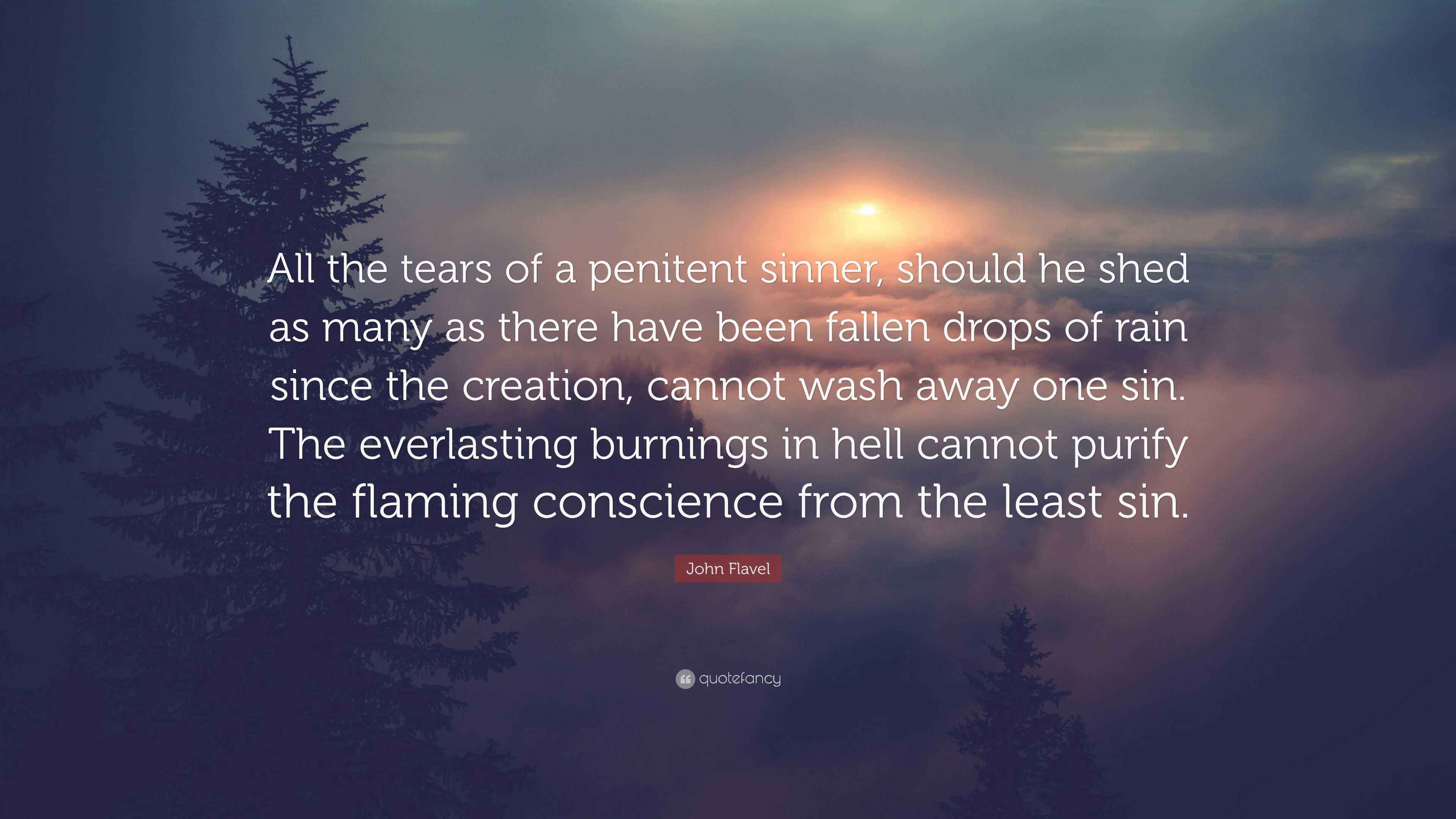
For a better translation of this dire warning, see the Notes below…

*   *   *   *

The upper image is courtesy of Temptation of Christ – Wikipedia.  The caption: “The Temptations of Christ, 12th century mosaic at St Mark’s BasilicaVenice.” 

The Book of Common Prayer reference: The “corporate-mystical” prayer is on page 339, the post-communion prayer for Holy Eucharist, Rite I.

Feast days are designated days on the liturgical (church) calendar “set aside to commemorate events, saints, or doctrines that are important in the life of the Church. These can range from Solemnities, which are the highest-ranking feast days like Easter and Christmas, to optional memorials that celebrate lesser-known saints.” Feast Days: Celebrating the Church’s Calendar.

For this post I borrowed from 2016’s My Lenten meditation, On the beginning of Lent – 2018, 2023’s On “Black Saturday” weddings in Lent – and other matters, and Welcome to Lent – 2024. I also borrowed from A HANDBOOK FOR THE DISCIPLINES OF LENT.

The “wouldn’t it be pretty is a take on the last line of Hemingway’s novel, “The Sun Also Rises.” See Quotes – Isn’t it pretty to think so? – Shmoop.

The lower image is courtesy of Sinner Penitent Image – Image Results. I should note that even in a bigger size it’s hard to see the commas that make all the difference, so here’s that better translation: “All the tears of a penitent sinner – should he shed as many [tears] as there have fallen drops of rain since the creation – cannot wash away one sin. The everlasting burnings in hell cannot purify the flaming conscience from the least sin.” (Imagine if there were many and great.)

*   *   *   *