* * * *

* * * *
July 7, 2025 – This time eleven years ago (2014) I did what may have been my first post on America’s Independence Day. I was riding a train north from New York City to Montreal, which meant I had to find my passport. In the process I found some interesting reading.
That included – on page 4 – the Preamble to the United States Constitution. It begins “We the People of the United States … do ordain and establish this Constitution for the United States of America.” Meaning that for the first time in history the People finally decided that they held Sovereign Power, not some temporary hired hand with a limited term of service.
Moving on, passport pages 8-9 are topped by a saying from George Washington, “Let us raise a standard to which the wise and honest can repair.” Unfortunately – as we’ve seen too often – the reckless and dishonest can also repair to the standard of freedom that America provides.
Then there’s a quote on pages 16-17, from Teddy Roosevelt: “This is a new nation, based on a mighty continent, of endless possibilities.” Get that? “Endless possibilities?” But to get over to that land of endless possibilities, our ancestors – the first immigrants, the people with enough gumption and nerve – had to leave behind the old and corrupt ways of “back where they came from.” (Another way of saying conservative types, but that’s a subject for another post.)
Then there’s the last quote, on page 28, from the late astronaut Ellison Onizuka:
Every generation has the obligation to free men’s minds for a look at new worlds . . . to look out from a higher plateau than the last generation.
(Ellipses in passport.) But are we doing that? Are we opening up new worlds for our children and grandchildren? Are we working toward a future where the can look out from a higher plateau? Or are we saddling them with an national debt that threatens their future?
But down off the soapbox: Onizuka was part of the seven-member crew on the Space Shuttle Challenger that took off from Kennedy Space Center on January 28, 1986. The shuttle exploded when a flame-jet leaking from a solid rocket booster ruptured the liquid hydrogen fuel tank 73 seconds after launch. All seven crew members were killed.
Meaning the freedom of space travel showed itself as extremely dangerous, but as Thomas Jefferson said, “I prefer dangerous freedom over peaceful slavery.” Which could be one of those off on a tangents for which I am well known. (At least to my own family.) But back in 2014 I added that all this was just another way of saying, “Sing to the Lord a new song.” (As it says in Isaiah 42:10 and Psalms 96:1, 98:1, and 144:9.) But could trying to sing a new song to the Lord be dangerous as well? Some people seem to think so. They prefer to go by the book” – which usually means “never beyond a literal reading of the book.”
In other words, some people today seem to think that rather than expanding our minds, exploring new worlds and enjoying freedom for all, it’s better to stick with the same old song. But as noted above, Jesus expects us to do even greater miracles than He did, and can you do that by “going by the book?” Or singing the same old song over and over again?
Which makes this a perfect time and place to bring up Independence Day:
Independence Day is a day of family celebrations [with] a great deal of emphasis on the American tradition of political freedom… Independence Day is a patriotic holiday for celebrating the positive aspects of the United States… Above all, people in the United States express and give thanks for the freedom and liberties fought by the first generation of many of today’s Americans.
(Hmm. A tradition of political freedom. The freedom and liberties fought for by the first generation of Americans…) But it’s also a religious feast day, as noted in the link Independence Day: “We commemorate the day the formal wording of the Declaration of Independence was approved and the document signed.” Thomas Jefferson wrote most of the Declaration, doing so in a way that (as one British writer said), “combines great prose, great politics, and great theology.”
But he wasn’t finished. In 1777 he went on to draft Virginia’s Statute for Religious Freedom. (Which he considered so important that it was “one of only three accomplishments Jefferson instructed be put in his epitaph.”) Needless to say, his proposal generated considerable debate. For one thing, the statute took away the power of Virginia’s state church – today’s Episcopal Church – so that all Virginians enjoyed religious liberty. But in passing the bill, Burgesses took note of the “impious presumption of legislators and rulers,” manifested in a desire to establish “their own opinions and modes of thinking as the only true and infallible.” (Sound familiar?)
And finally, the statute noted “that Truth is great, and will prevail if left to herself … and has nothing to fear from the conflict.” In other words, that religion is best that proves itself in the “free market place of ideas.” See Marketplace of ideas – Wikipedia. In further words, if your faith is true and sound, you won’t be afraid of a little competition.
That’s what I wrote in an earlier post, which is also a way of saying you can’t live up to, fulfill or implement either promise – the John 14:12 Promise of Jesus or the American Dream’s “endless possibilities” – if you interpret the Bible or Constitution in a closed, narrow, or “strict” way.
And speaking of competition, consider these two articles: Episcopalians criticise President Trump’s ‘big, beautiful Bill’,’ and US (Catholic) Bishops express deep concern over final passage of Budget Bill. Which leads to my mantra for the upcoming year: “I believe in Jesus Christ, the rule of law, and the Constitution!” And another note: The upcoming year would be ever so much more enjoyable if the political party that thinks it’s more Christian would do their duty and make the first moves toward becoming “ministers of reconciliation.” (2nd Corinthians 5:18.)
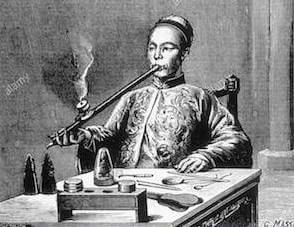
Here’s hoping that doesn’t turn out to be a pipe dream...
* * * *
* * * *
The upper image is courtesy of Ellison Onizuka – Wikipedia. Onizuka (1946-1986) was an American astronaut from Kealakekua, Hawaii, who successfully flew into space with the Space Shuttle Discovery on STS-51-C. He died in the destruction of the Space Shuttle Challenger, on which he was serving as Mission Specialist for mission STS-51-L. He was the first Asian-American to reach space.”
For this post I borrowed from 2014’s For Sunday of the July 4th weekend, On Independence Day, 2016, On Independence Day, 2018, and July 4, 2024 – and a “What would have happened?”?” Also – for some reason – On my first full day in Jerusalem, from June 2019.
I found some interesting reading when I Googled “freedom is dangerous…”
It’s the Same Old Song – Wikipedia gave some background. Best known for the 1965 Motown single by the Four Tops, the group’s tenor, Abdul “Duke” Fakir, recalled how the lyrics developed:
Lamont Dozier and I were both a little tipsy and he was changing the channels on the radio. He said, ‘It sounds like the same old song.’ And then he said, “Wait a minute.” So he took “I Can’t Help Myself (Sugar Pie Honey Bunch)” and reversed it using the same chord changes. The next day, we went to the studio and recorded it, and then they put it on acetate, shipped it out to disc jockeys across the country.
(Which goes to show that somethings a little “tipsy” can help creativity. Psalm 104:15, about God bringing forth food from the earth and “wine that gladdens the heart.”) Another note: “Pop music writers and bloggers have noted the similarity of the song’s main instrumental riff with the marimba riff in the Rolling Stones song ‘Under My Thumb‘ which was first released almost a year later, on April 15, 1966.” Which is one reason I love blogging: You learn lots of new stuff.
Wikipedia says a Mantra is “a sacred utterance, a numinous sound, a syllable, word or phonemes, or group of words (most often in an Indo-Iranian language like Sanskrit or Avestan) believed by practitioners to have religious, magical or spiritual powers.”
2 Corinthians 5:18 says “all things are from God, who reconciled us to himself through Christ, and gave us the ministry of reconciliation.”
The lower image is courtesy of Pipe Dream – Image Results. See also Pipe dream – Idioms … Free Dictionary which defines the term as a “fantastic notion or vain hope.” The idiom is an allusion to the “fantasies induced by smoking an opium pipe … used more loosely since the late 1800s.”
* * * *