Monthly Archives: January 2026

On PAUL’s Damascus Road Experience – 2026

*   *   *   *

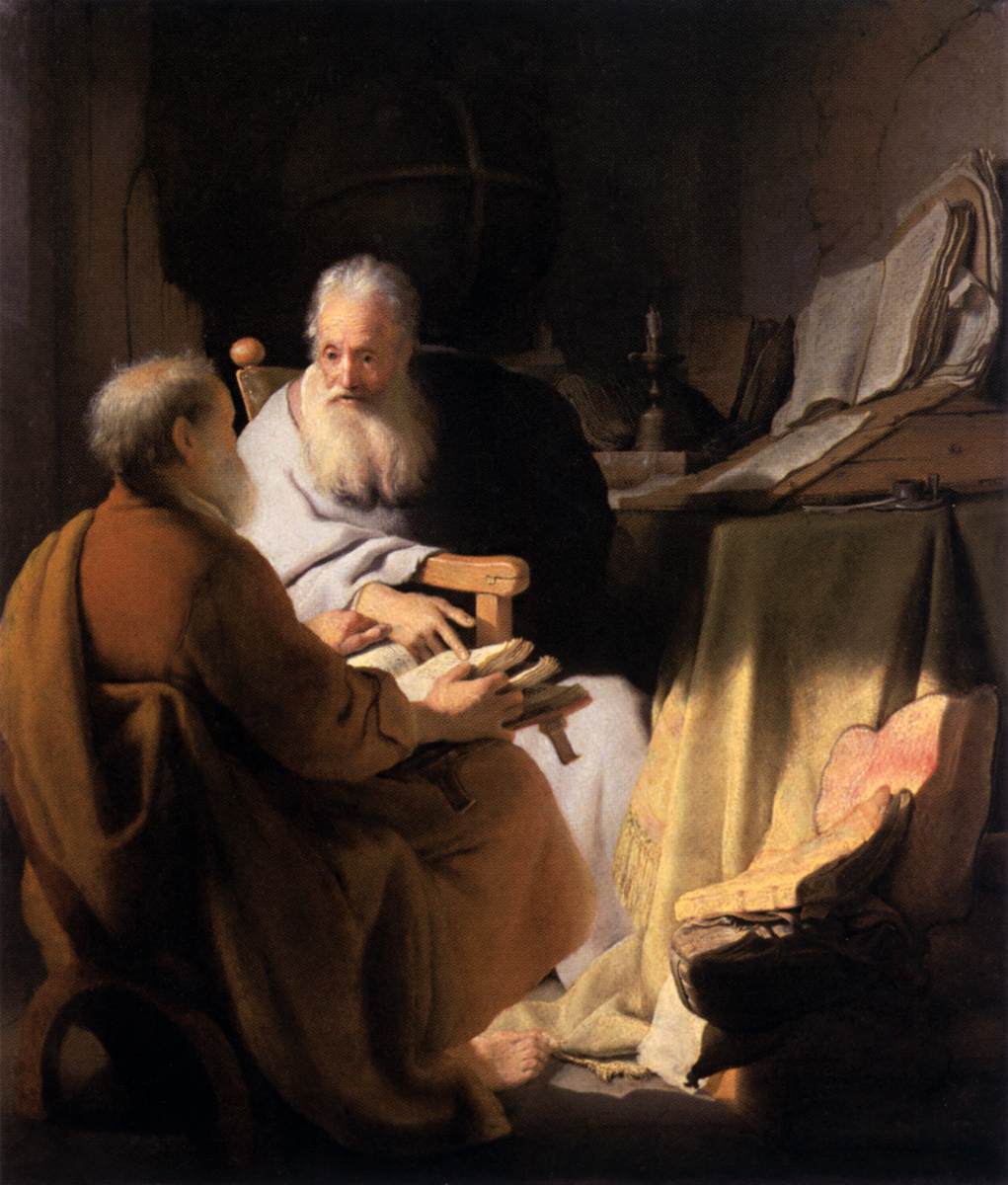
Two Scholars Disputing – after one of them had HIS Damascus Road Experience

*   *   *   *

Welcome to “read the Bible – expand your mind:”

The Book of Common Prayer says that by taking part in Holy Communion, Christians become “very members incorporate in the mystical body” of Jesus. The words “corporate” and “mystical” are key. They show that a healthy church has two sides, with the often-overlooked “mystic” side asking the question, “How do I experience God?” This blog tries to answer that.

It has four main themes. The first is that God will accept anyone. (John 6:37.) The second is that God wants us to live lives of abundance.(John 10:10.) The third is that Jesus wants us to read the Bible with an open mind. (As Luke 24:45 says: “Then He [Jesus] opened their minds so they could understand the Scriptures.”) The fourth theme – another one often overlooked – is that Jesus wants us to do even greater miracles than He did. (John 14:12.) 

And this thought ties them together:

The best way to live abundantly and do greater miracles than Jesus is: Read, study and apply the Bible with an open mind. For more see the notes or – to expand your mind – see the Intro.

In the meantime:

January 24, 2026 – The last post covered two major feast days in January, the Confession of St Peter on the 18th and the Conversion of St Paul on the 25th. It covered Peter confessing, so this post will cover “Paul’s converting.” Converting from a devout foe of the early Christian church to its most ardent spokesman. (Becoming second only to Jesus in helping spread the Good News.)

In plain words, they took different paths. Peter came to a position of authority from inside the church, but Paul got dragged kicking and screaming into his position of authority. Paul wrote of his former life as a zealous enemy of the budding Christian church in Galatians 1:13-14. (He said he was “extremely zealous for the traditions of my fathers.”) He “persecuted the church of God … and tried to destroy it.” But God changed his tune, and his name, from Saul to Paul.

As noted in Acts 7:57-8:3, “Saul was ravaging the church, and entering house after house, he dragged off men and women and committed them to prison.” Then came the Stoning of Stephen, and as the crowd threw their rocks “the witnesses laid their coats at the feet of a young man named Saul.” But then he had his Damascus Road Experience (as illustrated below). In other words, Paul went through a profound life-changing experience that changed him from skeptic to believer and advocate. And he was literally struck blind, for three days.

Of that episode, Wikipedia noted three different accounts, including Acts 9, 9-19:

[The] third discussion of Paul’s conversion occurs when Paul addresses King Agrippa, defending himself against the accusations of antinomianism that have been made against him. This account is briefer than the others. The speech here is again tailored for its audience, emphasizing what a Roman ruler would understand: the need to obey a heavenly vision, and reassuring Agrippa that Christians were not a secret society.

So, as I said Paul was “dragged kicking and screaming into his position of authority.” And from there he became “the most important person after Jesus in the history of Christianity.” From that position of authority, Paul noted that above all we as good Christians are called on to be “ministers of reconciliation.” In following his lead, we Americans should not be as polarized as we are now. Because as Paul said in Galatians 3:28, in Christ “there is no Jew or Greek, no male or female, no liberal or conservative.” (Well, that’s what he would write if he was here today.)

And speaking of current events, can you think of anyone today who could bring lots of people to Jesus, if only “they” could have a Damascus Road Experience?

*   *   *   *

*   *   *   *

The upper image is courtesy of www.canvasreplicas.com/Rembrandt.htm. See also Two Scholars Disputing by REMBRANDT Harmenszoon van Rijn. (I used it in the previous post, on Peter Confessing, in part because the two feast days are only a week apart and in the past, I’ve combined them.)

The Book of Common Prayer reference: The “corporate-mystical” prayer is on page 339, the post-communion prayer for Holy Eucharist, Rite I.

Feast days are designated days on the liturgical (church) calendar “set aside to commemorate events, saints, or doctrines that are important in the life of the Church. These can range from Solemnities, which are the highest-ranking feast days like Easter and Christmas, to optional memorials that celebrate lesser-known saints.” Feast Days: Celebrating the Church’s Calendar.

Note that both feast days – January 18 and 25 – fell on a Sunday and so were transferred to the following Monday. See Precedence, Rules of – The Episcopal Church: “Sunday takes precedence over all other feasts and observances of the church year. When a feast of our Lord or other major feast appointed cannot be observed because it occurs on a Sunday, the feast is normally transferred to the first convenient open day in the following week.”

For this post I borrowed from 2016’s Paul restored – from the Damascus Road, Paul gets his sight back, Peter confesses – 2024On Peter and Paul, working together – 2025, and links therein.

The actual link to Paul’s “DRE” is Conversion of Paul the Apostle – Wikipedia.

The lower image, by Caravaggio, is courtesy of Conversion on the Way to Damascus – Wikipedia.

The painting depicts this moment … except Caravaggio has Saul falling off a horse (which is not mentioned in the story) on the road to Damascus, seeing a blinding light and hearing the voice of Jesus. For Saul this is a moment of intense religious ecstasy: he is lying on the ground, supine, eyes shut, with his legs spread and his arms raised upward as if embracing his vision. 

*   *   *   *

As noted in the opening blurb, this blog has four main themes. The first is that God will accept anyone. (See John 6:37, with the added, “Anyone who comes to Him.”) This is a consistent theme throughout the Bible. From the Old Testament, Psalm 9:10, “You never forsake those who seek you, O Lord.” (In the Book of Common Prayer version.) The second is that God wants us to live abundantly.  (John 10:10.) The third is that we should do greater miracles than Jesus. (John 14:12). A fourth theme: The only way to do all that is read the Bible with an open mind:

…closed-mindedness, or an unwillingness to consider new ideas, can result from the brain’s natural dislike for ambiguity. According to this view, the brain has a “search and destroy” relationship with ambiguity and evidence contradictory to people’s current beliefs tends to make them uncomfortable… Research confirms that belief-discrepant-closed-minded persons have less tolerance for cognitive inconsistency

So in plain words, I take issue with what I call “Christian first graders.” Those who choose to stay in a kind of elementary-school first grade. See John the Baptist, ’24 – and “Christian First Graders,” for more. But the key point: “The Bible was designed to expand your mind,” not make it narrow. Also, there’s the idea that “Jesus was anything but negative. His goal was for you to grow and develop into all that you can be.” (For more on that see ABOUT THE BLOG, above.)

I’ve written on boot-camp Christians, the Literalists who never go “beyond the fundamentals.” But the Bible offers so much more than a narrow reading gives… (Unless you want to stay a buck private all your life…) Now, about “Boot-camp Christians” see Conservative Christian – “Career buck private?” The gist of that post: Starting the Bible is like Army Basic Training. You begin by“learning the fundamentals.” But after boot camp, you move on to Advanced Individual Training.” 

http://www.toywonders.com/productcart/pc/catalog/aw30.jpg

And as noted in “Buck private,” one of this blog’s themes is that if you want to be all that you can be, you need to go on and explore the “mystical side of Bible reading.*” In other words, exploring the mystical side of the Bible helps you “be all that you can be.” See Slogans of the U.S. Army – Wikipedia, re: the recruiting slogan from 1980 to 2001. The related image at left is courtesy of: “toywonders.com/productcart/pc/catalog/aw30.jpg.”

Re: “mystical.” Originally the “liturgical, spiritual, and contemplative dimensions of early and medieval Christianity.” Mysticism – Wikipedia, and the post On originalism.  (“What the Bible was originally about!”) See also Christian mysticism – Wikipedia, “In early Christianity the term ‘mystikos’ referred to three dimensions, which soon became intertwined, namely the biblical, the liturgical and the spiritual or contemplative… The third dimension is the contemplative or experiential knowledge of God.” As to that “experiential” aspect, see also Wesleyan Quadrilateral – Wikipedia, on the theological reflection method using four sources of spiritual development: scripturetradition, reason, and “Christian experience.”

For an explanation of the Daily Office – where “Dorscribe” came from – see What’s a DOR?

*   *   *   *

On Peter Confessing – 2025

*   *   *   *

“Scholars Disputing” – but Peter and Paul worked together for the common good… 

*   *   *   *

Two major feast days are coming up, January 18’s Confession of St Peter and January 25’s Conversion of St Paul. Taking the “confession” first, January 18 celebrates Peter confessing that Jesus is the Christ (the Jewish Messiah): “Thou art the Christ, Son of the Living God.” In other words we recall how Peter was “led by God’s grace to acknowledge Jesus as the Christ” And we join with him – and with all other Christians – in “hailing Jesus as our Lord, God, and Savior.”

[The] Apostle Peter proclaims Jesus to be Christ – the Messiah. The proclamation is described in the three Synoptic GospelsMatthew 16:13-20Mark 8:27–30 and Luke 9:18–20. The proclamation of Jesus as Christ is fundamental to Christology … and Jesus’ acceptance of the title is a definitive statement for it in the New Testament narrative.

Note that later this year, on June 29, we have a Feast Day that remembers both Peter and Paul, together. At that time we remember that both men were martyred at about the same time, in Rome, on or about 65 A.D. But here on the other side of the liturgical year – in the dead of winter – we remember both men separately. Or more precisely, we remember how these two “Pillars of the Church” took two completely different paths to the same destination.

On 18 January we remember how the Apostle Peter was led by God’s grace to acknowledge Jesus as the Christ (Matthew 16:13-20), and we join with Peter, and with all Christians everywhere, in hailing Jesus as our Lord, God, and Savior.

(See Confession of St. Peter, from the Satucket website.)  Put another way, the January 18 Feast Day commemorates Peter being the first apostle “to confess Jesus as Messiah.”

But at as indicated by the painting at the top of the page, the two men did have their differences. See for example, Galatians 2:11-14, when Paul corrected Peter at Antioch: “When Peter came to Antioch, I told him face to face that he was wrong.” On the other hand, Peter wasn’t too crazy about Paul’s style of writing. See 2d Peter 3:16: “He writes the same way in all his letters.” (Pretty much like the lawyer Paul was.) “His letters contain some things that are hard to understand, which ignorant and unstable people distort, as they do the other Scriptures, to their own destruction.” (Which is why God made John 6:37 and Romans 10:9.)

But despite their differences, Peter and Paul managed to work together, just like Ronald Reagan and Tip O’Neill. As one site noted, despite starkly different ideologies, Reagan and House Speaker O’Neill offered a model of political friendship. That was especially evident after the assassination attempt. O’Neill was one of the first people Reagan let in to see him at George Washington University Hospital. When O’Neill entered the room he walked over to the bed, “grasped both the president’s hands, and said, God bless you, Mr. President.’”

The president still seemed groggy … with lots of tubes and needles running in and out of his body. But when he saw Tip, he lit up and gave the speaker a big smile, and said, ‘Thanks for coming, Tip.’ Then, still holding one of the president’s hands, the speaker got down on his knees and said he would like to offer a prayer for the president, choosing the 23rd Psalm.” Then O’Neill kissed Reagan on the forehead.

Another tidbit: Reagan often answered O’Neill’s calls, “Tip, is it after 6 p.m.?” The point being that Reagan and O’Neill might fight like cats and dogs during work hours, but “after 6, these two enemies enjoy each other’s company.” So, wouldn’t it be wonderful if making America great again meant a return to those “traditional family values?” On the other hand, you might say that’s all part of being a good Christian. (Romans 5:6 and Matthew 5:44.)

Reagan and Ted Kennedy were also able to do that, despite their intense political differences. Kennedy said of Reagan: “He’s absolutely professional.  When the sun goes down, the battles of the day are really gone.” Or as one writer said, “Heated rhetoric was part of the game of government. [But w]hen the day was over, win or lose, everyone could have a drink together.”

I’ll write about God giving Paul his Damascus Road Experience in a week or so. (Turning him from an enemy of the church to its most ardent advocate.) In the meantime, wouldn’t it be nice if we could go back to this kind of working together, in religion and politics?

*   *   *   *

*   *   *   *

The upper image is courtesy of www.canvasreplicas.com/Rembrandt.htm.  See also Two Scholars Disputing by REMBRANDT Harmenszoon van Rijn.

The Book of Common Prayer reference: The “corporate-mystical” prayer is on page 339, the post-communion prayer for Holy Eucharist, Rite I.

Feast days are designated days on the liturgical (church) calendar “set aside to commemorate events, saints, or doctrines that are important in the life of the Church. These can range from Solemnities, which are the highest-ranking feast days like Easter and Christmas, to optional memorials that celebrate lesser-known saints.” Feast Days: Celebrating the Church’s Calendar.

For this post I borrowed from Paul gets his sight back, Peter confesses – 2024, On Peter and Paul, working together – 2025, and links therein.

On Paul’s style of writing see Understanding Paul’s Difficult Scriptures. On Paul as lawyer see Topical Bible: The Lawyer: “In the context of the Bible, the term ‘lawyer’ refers to an expert in the Mosaic Law, often synonymous with a scribe or teacher of the law… The Apostle Paul, formerly known as Saul of Tarsus, was a Pharisee and well-versed in the law. His background as a lawyer-like figure provided him with a deep understanding of Jewish law.” 

Romans 10:9 says, “if you confess with your mouth that Jesus is Lord and believe in your heart that God raised him from the dead, you will be saved.” Period, no ifs, ands or buts. To me that’s pretty much sums up the whole point of the Bible.

The quote about Kennedy and “heated rhetoric” is courtesy of Battle for Justice: How the [Robert] Bork Nomination Shook America, by Ethan Bronner, Anchor Book edition (1989), at pages 103-104. 

The lower image is courtesy of the Ronald Reagan and Tip O’Neill link in the main text of the January 2025 post noted above.

*   *   *   *

On Epiphany ’26, Plough Monday and Plough Pudding

*   *   *   *

January 6 – the last of the 12 Days of Christmas – leads in time to “Plough Monday…”

*   *   *   *

January 12, 2026 – The last post talked about Christmastide – also called the 12 days of Christmas – that begins on December 25 and ends on January 6 with the Feast of Epiphany. (Which also celebrates the visit of the Wise Men – the Magi – and their bringing gifts to the infant Jesus.) But January 6 also marks the start of the Season of Epiphany, which typically ends with Ash Wednesday and the start of Lent. (This year Ash Wednesday comes on February 18, and Lent ends on April 5, Easter Sunday.) But we’re getting ahead of ourselves.

Each year, January 6 is the traditional day to celebrate the Feast of the Epiphany.  (In this sense, an “annual religious celebration.”) See also the Satucket piece on Epiphany:

“Epiphany” is a word of Greek origin, related to such English words as “theophany,” “phenotype,” and “phenomenon.”  It means an appearance, a displaying, a showing forth, a making clear or public or obvious.  On this day, Christians have traditionally celebrated the making known of Jesus Christ to the world.

Note that “making Jesus known to the world.” In other words, the Epiphany celebrates the world getting “first introduced to Jesus.” And aside from this feast day, January 6 and others close to it – which sometimes overlap – have other names like Plough MondayThree Kings Day (as in, “We Three Kings of Orient are”), and Twelfth Night. And now for some lesser-known details.

Plough Monday comes right after Plough Sunday, of which more below. And Plough Monday – following the first Sunday after January 6 – once marked the start of the agricultural work year in Merry Olde England. (References to it go back as far as the 15th century.) And as noted that first Sunday after the Epiphany is Plough Sunday, when a ploughshare was brought into the local Christian church, with prayers for blessing human labor, tools, and the land. However:

Plough Monday customs declined in the 19th century. The advent of mechanised farming meant that agricultural workers were less numerous and relatively better paid, and thus did not have to beg for money in the winter. Additionally, the rowdy and threatening behaviour of the plough gangs was increasingly controversial in this period, and there was pressure from authorities to stop, or moderate their excesses. (Emphasis added.)

All of which bears some explaining. For starters, the Church of England had a long church service on Plough Sunday, with prayers especially for a bountiful harvest in the season to come. The service included a prayer for the Blessing of the Plough: “By your [God’s] blessing, let this plough be a sign of all that you promise to us. Prosper the work of our hands, and provide abundant crops for your people to share.” It also helps to remember that back then life was generally “nasty, brutish and short.” Mostly living hand to mouth, meaning if the harvest was bad, people starved. Which helps explain the rowdy behavior authorities looked down on.

So Plough Sunday was a way to celebrate – and maybe boost – farming and farm workers. (“On whom” the community relied on to survive.) But since you couldn’t work on Sundays – back in the good old days – the new agricultural year didn’t really start until the next work day, Plough Monday. (When the farm-workers could start plowing again.)

The point of all this – Twelfth Night, Plough Sunday, Plough Monday, etc. – was to give those hard-working farm-workers one last big blast before getting back to work. (Resuming work after the long winter holiday season when little farming could be done.) And as such it was a good occasion for the general tomfoolery shown in the image at the top of the page. (Which included enough rowdy, boisterous behavior to get the celebrations banned in some places):

In some areas, particularly in northern England and East England, a plough was hauled from house to house in a procession, collecting money. They were often accompanied by musicians, an old woman or a boy dressed as an old woman, called the “Bessy,” and a man in the role of the “fool.”

And finally, people celebrated Plough Monday with Plough Pudding, shown below: A “boiled suet pudding, containing meat and onions. It is from Norfolk and is eaten on Plough Monday.” But again, the Epiphany “celebrates the revelation of God the Son as human in Jesus Christ:”

The observance [of Epiphany] was a general celebration of the manifestation of the Incarnation of Jesus Christ. It included the commemoration of his birth; the visit of the Magi[and] all of Jesus’ childhood events, up to and including his baptism in the Jordan by John the Baptist

And the Epiphany starts the Epiphany Season, the four to nine weeks from January 6 through the Tuesday before Ash Wednesday. The season’s Gospel readings describe events manifesting the divinity of Jesus, including the coming of the Magi and Jesus’ baptism. The gospels for the other Sundays of the Epiphany season describe the wedding at Cana, the calling of the disciples, and various miracles and teachings of Jesus. The Last Sunday after the Epiphany is always devoted to the Transfiguration. Jesus’ identity as the Son of God is dramatically revealed.

And that’s the Reason for the [Epiphany] Season. In the meantime, enjoy the Plough Pudding.

*   *   *   *

*   *   *   *

The upper image is courtesy of the December 28, 2015, post, “Here’s to Plough Monday!”

The Book of Common Prayer reference: The “corporate-mystical” prayer is on page 339, the post-communion prayer for Holy Eucharist, Rite I.

Feast days are designated days on the liturgical (church) calendar “set aside to commemorate events, saints, or doctrines that are important in the life of the Church. These can range from Solemnities, which are the highest-ranking feast days like Easter and Christmas, to optional memorials that celebrate lesser-known saints.” Feast Days: Celebrating the Church’s Calendar.

Re: Magi. From the original Greek μάγοι or ‘magoi,’ the term originally referred to the Iranian priestly caste of Zoroastrianism. “Within this tradition, priests paid particular attention to the stars and gained an international reputation for astrology, which was at that time highly regarded as a science. Their religious practices and astrological abilities caused derivatives of the term Magi to be applied to the occult in general and led to the English term magic.”

For this post I borrowed from posts including 2017’s To Epiphany – “and BEYOND,” Happy Epiphany – 2018, and “Happy Epiphany (season) – 2025!” For a more personal, maybe morbid note see Epiphany ’23, the end of Christmas and “farewell Mi Dulce.” The latter included links to both Infinite Frogs and the Infant [Jesus] of Prague – Wikipedia. And the quote, “as they say, ‘in teaching you will learn.'” And that through the lady in question, “I learned that there actually are websites for Infinite Frogs.”

Re: “Olde England.” See Merry England Explained: In one sense it “was not a myth. They really did used to dance around the maypole, feast all day and drink beer all night. And not only was it more merry, the merry-making was actually encouraged by the Church, particularly in the later medieval period.” But in another sense, it “may be treated both as a product of the sentimental nostalgic imagination and as an ideological or political construct, often underwriting various sorts of conservative world-views. Favourable perceptions of Merry England reveal a nostalgia for aspects of an earlier society that are missing in modern times.” The link goes into great detail.

The link Twelfth Night (holiday) – Wikipedia details some of the confusion around deciding which night was “twelfth,” as in January 5 or 6. It also noted that “Twelfth Night in the Netherlands became so secularised, rowdy, and boisterous that public celebrations were banned by the Church.”

Note: Although “reason for the season” is usually applied to Christmas, I’d say it applies to all seasons in the Liturgical year, “each with their own mood, theological emphases, and modes of prayer.” They all culminate in Easter Sunday, per Romans 10:9: “If you declare with your mouth, ‘Jesus is Lord,’ and believe in your heart that God raised him from the dead, you will be saved.” (Emphasis added.)

The lower image is courtesy of Norfolk Plough Pudding for Plough Monday – Lavender and Lovage.

*   *   *   *