Monthly Archives: July 2025

On James, the Pilgrim’s Saint – 2025

*   *   *   *

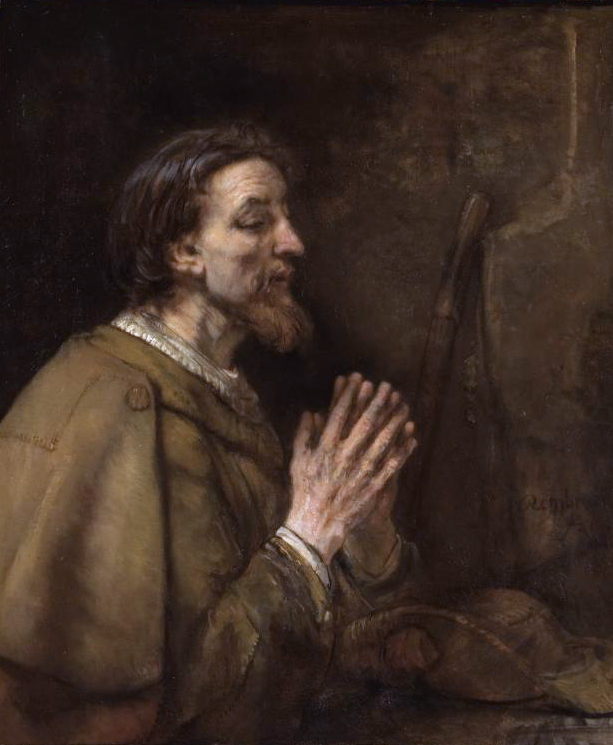
St. James the Greater, dressed and accoutred as the quintessential Pilgrim

*   *   *   *

July 24, 2025 – Friday, July 25, is the feast day for James, son of Zebedee. He was one of the 12 Apostles, and tradition says he was the first to be martyred. (Around 44 A.D.) He was son of Zebedee and Salome, and brother of John the Apostle. He is James the Greater or James the Great to distinguish him from James, son of Alphaeus. (There were as many as eight “James” in the New Testament.) I’ve noted in past posts that this “July 25” James is also the Patron Saint of Pilgrims, which takes us back to my 2016 post St. James, Steinbeck, and sluts:

I’ve gone on a few pilgrimages in my time, and am fixing to go on another one… And in the Sluts post, I noted that in the spiritual literature of Christianity, the concept of pilgrim and pilgrimage may refer to “the inner path of the spiritual aspirant from a state of wretchedness to a state of beatitude…”

So what makes this timely? Just that this coming August I will do yet another pilgrimage. This one in England, hiking the Pilgrims’ Way, also known as the Canterbury Trail. (From Winchester to the cathedral in Canterbury. 16 days, with 14 hiking and two days off to relax a bit.) In doing so I’ll be relying on James as my patron saint. (Hey, I’ll take all the help I can get.)

Perhaps the best known pilgrim path is Camino de Santiago, which translates “Way of St. James.” It’s actually a network of such paths, mostly in Spain, and the Spanish word for James is “Iago.” (Thus, “Sant Iago.”) The two most popular Caminos are the Camino Francés, or French Way, and the Camino Portugués, or Portuguese Way. (And I’ve done both). They all lead to the “shrine of the apostle James in the cathedral of Santiago de Compostela in Galicia in northwestern Spain, where tradition holds that the remains of the apostle are buried.”

But this August my goal is the shrine of Thomas Becket – a.k.a. St. Thomas of Canterbury – at the same-named cathedral in KentSo what’s the big deal about pilgrimage? One definition is “a journey to a holy place, which can lead to a personal transformation, after which the pilgrim returns to their daily life.” Then there’s what Pope (Emeritus) Benedict XVI said:

To go on pilgrimage is not simply to visit a place to admire its treasures of nature, art or history. To go on pilgrimage really means to step out of ourselves in order to encounter God… Above all, Christians go on pilgrimage to Compostela [for example], which, associated with the memory of Saint James, has welcomed pilgrims from throughout the world who desire to strengthen their spirit with the Apostle’s witness of faith and love.

But back to James himself: He was one of the first disciples to join Jesus – see Matthew 4:21-22 and Mark 1:19-20 – and one of only three who Jesus chose to witness His Transfiguration. Tradition says he went to Spain to spread the Gospel there. (He’s also patron saint of Spain and Portugal.) Specifically, that tradition tells of an event on January 2, 40 A.D.:

[T]he Virgin Mary appeared to James on the bank of the Ebro River at Caesaraugusta, while he was preaching the Gospel in Iberia.  She appeared upon a pillar, Nuestra Señora del Pilar, and that pillar is conserved and venerated within the present Basilica of Our Lady of the Pillar, in Zaragoza, Spain. Following that apparition,* St. James returned to Judea, where he was beheaded by King Herod Agrippa I in the year 44.

Still more tradition: Legend holds that after his beheading by Herod, his remains were carried by boat from Jerusalem to northern Spain, where he was buried. (In what is now Santiago de Compostela, under the cathedral named for him.) And over the years Santiago has been the goal for hordes of pilgrims – hiking, biking or on horseback – who “follow its routes as a form of spiritual path or retreat for their spiritual growth.” Which is why – this time each year – I refer to St. James as the Patron Saint of Pilgrims. Which brings us back to Canterbury, and Becket.

In 1162 Henry II, King of England appointed Becket – his friend and sometime drinking companion – as Archbishop of Canterbury. (Mostly because Henry thought the new archbishop would be more amenable to his interests.) Becket served as archbishop from 1162 until his death in 1170, and that death was precipitated by Henry’s disappointment. (Briefly, after Henry appointed him, Becket actually started to take his new job seriously.)

It took six years of long drawn-out drama – from 1164 to 1170 – but eventually Henry got so mad that he uttered the question so often attributed to him: “‘Will no one rid me of this turbulent priest?’ This inspired four knights to set off from the king’s court in Normandy to Canterbury, where on 29 December 1170, they murdered Becket.” But soon after his death, Henry regretted his words and in 1174 did a public act of penance at the site. That and later miracles said to occur there “transformed Canterbury Cathedral into one of the most important pilgrimage destinations in Europe.” And that’s where I’m heading in August.

Aside from all that, Becket was canonized by Pope Alexander III and so he is venerated as saint and martyr by the Catholic Church and the Anglican Communion. The latter includes the Episcopal Church – of which I am a member – and the Archbishop of Canterbury is the head of that worldwide Communion. So again, “that’s where I’m heading in August.”

I may not meet the Archbishop, but I will be able to see the Shrine of Thomas Becket. (Again; “we” visited it back in May.) Either way, as Psalm 84:4 says of God – in the BCP version – “Happy are the people whose strength is in you! Whose hearts are set on the pilgrim’s way.”

*   *   *   *

*   *   *   *

The upper image is courtesy of James, son of Zebedee – Wikipedia, with the full caption, “Saint James the Elder by Rembrandt[.]  He is depicted clothed as a pilgrim;  note the scallop shell on his shoulder and his staff and pilgrim’s hat beside him.”

The Book of Common Prayer reference: The “corporate-mystical” prayer is on page 339, the post-communion prayer for Holy Eucharist, Rite I.

Feast days are designated days on the liturgical (church) calendar “set aside to commemorate events, saints, or doctrines that are important in the life of the Church. These can range from Solemnities, which are the highest-ranking feast days like Easter and Christmas, to optional memorials that celebrate lesser-known saints.” Feast Days: Celebrating the Church’s Calendar.

For this post I borrowed from – or just reread – the following posts. 2014’s On returning from a pilgrimage – and the coming holidays, on an eight-day canoe trip 12 miles out in the Gulf of Mexico, camping on the occasional salt marsh and islands including Half-moon Island, Cat Island and the Ship Islands. (Primitive camping, as in “dig a hole and squat.”) Also from 2017’s On a pilgrimage in Spain, a prequel to my first official Camino hike: “In less than 24 hours I’ll be winging my way from Atlanta to Madrid… From there I’ll take a train to Pamplonafrom whence my brother and I will hike 450 miles in 30 days.  (On the Camino de Santiago.) Also, from August of 2019, St. James – and “my next great pilgrimage,” which cited the 2016 post, St. James, Steinbeck, and sluts. (And by the way, Robert Louis Stevenson used the now-offensive word in his 1878 book Travels with a Donkey in the Cévennes, but it had a different meaning back then.)

I also borrowed from – or just reread – from October 2019, On Saints James, Luke – and the lovelies of Portugal, which noted a hike on the Portuguese Camino, and also that there were between six and eight “James” in the New Testament. The post Saints Luke, and James of Jerusalem – 2021 noted a 17 day and 177 mile hike, from Saint-Jean in France, “over the daunting Pyrenees”to Burgos in Spain. And On James, “the Pilgrim’s Saint” – 2024.

“Compostela” in the Pope Benedict quote refers to Santiago de Compostela, the city with the cathedral said to hold the remains of St. James the Greater. In pilgrim terms, a “compostela” is the certificate “awarded to pilgrims for the past 1000 years. It is written in Latin and attests to the fact that you have successfully completed a religious pilgrimage… Do bear in mind that it is written in Latin, a bit like lawyers’ language.” The Compostela Translated into English – Camino de Santiago.

Re: Jamesvision. The quoteSt. James returned to Judea seems to overlook the three-to-four years that he actually spent in Spain. But there is another legend, of “Our lady of the boat:”

According to tradition, after Jesus’ crucifixion, St. James traveled to the Iberian Peninsula to spread Christianity. His efforts were met with limited success, and he became discouraged… One night, while he was praying on the coast near Muxía, the Virgin Mary appeared to him… She arrived in a stone boat, accompanied by angels, to encourage him to continue his missionary work. The boat’s sail, mast, and hull were said to have turned into three large stones, which are still present near the sanctuary today… This miraculous event bolstered St. James’ resolve, and he continued his mission, eventually becoming the patron saint of Spain.

From Muxía and Our Lady of the Boat – ethanrayd.blogspot.com. BTW: That’s a place I visited during my 2024 hike in Spain, on the Camino Finisterre and Camino Ingles: Route, Map & Stages | English Way – Pilgrim. But strangely enough I didn’t do any posts on that pilgrimage; a lapse I will have to rectify when I get back home this September.

On Thomas Becket, see also Becket controversy – Wikipedia. As to Henry regretting his words, see Thomas Becket: the murder that shook the Middle Ages: “Henry II, in a public act of penance for his involvement in the murder, visited the tomb in 1174, granting royal approval to Becket’s cult. Becket’s death and subsequent miracles transformed Canterbury Cathedral into one of the most important pilgrimage destinations in Europe.”

Re: The pilgrim’s way psalm. In the BCP psaltery it is Psalm 84:4. In the Bible Hub version it is Psalm 84:5, with the New Living Translation saying, “What joy for those whose strength comes from the LORD, who have set their minds on a pilgrimage to Jerusalem.” With Commentary adding:

The concept of pilgrimage in this context refers to the journey to the temple in Jerusalem, a central aspect of Jewish worship and religious life. Pilgrimages were times of spiritual renewal and reflection… The heart being set on pilgrimage indicates a deep, inner desire to seek God and His presence, reflecting a commitment to spiritual growth and devotion. This journey can also be seen as a metaphor for the Christian life, which is often described as a journey or walk of faith (Hebrews 11:13-16). The pilgrimage motif connects to the broader biblical narrative of God’s people as sojourners and exiles, looking forward to a heavenly homeland..

The lower image is courtesy of Canterbury Cathedral Shrine Of Thomas Becket – Image Results.

*   *   *   *
On Mary “Maudlin” – 2025

*   *   *   *

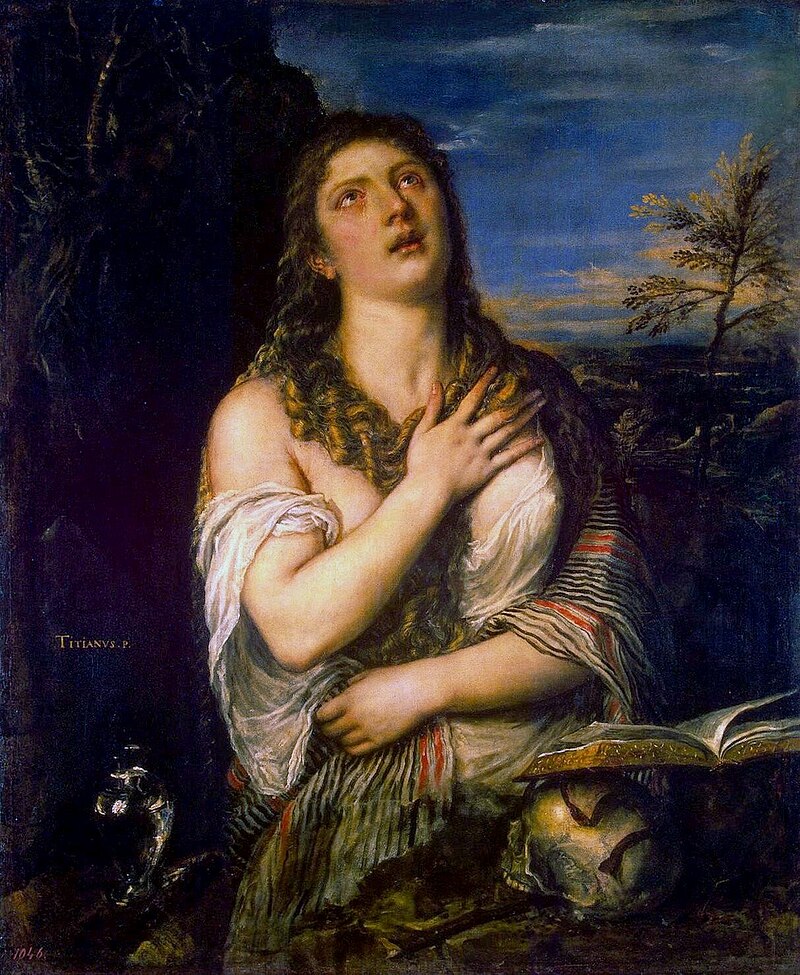
An accurate portrayal of Mary Magdalene – or “little more than pious pornography?”

*   *   *   *

July 19, 2025 – Next Tuesday, July 22, is the Feast Day for Mary Magdalene. Which means that for the first time in a really long time I’m doing a Feast-Day post before that day rolls around. (I won’t explain it “ex post facto.”) Turning to this Mary – the name was quite common in Jesus’ time – she was said to be a prominent follower of Jesus and to have been healed by Him. She is also said to have supported His ministry financially, and was there at the Crucifixion and Burial. But while she played a key role among his female disciples, for the most part “there is limited information about her life.” And much of that was limited information was bad.

As the Collect for her day says, Jesus “restored Mary Magdalene to health of body and of mind, and called her to be a witness of his resurrection.” She did that, and set an example for us all.

And she did all that despite what some said was a sordid past and a really lousy reputation.

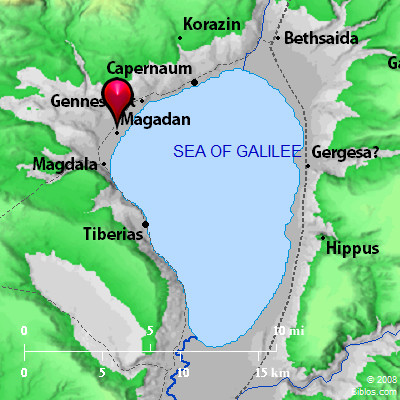
For starters, “Mary” was as noted an extremely common name at the time. This particular Mary was said to have been born in Magdala, which is where she got her name: “Mary from Magdala,” or Magdalene. Unfortunately it’s not clear where Magdala is, but most scholars assume it’s “the place the Talmud calls Magdala Nunayya.” (“Magdala of the fishes.”) And the consensus is also that this is the site noted in Matthew 15:39, on what happened after Jesus fed the 4,000:

And those who ate were four thousand men, besides women and children. And sending away the crowds, Jesus got into the boat and came to the region of Magadan. [Below left.]

As Wikipedia noted, this particular Mary has long had a bad reputation. In Western Christianity, she’s known as “repentant prostitute or loose woman.” But the consensus now is that such claims are unfounded. Consider what Isaac Asimov said.

He first noted that Magdala is usually considered a town on the western shore of the Sea of Galilee, and may have been a suburb of Tiberias. He also noted this Mary “has been considered, in tradition, to have been a prostitute and to have repented as a result of her meeting with Jesus.” (Thus the “devils” in Mark 16:9 and Luke 8:2 “might then be considered devils of lust.”)

Asimov also noted some confusion that arose from the placement of the story of Mary’s “devils” coming right after the story of the woman washing the feet of Jesus with her tears and drying them with her hair. Wikipedia also noted there’s long been a mix-up between Mary from Magdala and the “unnamed sinner who anoints Jesus’ feet in Luke 7:36-50:”

Mary Magdalene, the anointing sinner of Luke, and Mary of Bethany, who in John 11:1-2 also anoints Jesus’ feet, were long regarded as the same person. Though Mary Magdalene is named in each of the four gospels … none of the clear references to her indicate that she was a prostitute or notable for a sinful way of life, nor link her with Mary of Bethany.

Asimov put it this way: The sinner in Luke 7:36-50 “was, indeed, a prostitute in all likelihood,” but there was no direct link in the Bible between this woman and Mary Magdalene. He added that to be “possessed by devils” – as this Mary was said to be – would be considered today as “mental illness, rather than anything else.” Thus to Asimov, Mary Magdalene would be more accurately considered “a cured madwoman rather than a reformed prostitute.”

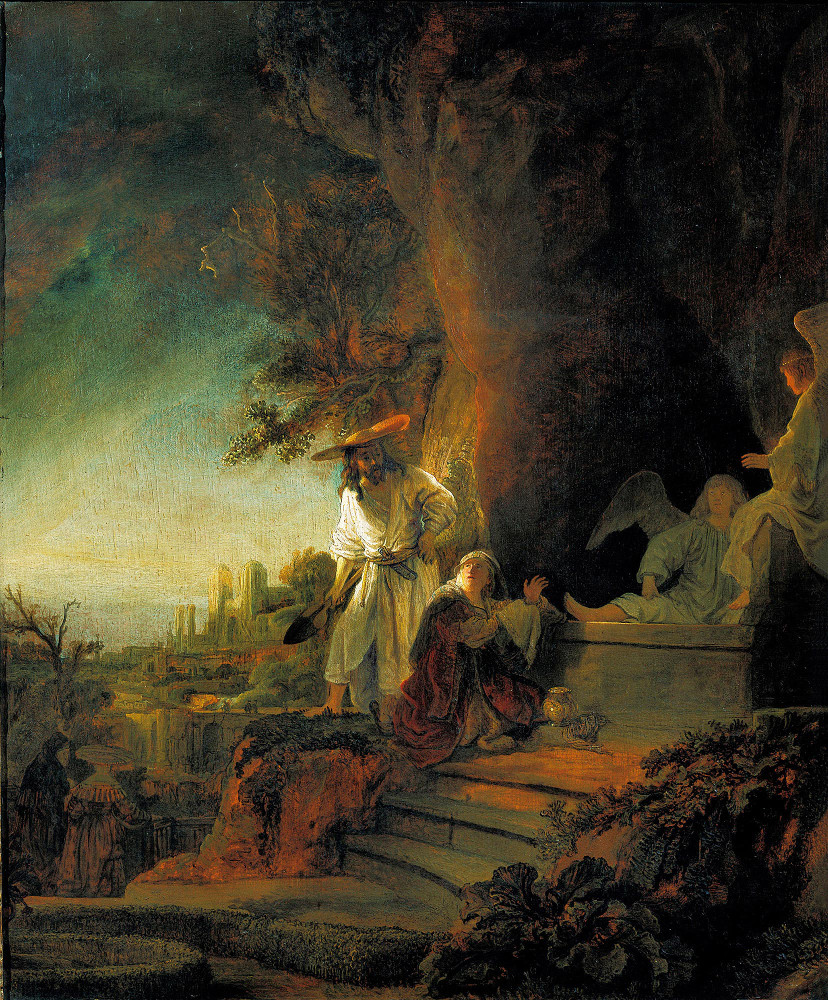
But wait, there’s more! She also gave us – inadvertently – the negative term “maudlin,” meaning effusively sad, full of self-pity or “extremely sentimental.” (“Maudlin” is an alteration of the name Magdalene, referring to this Mary as “frequently depicted as a tearful penitent,” as shown in the painting above.) But she overcame all that bad press by her own series of transforming pilgrimages. Unfortunately, much of that change-of-opinion happened long after she died.

That posthumous journey – in its way – led “to a personal transformation,” a transforming of how we see Mary today. For example, Mary of Magdala | FutureChurch noted that for centuries she was “perhaps the most maligned and misunderstood figure in early Christianity:”

Since the fourth century, she has been portrayed as a prostitute and public sinner…   Paintings, some little more than pious pornography, reinforce the mistaken belief that sexuality, especially female sexuality, is shameful, sinful, and worthy of repentance. Yet the actual biblical account of Mary of Magdala paints a far different portrait than that of the bare-breasted reformed harlot of Renaissance art.

But if you think about it – and read the Gospels – this Mary showed tons more courage than the male disciples when push came to shove. While those 11 men cowered in their room, hiding lest the Romans punish them as well, Mary alone went to the empty tomb. John 20:1: “Early on the first day of the week, while it was still dark, Mary Magdalene went to the tomb and saw that the stone had been removed from the entrance.” Thus one indisputable fact about Mary is that she was both the first person to visit the empty tomb and the first person to see the risen Jesus. (John 20:11-16.) That’s why St. Augustine called her the “Apostle to the Apostles.”

Then too that may account for all the stories of her “sordid past.” Did jealous men – then and later – try to cover up their own cowardice or their own bias, by sullying her reputation? So one lesson from all this? Keep on “pilgriming.” Good results can keep coming even after you die!

But the important thing to remember is that this Mary personally experienced the Risen Jesus, and so was the first among the millions who’ve had that experience. As the Wesleyan Quadrilateral says, aside from Bible itself, a personal experience of the Risen Jesus “is the strongest proof of Christianity.” And Mary of Magdala was the first of all that followed.

*   *   *   *

The Risen Christ Appearing to Mary Magdalen, by Rembrandt  (1638)…

*   *   *   *

The upper image is courtesy of wikipedia.org/wiki/Penitent_Magdalene_(Titian,_1565):

The Penitent Magdalene is a 1565 oil painting by Titian of saint Mary Magdalene, now in the Hermitage Museum in Saint Petersburg.  Unlike his 1533 version of the same subject, Titian has covered Mary’s nudity and introduced a vase, an open book and a skull as a memento mori.  Its coloring is more mature than the earlier work, using colors harmoni[z]ing with character.  In the background the sky is bathed in the rays of the setting sun, with a dark rock contrasting with the brightly lit figure of Mary.

That is, Titian did a “racier” version in 1533. See Penitent Magdalene (Titian, 1533) – Wikipedia. Also, for more on this Mary see also MARY MAGDALENE, Bible Woman: first witness to Resurrection, and What Did Mary Magdalene look like?

The Book of Common Prayer reference: The “corporate-mystical” prayer is on page 339, the post-communion prayer for Holy Eucharist, Rite I.

Feast days are designated days on the liturgical (church) calendar “set aside to commemorate events, saints, or doctrines that are important in the life of the Church. These can range from Solemnities, which are the highest-ranking feast days like Easter and Christmas, to optional memorials that celebrate lesser-known saints.” Feast Days: Celebrating the Church’s Calendar.

In a pure legal sense, “ex post facto” refers to a law that “retroactively changes the legal consequences or status of actions that were committed, or relationships that existed, before the enactment of the law. In criminal law, it may criminalize actions that were legal when committed.” (Wikipedia.) But the original Latin translates “(from) a thing done afterward.” Legal Information Institute.

For this post I borrowed from 2014’s On Mary Magdalene, “Apostle to the Apostles,” 2023’s St. James (2023), Pilgrimage, and “Maudlin’s Journey.” See also Mary Magdalene – Wikipedia.

Re: Isaac Asimov. The quotes on Mary are from Asimov’s Guide to the Bible (Two Volumes in One),  Avenel Books (1981), at pages 899-902. Asimov (1920-1992) was “an American author and professor of biochemistry at Boston University, best known for his works of science fiction and for his popular science books. Asimov was one of the most prolific writers of all time, having written or edited more than 500 books and an estimated 90,000 letters and postcards.” His list of books included those on “astronomymathematics, the BibleWilliam Shakespeare’s writing, and chemistry.” He was a long-time member of Mensa, “albeit reluctantly;  he described some members of that organization as ‘brain-proud and aggressive about their IQs.’” See Isaac Asimov – Wikipedia.

Re: Experiencing the Risen Jesus. See Wesleyan Quadrilateral – Wikipedia, referring to “a methodology for theological reflection that is credited to John Wesley, leader of the Methodist movement in the late 18th Century… This method based its teaching on four sources as the basis of theological and doctrinal development, scripturetradition, reason, and experience.”  Also, a complete quote:

Apart from scripture, experience is the strongest proof of Christianity… Wesley insisted that we cannot have reasonable assurance of something unless we have experienced it personally. [He] was assured of both justification and sanctification because he had experienced them in his own life. What Christianity promised … was accomplished in his soul. Furthermore, Christianity (considered as an inward principle) is the completion of all those promises. Although traditional proof is complex, experience is simple: “One thing I know; I was blind, but now I see.” Although tradition establishes the evidence a long way off, experience makes it present to all persons. As for the proof of justification and sanctification Wesley states that Christianity is an experience of holiness and happiness, the image of God impressed on a created spirit, a fountain of peace and love springing up into everlasting life.

The lower image is courtesy of File: Rembrandt – The Risen Christ Appearing to Mary Magdalen.  See also On Easter Season – AND BEYOND.

*   *   *   *

Independence Day 2025 – and a Call to Competition…

*   *   *   *

 Ellison Shoji Onizuka, an American hero, astronaut – and philosopher of freedom…

*   *   *   *

Welcome to “read the Bible – expand your mind:”

The Book of Common Prayer says that by sharing Holy Communion, Christians become “very members incorporate in the mystical body” of Jesus. The words “corporate” and “mystical” are key. They show that a healthy church has two sides, with the often-overlooked “mystic” side posing the question, “How do I experience God?” This blog will try to answer that.

It has four main themes. The first is that God will accept anyone. (John 6:37.) The second is that God wants us to live lives of abundance.(John 10:10.) The third is that Jesus wants us to read the Bible with an open mind. (As Luke 24:45 says: “Then He [Jesus] opened their minds so they could understand the Scriptures.”) The fourth theme – another one often overlooked – is that Jesus wants us to do even greater miracles than He did. (John 14:12.) 

And this thought ties them together:

The best way to live abundantly and do greater miracles than Jesus is: Read, study and apply the Bible with an open mind. For more see the notes or – to expand your mind – see the Intro.

In the meantime:

July 7, 2025 – This time eleven years ago (2014) I did what may have been my first post on America’s Independence Day. I was riding a train north from New York City to Montreal, which meant I had to find my passport. In the process I found some interesting reading.

That included – on page 4 – the Preamble to the United States Constitution. It begins “We the People of the United States … do ordain and establish this Constitution for the United States of America.” Meaning that for the first time in history the People finally decided that they held Sovereign Power, not some temporary hired hand with a limited term of service.

Moving on, passport pages 8-9 are topped by a saying from George Washington, “Let us raise a standard to which the wise and honest can repair.” Unfortunately – as we’ve seen too often – the reckless and dishonest can also repair to the standard of freedom that America provides. 

Then there’s a quote on pages 16-17, from Teddy Roosevelt: “This is a new nation, based on a mighty continent, of endless possibilities.” Get that?  “Endless possibilities?” But to get over to that land of endless possibilities, our ancestors – the first immigrants, the people with enough gumption and nerve – had to leave behind the old and corrupt ways of “back where they came from.” (Another way of saying conservative types, but that’s a subject for another post.) 

Then there’s the last quote, on page 28, from the late astronaut Ellison Onizuka:

Every generation has the obligation to free men’s minds for a look at new worlds . . . to look out from a higher plateau than the last generation.

(Ellipses in passport.) But are we doing that? Are we opening up new worlds for our children and grandchildren? Are we working toward a future where the can look out from a higher plateau? Or are we saddling them with an national debt that threatens their future?

But down off the soapbox: Onizuka was part of the seven-member crew on the Space Shuttle Challenger that took off from Kennedy Space Center on January 28, 1986. The shuttle exploded when a flame-jet leaking from a solid rocket booster ruptured the liquid hydrogen fuel tank 73 seconds after launch. All seven crew members were killed.

Meaning the freedom of space travel showed itself as extremely dangerous, but as Thomas Jefferson said, “I prefer dangerous freedom over peaceful slavery.” Which could be one of those off on a tangents for which I am well known. (At least to my own family.) But back in 2014 I added that all this was just another way of saying, “Sing to the Lord a new song.” (As it says in Isaiah 42:10 and Psalms 96:1, 98:1, and 144:9.) But could trying to sing a new song to the Lord be dangerous as well? Some people seem to think so. They prefer to go by the book” – which usually means “never beyond a literal reading of the book.”

In other words, some people today seem to think that rather than expanding our minds, exploring new worlds and enjoying freedom for all, it’s better to stick with the same old song. But as noted above, Jesus expects us to do even greater miracles than He did, and can you do that by “going by the book?” Or singing the same old song over and over again?

Which makes this a perfect time and place to bring up Independence Day:

Independence Day is a day of family celebrations [with] a great deal of emphasis on the American tradition of political freedom…  Independence Day is a patriotic holiday for celebrating the positive aspects of the United States…  Above all, people in the United States express and give thanks for the freedom and liberties fought by the first generation of many of today’s Americans.

(Hmm. A tradition of political freedom. The freedom and liberties fought for by the first generation of Americans…) But it’s also a religious feast day, as noted in the link Independence Day: “We commemorate the day the formal wording of the Declaration of Independence was approved and the document signed.” Thomas Jefferson wrote most of the Declaration, doing so in a way that (as one British writer said), “combines great prose, great politics, and great theology.”

But he wasn’t finished. In 1777 he went on to draft Virginia’s Statute for Religious Freedom. (Which he considered so important that it was “one of only three accomplishments Jefferson instructed be put in his epitaph.”) Needless to say, his proposal generated considerable debate. For one thing, the statute took away the power of Virginia’s state church – today’s Episcopal Church – so that all Virginians enjoyed religious liberty. But in passing the bill, Burgesses took note of the “impious presumption of legislators and rulers,” manifested in a desire to establish “their own opinions and modes of thinking as the only true and infallible.” (Sound familiar?) 

And finally, the statute noted “that Truth is great, and will prevail if left to herself … and has nothing to fear from the conflict.” In other words, that religion is best that proves itself in the “free market place of ideas.” See Marketplace of ideas – Wikipedia. In further words, if your faith is true and sound, you won’t be afraid of a little competition.

That’s what I wrote in an earlier post, which is also a way of saying you can’t live up to, fulfill or implement either promise – the John 14:12 Promise of Jesus or the American Dream’s “endless possibilities” – if you interpret the Bible or Constitution in a closed, narrow, or “strict” way.

And speaking of competition, consider these two articles: Episcopalians criticise President Trump’s ‘big, beautiful Bill’,’ and US (Catholic) Bishops express deep concern over final passage of Budget Bill. Which leads to my mantra for the upcoming year: “I believe in Jesus Christ, the rule of law, and the Constitution!” And another note: The upcoming year would be ever so much more enjoyable if the political party that thinks it’s more Christian would do their duty and make the first moves toward becoming “ministers of reconciliation.” (2nd Corinthians 5:18.)

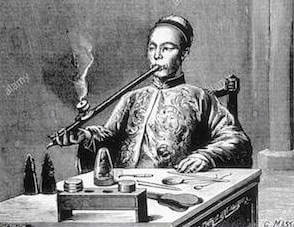
Here’s hoping that doesn’t turn out to be a pipe dream...

*   *   *   *

*   *   *   *

The upper image is courtesy of Ellison Onizuka – Wikipedia. Onizuka (1946-1986) was an American astronaut from KealakekuaHawaii, who successfully flew into space with the Space Shuttle Discovery on STS-51-C. He died in the destruction of the Space Shuttle Challenger, on which he was serving as Mission Specialist for mission STS-51-L. He was the first Asian-American to reach space.”

The Book of Common Prayer reference: The “corporate-mystical” prayer is on page 339, the post-communion prayer for Holy Eucharist, Rite I.

Feast days are designated days on the liturgical (church) calendar “set aside to commemorate events, saints, or doctrines that are important in the life of the Church. These can range from Solemnities, which are the highest-ranking feast days like Easter and Christmas, to optional memorials that celebrate lesser-known saints.” Feast Days: Celebrating the Church’s Calendar.

For this post I borrowed from 2014’s For Sunday of the July 4th weekend, On Independence Day, 2016, On Independence Day, 2018, and July 4, 2024 – and a “What would have happened?”?” Also – for some reason – On my first full day in Jerusalem, from June 2019.

I found some interesting reading when I Googled “freedom is dangerous…”

It’s the Same Old Song – Wikipedia gave some background. Best known for the 1965 Motown single by the Four Tops, the group’s tenor, Abdul “Duke” Fakir, recalled how the lyrics developed:

Lamont Dozier and I were both a little tipsy and he was changing the channels on the radio. He said, ‘It sounds like the same old song.’ And then he said, “Wait a minute.” So he took “I Can’t Help Myself (Sugar Pie Honey Bunch)” and reversed it using the same chord changes. The next day, we went to the studio and recorded it, and then they put it on acetate, shipped it out to disc jockeys across the country.

(Which goes to show that somethings a little “tipsy” can help creativity. Psalm 104:15, about God bringing forth food from the earth and “wine that gladdens the heart.”) Another note: “Pop music writers and bloggers have noted the similarity of the song’s main instrumental riff with the marimba riff in the Rolling Stones song ‘Under My Thumb‘ which was first released almost a year later, on April 15, 1966.” Which is one reason I love blogging: You learn lots of new stuff.

Wikipedia says a Mantra is “a sacred utterance, a numinous sound, a syllable, word or phonemes, or group of words (most often in an Indo-Iranian language like Sanskrit or Avestan) believed by practitioners to have religious, magical or spiritual powers.”

2 Corinthians 5:18 says “all things are from God, who reconciled us to himself through Christ, and gave us the ministry of reconciliation.”

The lower image is courtesy of Pipe Dream – Image Results. See also Pipe dream – Idioms … Free Dictionary which defines the term as a “fantastic notion or vain hope.” The idiom is an allusion to the “fantasies induced by smoking an opium pipe … used more loosely since the late 1800s.”

*   *   *   *

As noted in the opening blurb, this blog has four main themes. The first is that God will accept anyone. (See John 6:37, with the added, “Anyone who comes to Him.”) This is a consistent theme throughout the Bible. From the Old Testament, Psalm 9:10, “You never forsake those who seek you, O Lord.” (In the Book of Common Prayer version.) The second is that God wants us to live abundantly.  (John 10:10.) The third is that we should do greater miracles than Jesus. (John 14:12). A fourth theme: The only way to do all that is read the Bible with an open mind:

…closed-mindedness, or an unwillingness to consider new ideas, can result from the brain’s natural dislike for ambiguity. According to this view, the brain has a “search and destroy” relationship with ambiguity and evidence contradictory to people’s current beliefs tends to make them uncomfortable… Research confirms that belief-discrepant-closed-minded persons have less tolerance for cognitive inconsistency

So in plain words, I take issue with what I call “Christian first graders.” Those who choose to stay in a kind of elementary-school first grade. See John the Baptist, ’24 – and “Christian First Graders,” for more. But the key point: “The Bible was designed to expand your mind,” not make it narrow. Also, there’s the idea that “Jesus was anything but negative. His goal was for you to grow and develop into all that you can be.” (For more on that see ABOUT THE BLOG, above.)

I’ve written on boot-camp Christians, the Literalists who never go “beyond the fundamentals.” But the Bible offers so much more than a narrow reading gives… (Unless you want to stay a buck private all your life…) Now, about “Boot-camp Christians” see Conservative Christian – “Career buck private?” The gist of that post: Starting the Bible is like Army Basic Training. You begin by“learning the fundamentals.” But after boot camp, you move on to Advanced Individual Training.” 

http://www.toywonders.com/productcart/pc/catalog/aw30.jpg

And as noted in “Buck private,” one of this blog’s themes is that if you want to be all that you can be, you need to go on and explore the “mystical side of Bible reading.*” In other words, exploring the mystical side of the Bible helps you “be all that you can be.” See Slogans of the U.S. Army – Wikipedia, re: the recruiting slogan from 1980 to 2001. The related image at left is courtesy of: “toywonders.com/productcart/pc/catalog/aw30.jpg.”

Re: “mystical.” Originally the “liturgical, spiritual, and contemplative dimensions of early and medieval Christianity.” Mysticism – Wikipedia, and the post On originalism.  (“What the Bible was originally about!”) See also Christian mysticism – Wikipedia, “In early Christianity the term ‘mystikos’ referred to three dimensions, which soon became intertwined, namely the biblical, the liturgical and the spiritual or contemplative… The third dimension is the contemplative or experiential knowledge of God.” As to that “experiential” aspect, see also Wesleyan Quadrilateral – Wikipedia, on the theological reflection method using four sources of spiritual development: scripturetradition, reason, and “Christian experience.”

For an explanation of the Daily Office – where “Dorscribe” came from – see What’s a DOR?

*   *   *   *