Monthly Archives: February 2026

Shrove Tuesday and Ash Wednesday – 2026

*   *   *   *

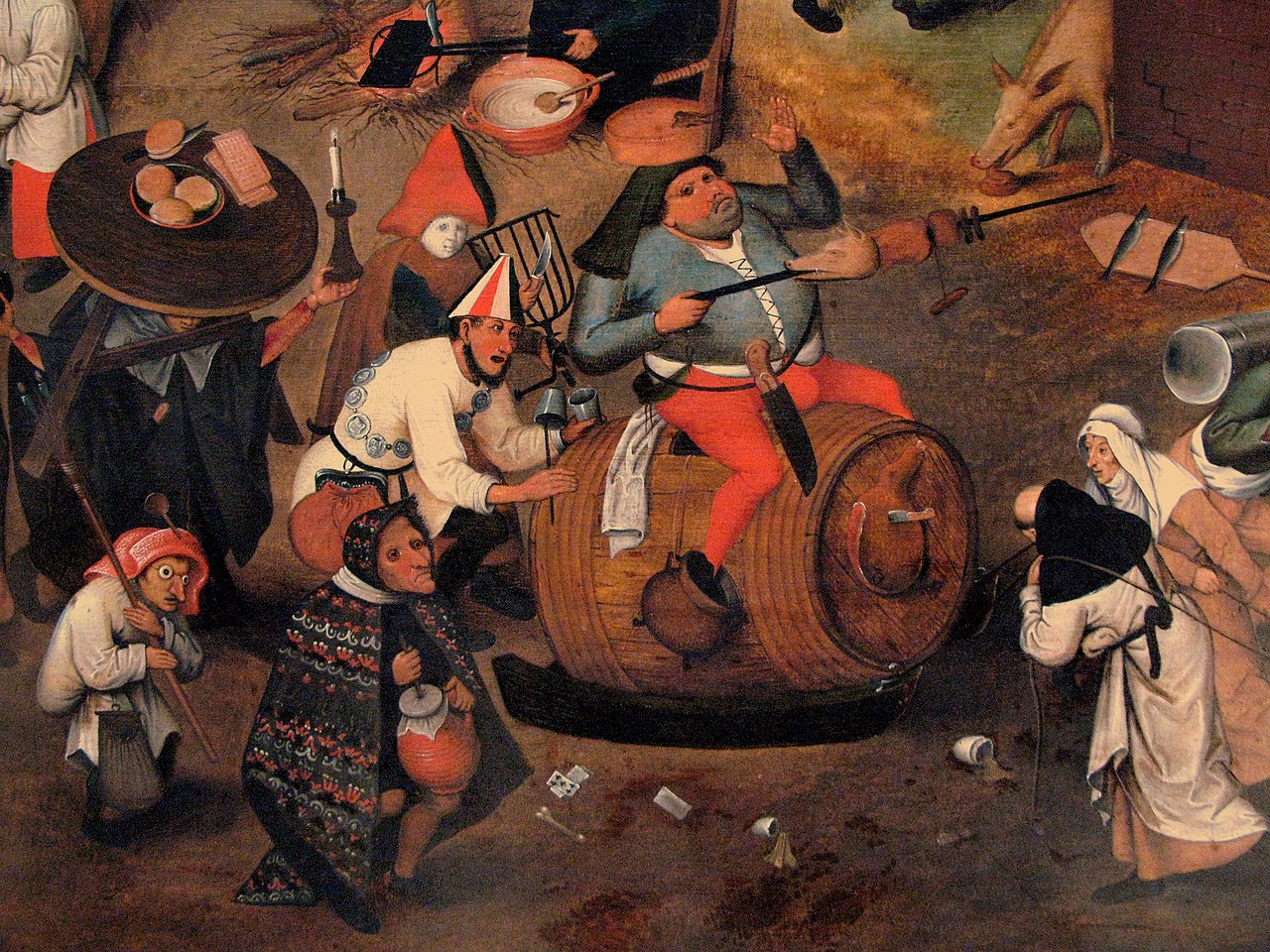
The Fight Between Carnival and Lent – a metaphor (by Pieter Bruegel the Elder…)

*   *   *   *

February 17, 2026 – This week brings Shrove Tuesday, followed by Ash Wednesday on February 18 and the beginning of Lent. (Meaning this year Lent starts before the Feast Day for St Matthias, Apostle on Monday, February 24.) And Lent is the season leading up to Easter Sunday that’s devoted to almsgivingatonement, self-denial, prayer and repentance of sins.

In turn, the forty-plus days of Lent mirror the actions of both Moses and Jesus. As for Moses, he went “into the mountains for 40 days and 40 nights to pray and fast ‘without eating bread or drinking water’ before receiving the Ten Commandments.” (From the Season of Lent):

According to the canonical gospels of MatthewMark and LukeJesus Christ spent 40 days fasting in the desert, where he endured temptation by Satan. Lent originated as a mirroring of this, fasting 40 days as preparation for Easter.

As for that “forty-plus days of Lent,” there are actually 46 days between February 18 and Easter Sunday, April 5. That’s because “Sundays are off.” They are special days exempt from the Lenten rules. Say for example, you’ve given up rye whiskey and two-dollar cigars for your Lenten discipline. On the six Sundays in Lent, you can take a take a break and enjoy both.

I’ll write more on Lenten disciplines later, including some of my own in the past, but meanwhile: For more information see the 2015 post On Ash Wednesday and Lent. (And the Wikipedia article on the subject.) That 2015 post explained the “Fight Between Carnival and Lent,” shown in the painting at the top of the page. (Actually, a close-up detail: The painting “contains nearly 200 characters … unified under the theme of the transition from Shrove Tuesday to Lent.”) The point is: Ash Wednesday always comes after Fat Tuesday, and as an aside, the French for Fat Tuesday is Mardi Gras. That has now become a generic term for “Let’s Party!!” 

As for the origins, see A Brief History of Mardi Gras … TIME, which said Fat Tuesday used to be far more spiritual than the nudity and drunken debauchery for which it is now known:

In earlier times, people used Lent as a time of fasting and repentance. Since they didn’t want to be tempted by sweets, meat and other distractions in the house, they cleaned out their cabinets. They used up all the sugar and yeast in sweet breads before the Lent season started, and fixed meals with all the meat available. It was a great feast! Through the years Mardi Gras has evolved (in some places) into a pretty wild party with little to do with preparing for the Lenten season of repentance and simplicity.

Wikipedia added, “Popular practices on Mardi Gras include wearing masks and costumes, overturning social conventions, dancing, sports competitions, parades, debauchery, etc.” That “debauchery, etc.” has come to include “showing skin for beads” as part of an “alcohol-fueled, nudity-filled bacchanal,” especially in New Orleans. (Or so I’ve heard.) But because this party-time comes right before the start of Lent, there’s an object lesson. That lesson? “To everything there is a season… A time to weep, and a time to laugh; a time to mourn, and a time to dance.”

That in turn is reflected throughout the whole liturgical calendar year, pretty much filled with such alternating seasons of celebration and penance. But while fasting and abstinence are the usual components of a Lenten discipline, keep in mind what Jesus said in Matthew 6:16-18, “Do not look dismal, like the hypocrites, for they disfigure their faces so as to show others that they are fasting.” Instead, He said to basically put on a happy face. That way, “your fasting may be seen not by others, but by your Father who is in secret.”

In other words, the life-long Christian pilgrimage consists of both fasting and feasting:

Lent is about both fasting and feasting… And that’s what we Christians do during Lent. We retell our story of slavery to sin and death. We remember that we are dust and into dust we shall return. We remember our helplessness and hopelessness. We remember that we are utterly dependent on God’s gift of deliverance. And we celebrate, we feast.

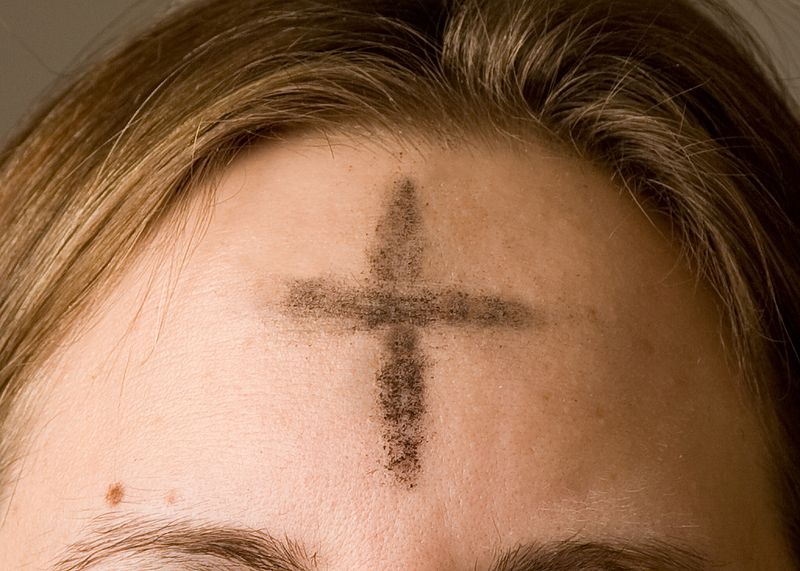
As for the day itself, many go to special Ash Wednesday services to get ash on their foreheads, “a sign of repentance since biblical times. The ash is typically made in the sign of the cross, and accompanied with the words, “Remember that you are dust, and to dust you shall return.”

That last in turn comes from passages like Genesis 3:19: “By the sweat of your brow you will eat your bread, until you return to the ground, because out of it were you taken; for dust you are and to dust you shall return.” Or more cheerfully in Ecclesiastes 12:7: “Then the dust returns to the ground it came from, and the spirit returns to God who gave it.” Which is actually pretty cheerful if you think about it. Especially if you also remember John 6:37, above, along with Romans 10:9, “If you declare with your mouth, ‘Jesus is Lord,’ and believe in your heart that God raised him from the dead, you will be saved.” Emphasis added, meaning no if, ands or buts. So remember where you’re going to end up, and have a Happy Ash Wednesday.

*   *   *   *
*   *   *   *

The upper image is courtesy of the “Fight Between Carnival” link in the Wikipedia article on Lent.  The full caption: “‘The Fight Between Carnival and Lent‘ by Pieter Bruegel the Elder (circa 1558–1559).” Note the upper image shows a mere “detail;” see the whole painting at Wikipedia.

The Book of Common Prayer reference: The “corporate-mystical” prayer is on page 339, the post-communion prayer for Holy Eucharist, Rite I.

Feast days are designated days on the liturgical (church) calendar “set aside to commemorate events, saints, or doctrines that are important in the life of the Church. These can range from Solemnities, which are the highest-ranking feast days like Easter and Christmas, to optional memorials that celebrate lesser-known saints.” Feast Days: Celebrating the Church’s Calendar.

For this post I borrowed from Ash Wednesday and Lent – 2016, 2017’s The “Overlooked Apostle,” Ruth and Mardi Gras, On Ash Wednesday and the start of Lent – 2020, Ash Wednesday – 2022, not to mention 2019’s OMG! Is it time for Lent again?

Turn! Turn! Turn! – Wikipedia discusses the song written by Pete Seeger in the late 1950s, which “became an international hit in late 1965 when it was covered by the American folk rock band The Byrds.” The lyrics were taken “almost verbatim from the book of Ecclesiastes, as found in the King James Version (1611) of the Bible,” at Ecclesiastes 3:1-8.

Re: Mardi Gras. See A Brief History … Photo Essays – TIME, which added:

Mardi Gras’ reputation as an alcohol-fueled, nudity-filled bacchanal is not completely unearned. In 1973 … the tradition of showing skin for beads began. Native New Orleanians despise the reputation, and rarely venture into the Quarter during Carnival season.

Re: Fasting and feasting. See also Fasting and Feasting – Flowing Faith.

The lower image is courtesy of Ash Wednesday – Wikipedia. Caption: “Ashes imposed on the forehead of a Christian on Ash Wednesday.”

*   *   *   *
The Presentation of Jesus – 2026

*   *   *   *

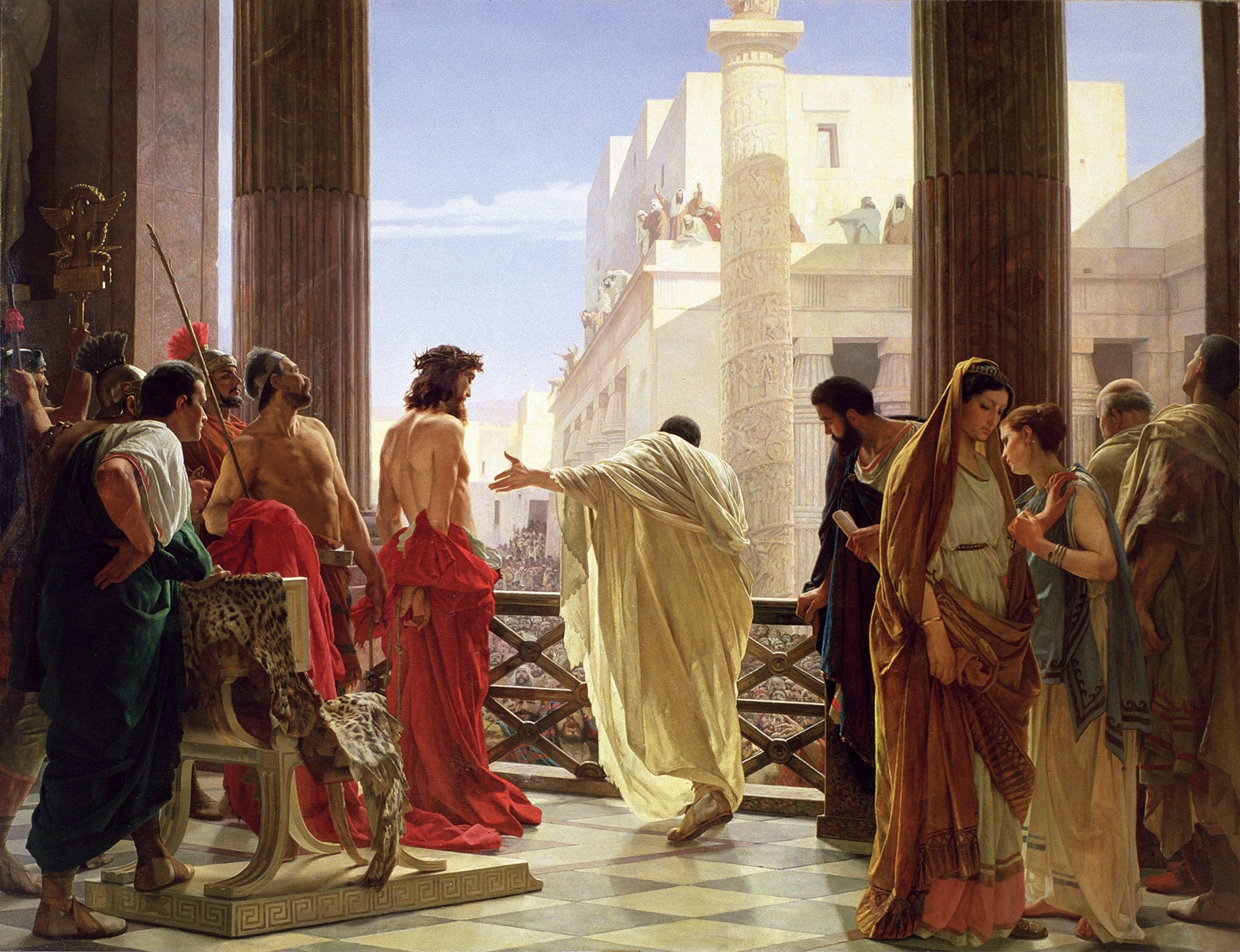
Ecce homo by Antonio Ciseri (1).jpg
This could be the “Second Presentation” – on Good Friday, as Jesus is about to be crucified

*   *   *   *

Welcome to “read the Bible – expand your mind:”

The Book of Common Prayer says that by taking part in Holy Communion, Christians become “very members incorporate in the mystical body” of Jesus. The words “corporate” and “mystical” are key. They show that a healthy church has two sides, with the often-overlooked “mystic” side asking the question, “How do I experience God?” This blog tries to answer that.

It has four main themes. The first is that God will accept anyone. (John 6:37.) The second is that God wants us to live lives of abundance.(John 10:10.) The third is that Jesus wants us to read the Bible with an open mind. (As Luke 24:45 says: “Then He [Jesus] opened their minds so they could understand the Scriptures.”) The fourth theme – another one often overlooked – is that Jesus wants us to do even greater miracles than He did. (John 14:12.) 

And this thought ties them together:

The best way to live abundantly and do greater miracles than Jesus is: Read, study and apply the Bible with an open mind. For more see the notes or – to expand your mind – see the Intro.

In the meantime:

February 1, 2026 – The next feast day is February 2, the Presentation of Jesus in the Temple. It’s part of the season of Epiphanytide, leading up to the Last Sunday after Epiphany on February 15, Ash Wednesday on February 18, and the First Sunday in Lent on February 22.

Counting forward from December 25 as Day One, we find that Day Forty is February 2. A Jewish woman is in semi-seclusion for 40 days after giving birth to a son, and accordingly it is on February 2 that we celebrate the coming of Mary and Joseph with the infant Jesus to the Temple at Jerusalem…

In other words, the day celebrates an early episode in the life of Jesus, “to officially induct him into Judaism.” (In many churches it’s also called Candlemas, as shown at right. Members take their candles from home to be blessed, and those “blessed candles serve as a symbol of Jesus Christ, who is referred to as the Light of the World.”) See Luke’s account of the Presentation at 2:22-40: “Mary and Joseph took the Infant Jesus to the Temple in Jerusalem … to complete Mary’s ritual purification after childbirth.”

Luke explicitly says that Joseph and Mary take the option provided for poor people (those who could not afford a lamb … Leviticus 12:8), sacrificing “a pair of turtledoves, or two young pigeons.” Leviticus 12:1-4 indicates that this event should take place forty days after birth for a male child, hence the Presentation is celebrated forty days after Christmas.

In other words, Mary and Joseph were there “in obedience to the Torah (Leviticus 12Exodus 13:12-15.” (On Purification after Childbirth, “if she cannot afford a lamb, she is to bring two doves or two young pigeons, one for a burnt offering and the other for a sin offering.”)

Another note: Mary did this even though she’d “borne Christ without incurring impurity” – meaning the usual ritual impurity involved in conception – but “went to the Temple in Jerusalem to fulfill the requirements of the Law of Moses.” (To set an example, like Jesus insisting that John baptize Him.) Another tidbit: This first Presentation put Jesus on the long road to His second one, the one at the hands of Pontius Pilate, displaying Him to the mob.

A reminder that from the time of His first Presentation – at just over a month old – Jesus’ life was one long journey to that second presentation. (On the eve of making the sacrifice that would literally change history, if not “split history in two.”) 

And it all began with “Simeon and Anna recognizing the Lord Jesus.”

Which brings up the question: Who first recognized the baby Jesus as the long-awaited Messiah, Mary, Anna or Simeon? Simeon and Anna were two old folk at the Temple when Joseph and Mary brought Jesus to Jerusalem for the first time. Simeon approached first, as he’d been told he wouldn’t die until he saw the Messiah. And having seen Jesus, he is ready to die.

Anna also recognizes Jesus as Messiah but she has a far different reaction. (She’s the only New Testament woman explicitly called a “prophetess,” Luke 2:36.) And at the ripe old age of 84, she wants to live and spread the Good News. She, like the disciples, is driven to bear witness. So, while Mary was first to hear the good news, Simeon and Anna were the first to understand fully.

Which makes Mary all the more like us today. Unlike Simeon and Anna, she didn’t immediately understand fully. She couldn’t foresee the future, or that a sword would pierce her own soul. She could only, as noted in Luke 2:19, “treasure all these words and ponder them in her heart.”

The act of pondering suggests deep contemplation and meditation, and in the Bible the heart is seen as the center of thought and emotion. That indicates Mary would not only remember these events but also try for years to understand their full meaning. Such introspection is a common theme in the Bible, where individuals meditate on God’s works and words, as seen in Psalm 119:15: “I will meditate on Your precepts, and contemplate Your ways.”

So, Mary’s pondering can be seen as an example of faith and obedience, as she seeks – for years – to comprehend God’s plan. An example of a “continuing search to understand” that seems especially appropriate now, since Lent will soon be upon us.

*   *   *   *

*   *   *   *

The upper image is courtesy of Pontius Pilate – Wikipedia. The caption:  “Ecce Homo (‘Behold the Man’), Antonio Ciseri‘s depiction of Pilate presenting a scourged Jesus to the people of Jerusalem.”

The Book of Common Prayer reference: The “corporate-mystical” prayer is on page 339, the post-communion prayer for Holy Eucharist, Rite I.

Feast days are designated days on the liturgical (church) calendar “set aside to commemorate events, saints, or doctrines that are important in the life of the Church. These can range from Solemnities, which are the highest-ranking feast days like Easter and Christmas, to optional memorials that celebrate lesser-known saints.” Feast Days: Celebrating the Church’s Calendar.

For this post I borrowed from 2017’s The FIRST “Presentation of the Lord,” The “Presentation of our Lord” – 2020, The Presentation of Jesus – 2/2/22, and The Presentation and the Poker player – 2025.

References to Simeon and Anna as the first to recognize Jesus as the Messiah are from Mary, Simeon or Anna: Who First Recognized Jesus as Messiah?

Re: Psalm 119:15. I used the translation from the New King James Version. Other translations: “I will study your commandments and reflect on your ways,” and “I will meditate on Your precepts And [thoughtfully] regard Your ways [the path of life established by Your precepts].”

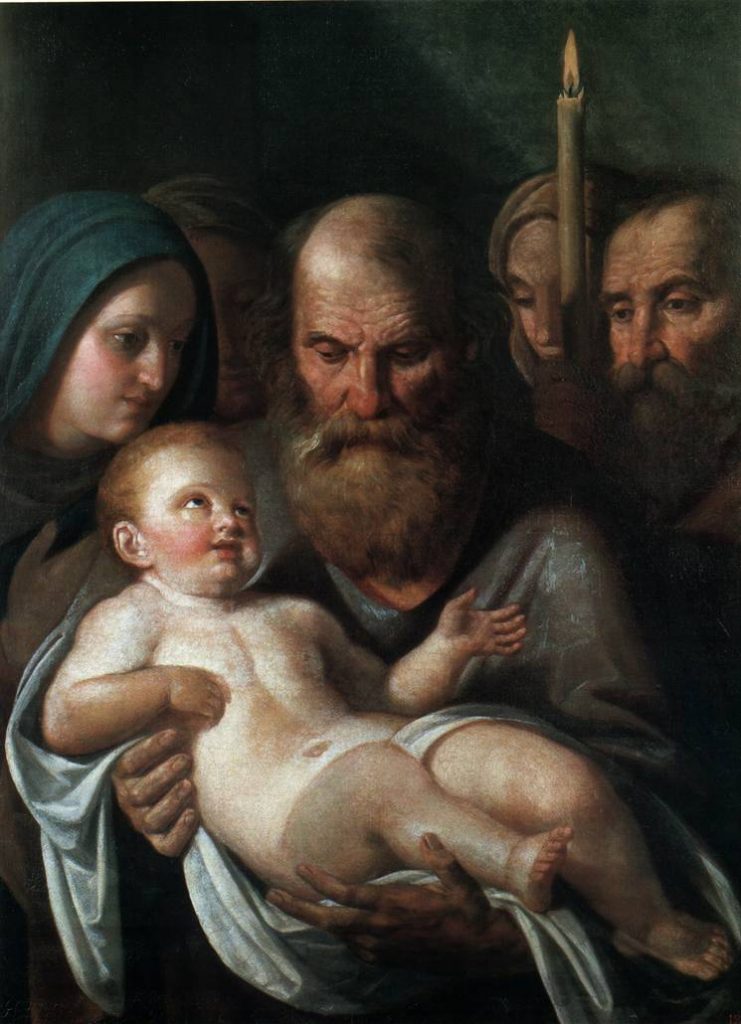
The lower image is courtesy of the “Simeon” link in the Wikipedia article on the Presentation, with caption: “Simeon the Godreceiver [sicby Alexei Egorov. 1830–40s.”  The caption for that image is from Simeon and Anna Recognize the Lord in Jesus. That’s another interpretation of the event, by Rembrandt (van Rijn).  (Far better known than Egorov.)  You can see Rembrandt’s interpretation at “Wikigallery,” or at “Rembrandtonline.”

*   *   *   *

As noted in the opening blurb, this blog has four main themes. The first is that God will accept anyone. (See John 6:37, with the added, “Anyone who comes to Him.”) This is a consistent theme throughout the Bible. From the Old Testament, Psalm 9:10, “You never forsake those who seek you, O Lord.” (In the Book of Common Prayer version.) The second is that God wants us to live abundantly.  (John 10:10.) The third is that we should do greater miracles than Jesus. (John 14:12). A fourth theme: The only way to do all that is read the Bible with an open mind:

…closed-mindedness, or an unwillingness to consider new ideas, can result from the brain’s natural dislike for ambiguity. According to this view, the brain has a “search and destroy” relationship with ambiguity and evidence contradictory to people’s current beliefs tends to make them uncomfortable… Research confirms that belief-discrepant-closed-minded persons have less tolerance for cognitive inconsistency

So in plain words, I take issue with what I call “Christian first graders.” Those who choose to stay in a kind of elementary-school first grade. See John the Baptist, ’24 – and “Christian First Graders,” for more. But the key point: “The Bible was designed to expand your mind,” not make it narrow. Also, there’s the idea that “Jesus was anything but negative. His goal was for you to grow and develop into all that you can be.” (For more on that see ABOUT THE BLOG, above.)

I’ve written on boot-camp Christians, the Literalists who never go “beyond the fundamentals.” But the Bible offers so much more than a narrow reading gives… (Unless you want to stay a buck private all your life…) Now, about “Boot-camp Christians” see Conservative Christian – “Career buck private?” The gist of that post: Starting the Bible is like Army Basic Training. You begin by“learning the fundamentals.” But after boot camp, you move on to Advanced Individual Training.” 

http://www.toywonders.com/productcart/pc/catalog/aw30.jpg

And as noted in “Buck private,” one of this blog’s themes is that if you want to be all that you can be, you need to go on and explore the “mystical side of Bible reading.*” In other words, exploring the mystical side of the Bible helps you “be all that you can be.” See Slogans of the U.S. Army – Wikipedia, re: the recruiting slogan from 1980 to 2001. The related image at left is courtesy of: “toywonders.com/productcart/pc/catalog/aw30.jpg.”

Re: “mystical.” Originally the “liturgical, spiritual, and contemplative dimensions of early and medieval Christianity.” Mysticism – Wikipedia, and the post On originalism.  (“What the Bible was originally about!”) See also Christian mysticism – Wikipedia, “In early Christianity the term ‘mystikos’ referred to three dimensions, which soon became intertwined, namely the biblical, the liturgical and the spiritual or contemplative… The third dimension is the contemplative or experiential knowledge of God.” As to that “experiential” aspect, see also Wesleyan Quadrilateral – Wikipedia, on the theological reflection method using four sources of spiritual development: scripturetradition, reason, and “Christian experience.”

For an explanation of the Daily Office – where “Dorscribe” came from – see What’s a DOR?

*   *   *   *