Category Archives: Not your daddy’s Bible

On “guilty until proven innocent”

 Over 200 years ago…

 Welcome to DORScribe, a blog about reading the Bible with an open mind…

In other words, this blog is different.  It’s different because it says that you can get more out of the Bible by reading it with an open mind, and that it was written to liberate people, not shackle them into some kind of “spiritual straitjacket.” Such ideas run contrary to some common perceptions these days.  For example:

I don’t have a problem with God.  I have a problem with religion.  I’ve chosen to live my life without the certainties of religious faith.

See 10 Questions for Sting – TIME.  (But here’s a news flash:  “If your religion makes you ‘certain,’you’re missing the point!”  See for example, On a dame and a mystic.) The comment by Gordon Matthew (Sting) provides an example of some common perceptions today:   1) that too many Christians are close-minded; 2) that too many are way too negative; or 3) that too many think The Faith of the Bible is all about getting you to follow their rules, on pain of you “going to hell.”  (See also my way or the highway – Wiktionary.) For more on such thoughts see About this Blog, which talks instead about the Three Great Promises of Jesus, to all people, and about how through those promises we can live full, rich lives of spiritual abundance and do greater miracles than Jesus, if only we open our minds

In the meantime:

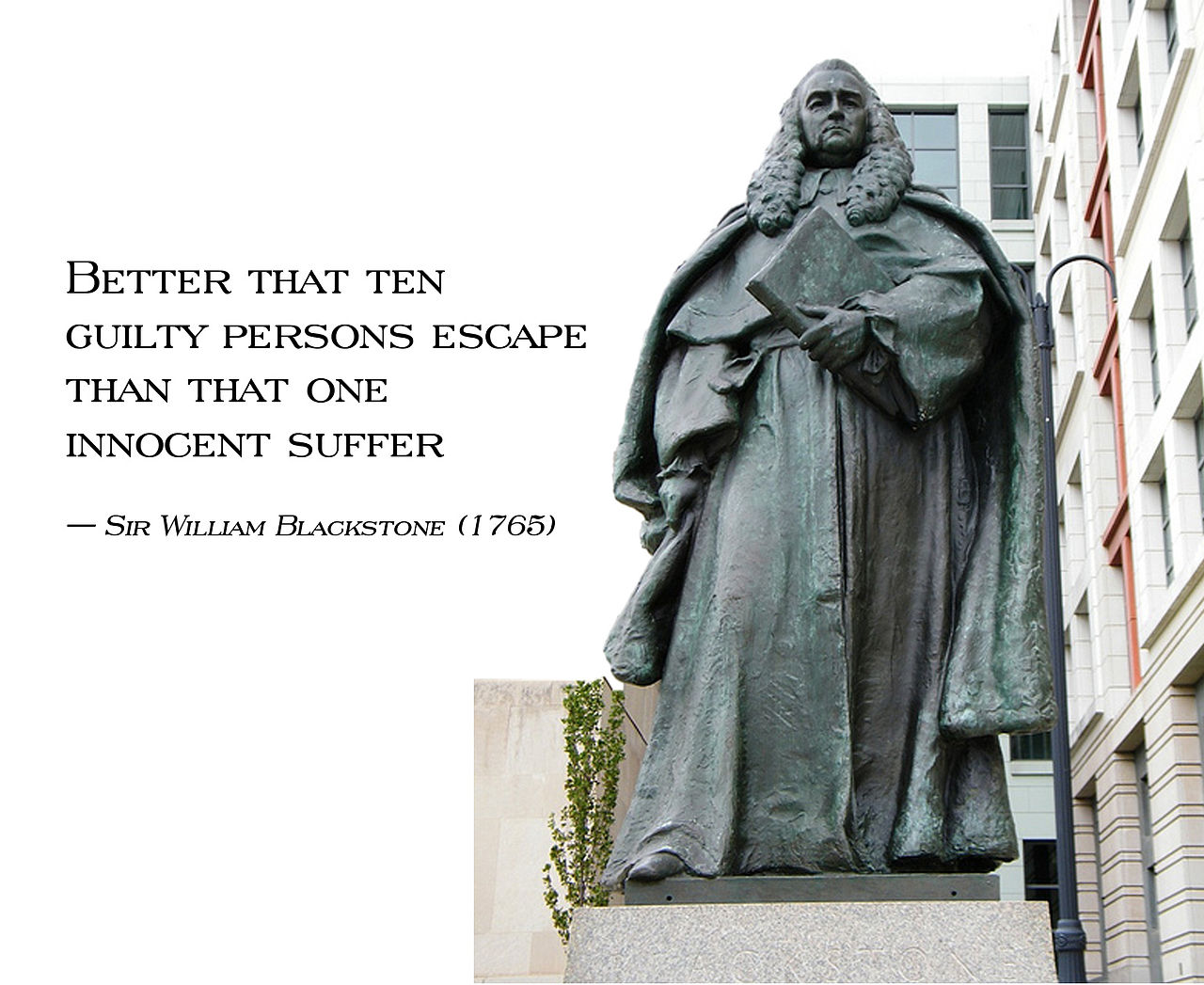
Talk about old-time, conservative sentiments.  That’s William Blackstone all right. Speaking of which, columnist Greg Couch recently wrote an article, Florida State Needs to Suspend Quarterback Jameis Winston , in which he said this:

This is the moment for Florida State when it answers the big question:  What do you stand for?  It’s an opportunity, really.  You do the right thing for the right reasons, and no matter the cost, you can look in the mirror later.  When you stand for something, it’s forever… Suspend Jameis Winston.   Now…    It’s the only thing to do for Florida State;  it must take a moral stand for football and society.  And if Florida State lets Winston play?  Then that makes a statement, too – a dangerous one. (E.A.)

Mr. Couch is right about two things.  There is a basic principle involved, and the idea that we as a people need to err on the side of caution – to chance letting 10 guilty people go unpunished rather than punish one innocent – is indeed a very dangerous proposition. (And a BTW:  Mr. Couch is in good company.  His sentiments were shared by Bismarck, the German dictator, and Pol Pot, the Communist leader of the Khmer Rouge, as noted below.) As it happens, I just wrote about modern-day witch hunts – and/or “vigilante justice” – in On “Gone Girl” and Lazy Cusses – Part I, and On “Gone Girl” and Lazy Cusses – Part II.  However, don’t think this is just about Jameis Winston.  (See also Witchhunt – Wikipedia.) Think about Todd Gurley.  Think about Johnny Manziel.  Those three and others have one thing in common:  They are examples of the twin truisms that “destroying things is easier than building them,” and – as especially today – “the media loves to build somebody up then looks for something to take it away.”  (See It is easier to tear down than to build up – Idioms, and Butter for Paula Deen – Following Today Show, vis-a-vis another witch-hunt victim.) But let’s get back to William Blackstone’s dangerous truism, that it’s better to err on the side of caution when it comes to “convicting people.”   And don’t forget Deuteronomy 19:15-19:

One witness is not enough to convict anyone…   A matter must be established by the testimony of two or three witnesses.   If a malicious witness takes the stand to accuse someone of a crime, the …  judges must make a thorough investigation, and if the witness proves to be a liar, giving false testimony … then do to the false witness as that witness intended to do to the other party.  You must purge the evil from among you. (E.A.)

But again we digress…   We were talking about Blackstone’s dangerous idea. As Wikipedia noted, “the details of the ratio [may] change, but the message that government and the courts must err on the side of innocence is constant.”  See Blackstone’s formulation – Wikipedia, which added that the principle is much older than Blackstone, and in fact can be seen as early as Genesis 18:23-32.  (Noted in On arguing with God.) Wikipedia also noted the “12th-century legal theorist Maimonides, expounding on this passage as well as Exodus 23:7 (‘the innocent and righteous slay thou not’)” added this to the mix:

…executing an accused criminal on anything less than absolute certainty would progressively lead to convictions merely “according to the judge’s caprice.  Hence the Exalted One has shut this door” against the use of presumptive evidence, for “it is better and more satisfactory to acquit a thousand guilty persons than to put a single innocent one to death.”

Wikipedia also noted “Sir John Fortescue‘s De Laudibus Legum Angliae (c. 1470),” and that in America, in 1692, “while decrying the Salem witch trialsIncrease Mather adapted Fortescue’s statement and wrote, ‘It were better that Ten Suspected Witches should escape, than that one Innocent Person should be Condemned.'”   And finally, Wikipedia noted this:

There are alternate theories:   More authoritarian personalities are supposed to have taken the opposite view; Bismarck is believed to have stated that “it is better that ten innocent men suffer than one guilty man escape;” and Pol Pot made similar remarks.

(Blackstone’s formulation.)   So what we have on the one hand is Mr. Couch saying FSU needs to “send a message.”  But unfortunately, that message would be:  “We don’t need to bother with finding the facts or with actual guilt.  A presumption of guilt is enough for some of us.”

On the other hand we have a bit of wisdom that’s been around for millenia – “thousands of years” – going back to the time of Abraham and lovingly “tweaked” by the likes of Moses, Maemonides, Sir John Fortescue, Increase Mather and Sir William Blackstone:

[Blackstone’s ] Commentaries on the Laws of England … is the best-known description of the doctrines of English law.  The work became the basis of university legal education in England and North America. He was knighted in 1770…  In the United States, the Commentaries influenced John MarshallJames WilsonJohn JayJohn AdamsJames Kent and Abraham Lincoln, and remain frequently cited in Supreme Court decisions.

But of course when it comes to who to believe, the choice is yours…

And there’s one final message, to Mr. Couch and others in the media like him:

Hey, I can pontificate too!
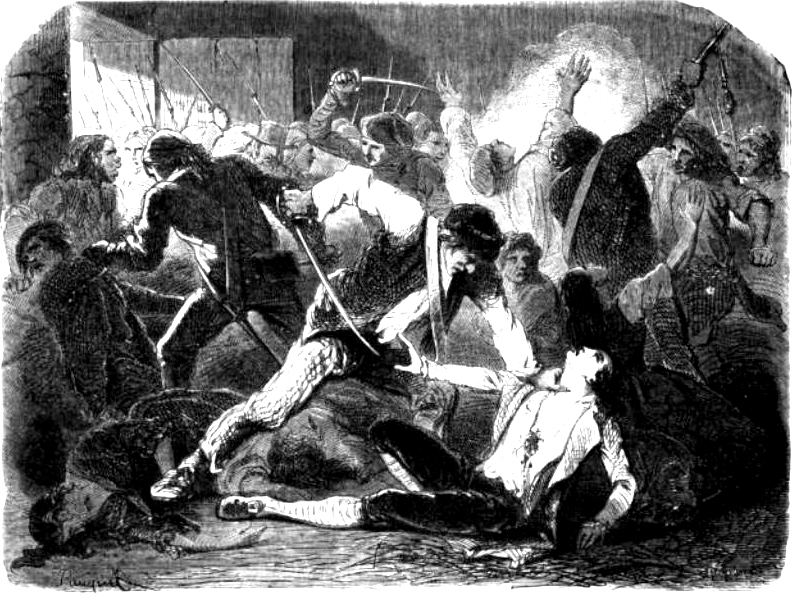
…and now?


The upper image is courtesy of Blackstone’s formulation.  The lower image is courtesy of Lynching – Wikipedia, the free encyclopedia (as another example of “vigilante justice,” as noted in the “Gone Girl” reviews noted above.)  The caption:  “September Massacres of 1792, in which Parisian mobs killed hundreds of royalist prisoners,” arguably in the old-time equivalent of a “media frenzy.”

(The other images – of lynchings and such – were too gory, while “September Massacres” provides an apt visual metaphor for a modern-day media frenzy…)

And a BTW: I wrote the bulk of this post before reading Jimbo Fisher not concerned over Jameis Winston, in which the coach said “this country is based on being innocent until proven guilty, not guilty until proven innocent.”    Which proves another truism: “Great minds think alike.” 

The final indented quote about Blackstone and his Commentaries was gleaned from William Blackstone – Wikipedia, and Sir William Blackstone (English jurist) — Encyclopedia ….

On “God’s Favorite Team” – Part III

Moses at Rephidim:  “If I let my arms down, the other team will win!


Here’s a quick response for any ardent football fan – pro or college – who gets a lot of grief for his or her “weird” fan ritual.   You know, that weird little ritual you use to help your team win, or conversely, to help avoid jinxing your team.

You may mute the sound on your TV.  (For example, if your team is on the road, losing, and you can’t stand the home crowd’s obnoxious cheering and/or gloating.)  Or you may wear a particular “good luck” jersey.  Or you may recite a “magic phrase,” over and over, like the guy I overheard at a Tampa Bay Buccaneers game years ago; “knock ‘eem down, knock ‘eem down!!

To all of this the doubting skeptic may say something like:  “Do you really believe you can affect the outcome of that game, by your pathetic little ritual?  Do you really think you have that much power?”  The answer – after ten trips through the Bible, and years of research – is YES!

Which is being interpreted: “Oh, you mean like Moses at the Battle of Rephidim?

Which is being interpreted in turn: Exodus 17 (verses 10-13) described how Moses’ team – the ancient Hebrews – pulled off the functional equivalent of their first upset of the season, long long ago.  That’s when they beat their hated arch-rival, the dreaded Amalekites:

Moses, Aaron, and Hur went up to the top of the hill.  Whenever Moses held up his hand, Israel prevailed; and whenever he lowered his hand, Am′alek prevailedBut Moses’ hands grew weary; so they took a stone and put it under him, and he sat upon it, and Aaron and Hur held up his hands, one on one side, and the other on the other side; so his hands were steady until the going down of the sun. [E.A.]

Now that’s a serious fan, sport or otherwise.   First of all, Moses developed the theory of having to hold his arms up in the air, on pain of “jinxing his team.”  More than that, when his arms got tired he got his two buddies – Aaron and Hur – to hold his arms up in the air.  (And by the way, that’s a form of post hoc, ergo propter hoc, the logical fallacy translating literally as “following after, therefore caused by.”  See also On “God’s Favorite Team” – Part II.)

However, as the current advertising meme says:  “It’s only weird if it doesn’t work:”

Football season was in full swing … and everyone knew it, especially Bud Light, who created an advertisement campaign with the slogan “It’s only weird if it doesn’t work,” in reference to the superstitions and rituals every die-hard fan practices when their team is up.

See It’s only weird if it doesn’t work. | Advertising & Society, which noted the TV commercial included a “montage of different superstitions fans [use], whether it be snapping fingers, stomping feet, or” – as in the case of Moses at Rephidim – getting two buddies to hold your arms up, because if you let them down, “the other team wins.”

All of which brings us back to my novel, God’s Favorite Team.  To cut to the chase, it’s about an ardent fan whose ritual included a “sacrifice” in the form of exercise – and especially running long distances – together with the discipline of daily Bible reading.   So, even if his team didn’t win all the time, he still ended up in better shape in the long run, both physically and spiritually.

And as a matter of fact, that’s how this whole blog got started…

Which is being interpreted:  My own horizon-expanding started back in the summer of 1992, in the form of reading the Bible on a daily basis.  Not only did I start in on the Bible, that’s also when I started my aerobic “ritual sacrifice.”  I did all of this in a mystic quest to help my alma mater win college football games.  (Florida State University, where I went to law school.)

But note too that most spiritual pilgrimages start that way.  From a sense of “greed.”  From wanting something good from God.  Or wanting God to keep something bad from happening…  So since 1992, I’ve been engaged in an ongoing search for the functional equivalent of Moses holding his hands up at Rephidim.  Ten trips through the Bible later, I’ve learned some lessons.  In turn it’s those lessons that I’m sharing with you through this blog.

One particularly-hard lesson to learn is that – lots of times – our own particular ritual – sports or otherwise – just doesn’t work.  (See for example:  Week of Upsets Turns College Football Upside Down: Who Is No. 1?)   That in turn leads to a lesson from the Bible on the proper approach to those trying times.   We keep trying – and have faith – as shown in the book of Daniel:

Shadrach, Meshach and Abednego replied…  “King Nebuchadnezzar, we do not need to defend ourselves before you in this matter.    If we are thrown into the blazing furnace, the God we serve is able to deliver us from it, and he will deliver us from Your Majesty’s hand.  But even if he does not, we want you to know, Your Majesty, that we will not serve your gods or worship the image of gold you have set up.”

Now that’s true faith.


http://lukedockery.com/wp-content/uploads/2014/03/The-Furnace.jpg


The upper image is courtesy of Rephidim – Wikipedia, the free encyclopedia, with the full caption:  “Moses holding up his arms during the Battle of Rephidim, assisted by Hur and Aaron, in John Everett MillaisVictory O Lord! (1871).”

*  As to the practice of religion being certain:  There is the “certainty” in the life of a Christian that he “has already won” in his “game of life.”  The true Christian knows how his life will end; it’s the time between now-and-then that can be so uncertain, usually because God has a different agenda…

The lower image is courtesy of http://lukedockery.com/wp-content/uploads/2014/03/The-Furnace.jpg,  an adaptation of an original work by Gustave Dore.  See Shadrach, Meshach and Abednego in the Furnace – Gustave Dorea.  The image illustrates Daniel 3:16-18 (NIV), emphasis added, and shows that the proper approach of your ritual sport-sacrifice will never that your favorite team will always win, even though God has the power to do just that.   (If you could find that one “ritually efficacious sacrifice,” you’d just end up spoiled, sloppy and obnoxious, metaphorically or otherwise.)


On “God’s Favorite Team” – Part II

Moses at Rephidim:  “If I let my arms down, the other team will win!


Talk about timely!   The Bible readings for Sunday, September 28, include Exodus 17:1-7, which serves as a prelude to Exodus 17:8-16, which in turn tells of Israel pulling off their “first upset of the season.”   They beat their hated arch-rival, the dreaded Amelikites, thanks to Moses:

Moses, Aaron, and Hur went up to the top of the hill. 11 Whenever Moses held up his hand, Israel prevailed; and whenever he lowered his hand, Am′alek prevailed. 12 But Moses’ hands grew weary; so they took a stone and put it under him, and he sat upon it, and Aaron and Hur held up his hands, one on one side, and the other on the other side; so his hands were steady until the going down of the sun.

As noted in On the readings for September 28, that sounds “a lot like a modern-day football fan, watching his favorite team on TV; moving around the room, sometimes standing, sometimes sitting,” sometimes muting the sound, sometimes telling his wife to leave the room, but “always trying to ‘help his team win.’”  (See also  On “God’s Favorite Team” – Part I.)

So imagine Moses – today – watching the “battle” from a stadium seat, or on his TV back at home.   For some reason he holds his arms up, and his team scores a touchdown.  But then his arms get tired and he lets them down, and – lo and behold! – the other team scores a touchdown.   So, in order to help his team win – or in the alternative, to avoid “jinxing” his team – Moses got his buddies Aaron and Hur to hold his arms up “for the rest of the game.”

That makes Moses the prototype of the modern-day football fan who does all kinds of strange things to help his team win.  And that is a basic theme of the Scribe’s new novel, God’s Favorite Team.   The book is all about finding spiritual growth by and through reading the Bible on a regular basis, and offering up the appropriate, “ritually efficacious” sacrifice to God.

Here’s how one “skeptic” explained the phenomenon, as shown by Moses at Rephidim and by the modern-day football fan trying to help his team win:

It’s a natural tendency for people to make connections between events.  “When I do this, that happens…”  Primitive people [and perhaps even modern-day football fans] developed superstitions in similar ways.  One year, the crops were bad.  The next year, they put a basket of dead birds in the middle of the field, and everything turned out great.  Therefore, placing a basket of dead birds in the field ensures a good crop…   Like the primitive farmers, we continue to make assumptions of causation [which] leads us to think that [for example] prayer works (you pray for your sports team to win…)   [I]t’s important that we not jump to conclusions.  We should make multiple observations.  We should try different sequences in various combinations…  Even with all that, we might never be sure about the real causes.  But we can rule some out, and we can increase our confidence in others.

See Faulty logic: Post hoc, ergo propter hoc « Gotham Skeptic.   All of which is another way of saying that many times those fan superstitions just don’t work out, as in reference to The Pueblo Chieftain | Broncos fans hope superstitions pay …., which told of the rituals used by Denver Bronco fans before last January’s Super Bowl.  (And we know how that turned out.)

Superstition is a large part of a fan’s repertoire these days, especially when the home team is in Super Bowl XLVIII today. – See more at: http://www.chieftain.com/news/2249487-120/broncos-hankins-flag-inflatable#sthash.OkAMWQ7l.dpuf

On a happier note, that also brings up the subject of “Touchdown Jesus,” a feature of the stadium at Notre Dame, and in which the pose of Jesus – seen further below – looks a lot like the pose of Moses at Rephidim, with his arms held over his head. (And who knows?  Maybe today’s signal for a touchdown somehow came from “the original,” Moses at the Battle of Rephidim.)

Beyond that, many “Irish” fans believe TDJ brings the team good luck, and/or “helps them win.”  See for example Touchdown Jesus: Does Notre Dame have God on its side, posted on January 5, 2013, the Saturday before the national championship game:

Will God be on Notre Dame’s side Monday night when the No. 1 Fighting Irish meet No. 2 Alabama in college football’s national championship game in Florida?  Hard to say…  But when Notre Dame plays at home, Touchdown Jesus stands watch.  Here are some little-known facts about the iconic mural that some call superstition, others consider the embodiment of belief and all would agree is a symbol of the Irish, who are one victory away from their first national title since 1988…

Of course we know how that game turned out too, but it does lead to another interesting point.

When I first published God’s Favorite Team several years ago – under a different nom de plume – Notre Dame had the most national championships of any college football team, at 13.  But in the years since then Alabama won national titles in 2009, 2011 and 2012, to take the lead at 15.  Which leads to another interesting point…

How can we tell which college football team is “God’s Favorite?”  Is it the number of national titles they have?  On that note, were the original Children of Israel known for the number of “national championships” they won?  Or was there something other factor involved?

The answer could be in God’s Favorite Team.   More later…

The Scribe


Touchdown Jesus Notre Dame - (Tom Hauck/Getty Images)


The upper image is courtesy of Rephidim – Wikipedia, the free encyclopedia, with the full caption:  “Moses holding up his arms during the Battle of Rephidim, assisted by Hur and Aaron, in John Everett MillaisVictory O Lord! (1871).”

The lower image is courtesy of Touchdown Jesus at Notre Dame – College Football – About.com, with caption:  “‘Touchdown Jesus’ is seen here towering over Notre Dame Stadium.   (Tom Hauck/Getty Images).”   Here’s a closer view courtesy of Word of Life Mural // Hesburgh Libraries … Notre Dame.


http://library.nd.edu/about/history/images/mural.jpg


For further information on TDJ, see Notre Dame Stadium – Wikipedia, the free encyclopedia, Touchdown Jesus – A Notre Dame Campus Landmark | UHND.com, and/or Word of Life Mural // Hesburgh Libraries // University of ….


On the readings for September 28

“Moses … during the Battle of Rephidim, assisted by Hur and Aaron…”


The readings for Sunday September 28 are Exodus 17:1-7, Psalm 78:1-4, 12-16, Philippians 2:1-13, and Matthew 21:23-32.   For Psalm 78, see On the psalms up to September 28.   The full readings are at Sixteenth Sunday after Pentecost Proper 21, but here are some highlights.

Exodus 17:1-7 tells about the Children of Israel, complaining in the “wilderness of Sin,” which is a lot like last week’s OT, on the “Children of Israel moaning and complaining in the Wilderness, despite God’s miraculously rescuing them from their slavery in Egypt.”

In this reading they “camped at Rephidim, but there was no water for the people to drink.”  Moses told God,  “What shall I do with this people? They are almost ready to stone me.”

(BTW:  That’s  why – in telling the Story of Creation – Moses had to use “language and concepts that his relatively-pea-brained contemporary audience could understand.”  See On the readings for June 15 – Part I.   That is, if Moses had said something like “the earth revolves around the sun,” he would have been stoned to death, or at least tarred and feathered.)

So anyway, here’s what Wikipedia said about the encampment at Rephidim and what happened after Moses provided water by “striking a rock,” the subject of today’s reading:

[T]he Amalekites attacked the Israelites while encamped at Rephidim, but were defeated (Exodus 17:8-16)…    The Israelites were led by Joshua in the battle.  Moses, Aaron and Hur watched the battle from a hill.  Moses noticed that when his arms were raised the Israelites gained the upper hand, but when they were down the Amalekites struck back.  Moses sat with his hands held up by Aaron and Hur until sunset, securing the Israelite victory.

(Empasis added.)   And by the way, the emphasized portions sound a lot like a modern-day football fan, watching his favorite team on TV; moving around the room, sometimes standing, sometimes sitting, but always trying to “help his team win.”  (See Rephidim – Wikipedia, the free encyclopedia, and also  On “God’s Favorite Team” – Part I.)

Which makes this Bible reading very timely for the 2014 pro and college football season.

Anyway, in Philippians 2:1-13 Paul wrote what the International Bible Commentary (IBC) calls the famous “early Christian hymn on the humility and exaltation of Christ.”  The Complete Jewish Bible translates Philippians 5 as, “Let your attitude toward one another be governed by your being in union with the Messiah,” then goes to Philippians 6-11:

Though he was in the form of God, he did not regard equality with God
something to be possessed by force.  On the contrary, he emptied himself,
in that he took the form of a slave by becoming like human beings are…

Therefore God raised him to the highest place and gave him the name above every name;  that in honor of the name given Yeshua [Jesus], every knee will bow — in heaven, on earth and under the earth — and every tongue will acknowledge that Yeshua [Jesus] the Messiah is Adonai [Lord] — to the glory of God the Father.

(And a BTW:  In Philippians 2:11, Paul quoted Isaiah 45:23: “In the name of myself I have sworn, from my mouth has rightly gone out, a word that will not return — that to me every knee will bow and every tongue will swear.”   And in Philippians 2:12, Paul quoted Psalm 2:11, “Serve the Lord with fear and trembling.”)

And finally, in Matthew 21:23-32, Jesus again distinguished the religious “powers that be” who challenged his authority,*  with the simple “sinners” who did believe in Him and welcomed His message of redemption, telling those distinguished persons:

“Truly I tell you, the tax collectors and the prostitutes are going into the kingdom of God ahead of you.  For John came to you in the way of righteousness and you did not believe him, but the tax collectors and the prostitutes believed him; and even after you saw it, you did not change your minds and believe him.”


Apostle Matthew - Getty Images


The upper image is courtesy of Rephidim – Wikipedia, the free encyclopedia, with the full caption:  “Moses holding up his arms during the Battle of Rephidim, assisted by Hur and Aaron, in John Everett MillaisVictory O Lord! (1871).”

The lower image is courtesy of Matthew in the Bible – Tax Collector and Apostle – Christianity, with the full caption:  “Jesus calling Matthew, a taxman, to follow him and become a disciple.”   The web article noted that “Matthew was a dishonest tax collector driven by greed, until Jesus Christ chose him as a disciple…   Tax collectors were notoriously corrupt because they extorted far and above what was owed, to ensure their personal profit.  Because their decisions were enforced by Roman soldiers, no one dared object.”  The article further noted this unique take on Matthew:

Despite his sinful past, Matthew was uniquely qualified to be a disciple.  He was an accurate record keeper and keen observer of people.  He captured the smallest details.   Those traits served him well when he wrote the Gospel of Matthew some 20 years later.

(Sometime the Lord does indeed “work in mysterious ways.”)


As to the location of Rephidim, see wilderness of Sin, which noted that it was “a geographic area mentioned by the Bible as lying between Elim and Mount Sinai.   Sin does not refer to sinfulness [at least not literally], but is an untranslated word that would translate as the moon,” and/or as referring or alluding to the “semitic moon-deity Sin.” 

*  As to Jesus’ thoughts on “the religious ‘powers that be,'” see also Atlanta Bishop Robert Wright’s recent take on the readings for Sunday, September 28:

Institutional authorities often become obsessed with order and institutional maintenance to the detriment of innovation and adaptation.  It becomes precedent over people; ritual over reflection; structure over Spirit…    God’s spirit does come through the church but refuses to be limited by the church or the clergy.

(“The Scribe” couldn’t have said it better himself.)   See  The Episcopal Diocese of Atlanta, Georgia (GA), under “For Faith,” for September 26, 2014.

On “God’s Favorite Team” – Part I

http://upload.wikimedia.org/wikipedia/commons/2/2f/Osceola,_George_Catlin,_1838.JPG

“Osceola, the Black Drink, a Warrior of Great Distinction…”


With football season now in full swing – college and pro – it’s time to announce the publication of The Scribe’s new novel, God’s Favorite Team.   The subtitle?   (“A story of the 1996 college football season, and of ritual in sports and sport-fans.”)    Here’s the sub-sub-title:

This book was originally written in the dark days after The Great FSU Loss to the Gators in the 1997 Sugar Bowl, and was intended to offer a message of hope…

In case you’ve forgotten, 1996 was the year the Florida State football team had to play a rematch against its hated arch-rival Florida Gators, despite beating them in the regular season finale.  And that only happened because of a glitch in the system:

Third-ranked Florida was invited to the Bowl Alliance’s designated national championship game for the 1996-97 season [only] because the Pac-10 Conference was contractually obligated to play in the Rose Bowl…    [T]he second-ranked Pac-10 champion, Arizona State, played the fourth-ranked Big Ten champion, Ohio State, in the Rose Bowl…     Florida was assured of winning the consensus national championship [only] when Ohio State defeated second-ranked Arizona State in the Rose Bowl.

See 1997 Sugar Bowl – Wikipedia, the free encyclopedia, emphasis added.  In other words, the end of the 1996 season not only saw FSU lose the championship game, it saw them lose in such a convoluted way that their hated archrivals won their first national title.

But we’re not hear to rehash the unfairness of the old college system.  We’re here to explore the possibility that – by following pro or college football in the proper manner – the dedicated sports fan can achieve a theophany not unlike Moses had.   (Though probably to a lesser degree.  For more on such theophanies see On the readings for August 31 – Part I, and/or Theophany – Wikipedia, the free encyclopedia.)

The hero of God’s Favorite Team got into offering a “ritual-exercise sacrifice” to help his team, but lest you think he’s alone in his delusions, consider this from Saturday, February 4, 2012.  (A day before Super Bowl XLVI, where the New York Giants beat the New England Patriots 21-17):

Whether it’s leaving up the [Christmas] tree, eating a special meal or wearing a team jersey, many sports enthusiasts have something they do in attempt to increase their team’s odds of winning.   It’s possible that these wacky fan behaviors are related to the superstitious actions some athletes take in attempt to improve their luck said Joshua Shuart, chairman of Sacred Heart University‘s department of marketing and sport management.   He pointed out that many athletes do things like growing beards or eating certain foods   because they think the behavior is lucky.  Adopting their own rituals is a way that fans can feel like they’re part of a team that they’re not actually a member of.   “It all comes down to fan identification,” Shuart said. “They really feel that they’re part of the team.”

But the hero of GFT didn’t just indulge in his own “wacky behavior,” he also added the spiritual discipline of reading the Bible on a daily basis, and it was all part of his own personal Mystic Quest.  (The “daily basis” was the Daily Office, a set of readings designed to get the reader through the Bible in two years.  For on the Office, see About the DOR Scribe, above.)

Unfortunately, while the hero’s team ended up winning three national titles (so far), he also had to endure a lot of heartache along with way.  That’s another way of saying that no one yet has found The Perfect Ritual to guarantee your team will always win.  That in turn is another way of saying good ritual sometimes does no more than help us “accept the rhythm of the seasons,” which includes losing, heartbreak and/or heartache.  An example is this February 1, 2014 post, just before the last Super Bowl, titled “Broncos fans hope superstitions pay off big time:”

This morning Grant Hankins – like thousands of other superstitious fans – will do his game day ritual…   Superstition is a large part of a fan’s repertoire these days, especially when the home team is in Super Bowl XLVIII today…   Kenny Shisler has similar superstitions.  The lifelong Broncos fan said he will wear Broncos gear all week long, but refuses to do so on game day… “Like the Bud Light commercials, ‘It’s only weird if it doesn’t work,’” Shisler said…   The superstition factor is a part of the game. It’s the fan’s way of connection to their team.  “Hopefully our fans have better rituals than the Seahawks fans,” Hankins said.

Broncos fans hope superstitions pay off big-time

See The Pueblo Chieftain | Broncos fans hope superstitions pay ….  (The devoted football fan will of course recall that in Super Bowl XLVIII, the Seattle Seahawks beat the Broncos 43-8.)

Which is yet another way of saying that in the whole history of the world, no one has found The Perfect Ritual to either:   1) “keep winter at bay,” or 2) guarantee a win for his team, or 3) – like the arrogant King Canute – “keep back the tide,” as seen below.

But here’s a hint: That’s part of the process.   More later…


Engraving of picture of King Canute


The upper image is courtesy of commons.wikimedia.org/wiki/File:Osceola,_George_Catlin,_1838.JPG.  The description included with the image reads as follows:

George Catlin painted Osceola in the final month of the warrior’s life, following his infamous capture in October of 1837.  Among the most memorable portraits in Catlin’s large body of work, the painting vividly captures the chief’s pride amid a terrible change of circumstances.

As soon as he heard of Osceola’s capture, Catlin closed his New York studio and headed south.  At Fort Moultrie, he found several competitors engaged in the process of painting and drawing Osceola.  The chief suffered the artists graciously, often sitting for two at once.  Of the group, he particularly liked Catlin, who had traveled widely in American Indian territories. The two stayed up talking late into the night.

Of the many images of Osceola, Catlin’s is the most famous and justifiably so.  The painter’s craftsmanship and respect for his subject shine through in many accurate personal details and in the chief’s nobility and calm grace.

For further information on the painter, see George Catlin – Wikipedia, the free encyclopedia.


For another view on such “wacky fan behavior,” see “Super”stitions: Fans engage in odd rituals – Connecticut Post, Faulty logic: Post hoc, ergo propter hoc « Gotham Skeptic, and/or Why Superstition Works: The Science of Superstition in Sports ….

The quotes about “keeping the winter at bay” and “accepting the rhythm of the seasons” were gleaned from the book Passages of the Soul[:]  Ritual Today,” by James Roose-Evans, Element Books Ltd. (1994)   Here are some further passages of interest: “All true ritual calls for discipline, patience, perseverance, leading to the discovery of the self within,” and this:  “No rite has yet succeeded in keeping winter at bay … nor can rites of spring guarantee an abundant harvest.  Such rituals [only] serve to help us to accept the rhythms of the seasons…” 


The lower image is courtesy of BBC News – Is King Canute misunderstood?   The article cited recent media misuse of the “Canute metaphor,” and added that in the examples, “the sentiment in the same, King Canute is being used as shorthand to describe trying and failing to hold back the tide.”  But see also, King Canute and the waves, cited in Cnut the Great – Wikipedia, the free encyclopedia

Proverbial reference to the legend in contemporary journalism or politics usually casts the story in terms of “Cnut’s arrogance” of “attempting to stop the tide.”   It was cited, for example, by Stacy Head as typifying the New Orleans city council’s response to Hurricane Katrina (2005), or by Mark Stephens in reference to Ryan Giggs as “the King Canute of football” for his attempts of stopping “the unstoppable tide of information ” on the internet in the 2011 British privacy injunctions controversy.   This is a misrepresentation of Huntingdon’s account, whose Cnut uses the tide to demonstrate his inability to control the elements and deferring to the greater authority of God.

(Emphasis added.)  The foregoing may well be of interest to those engaging in Bible study, as an example of how past events and/or accounts can be twisted, manipulated and/or “spun.”  See Spin (public relations) – Wikipedia, the free encyclopedia.


On snake-handling, Fundamentalism and suicide – Part II

989766

Stott’s “Understanding the Bible…”

*   *   *   *

About that “reading the Bible with an open mind.” In a word – or six – this Bible-reading blog is different. It says not only that the Bible should be read with an open mind, but also that it was specifically designed to help liberate the human mind and spirit, not shackle them.

That runs contrary to a prevailing perception these days, that way too many Christians are way too negative and/or close-minded.   For more on those ideas see About this Blog, which also talks at length about how we as a people can live fuller, richer lives of great spiritual abundance, and do greater miracles than even Jesus did, if only we open our minds

  In the meantime:

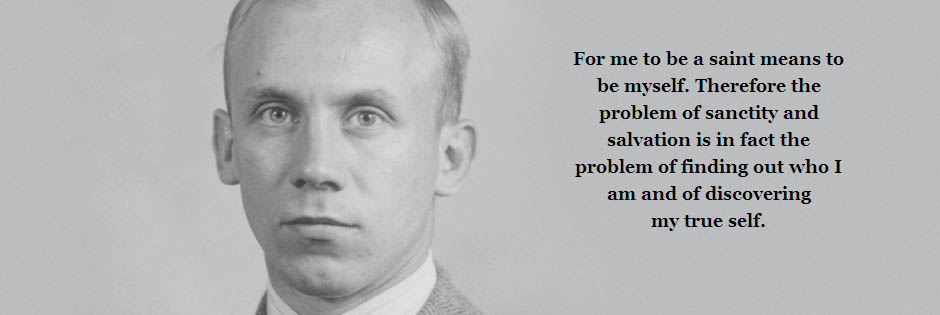
 As noted in Part I, John R. W. Stott was an Anglican cleric whom Time magazine ranked among the 100 most influential people in the world.  He wrote a book, Understanding the Bible, and on pages 140-143, he made three key points.

Stott’s first point was that the process of Bible inspiration “was not a mechanical one.  God did not treat the human authors of Scripture as dictating machines or tape recorders.”

He said God spoke to the authors in different ways, sometimes through dreams and visions, “sometimes by audible voice, sometimes by angels.”  He said however God spoke to them, the writers’ “literary style and vocabulary were [still] their own…   God made full use of the personality, temperament, background and experience of the biblical authors.”  Thus there was a “dual authorship.”  The Bible was equally the word of God, and the word of men and women;  “This is, indeed, how it describes itself,” with citations. (Id, at 140-41.)

Stott next disputed the notion that “every word of the Bible is literally true.”

He said instead that the words of the Bible were true “only in context,” and cited the book of Job as an example.  He said the first 37 chapters of Job consisted of dialogue, usually between Job and his ostensible comforters, while the truth of the book was contained only in the last five chapters.  “The book as a whole is God’s word, but the first thirty-seven chapters can be understood only in the light of the last five.” (Id, at 141, emphasis added.)

Thus a key principle for Stott is that Scripture is without error “in all that it affirms.

That principle (he said) was not always apparent “in the so-called ‘inerrancy debate.’”  Stott said (for example) that much of the Bible is written in a figurative manner, including many “‘anthropomorphic’ descriptions of God.”  He said the Bible often described God in human terms, as for example His having eyes and ears, or an “outstretched arm” or a “mighty hand.”  (On the other hand, Jesus Himself said that “God is spirit,” in John 4:24.)

Thus when we read of people hiding under God’s wings, we understand the Bible writer was passing on the truth that God “protects those who take refuge in him.” (Id, 141-42, emphasis added.  For more on the “inerrancy debate,” see Biblical inerrancy – Wikipedia, of which more in later posts.  See also Fundamentalism – Wikipedia, which noted that the first of the Five Fundamentals set out at the Niagara Bible Conference 1910 was “the doctrine that the Bible ‘is without error or fault in all its teaching.’”)

Then too, this business of “requiring every word of the Bible to be inerrant” brings to mind what Jesus said in Matthew 23:4, as He chastised the Scribes and Pharisees.  In the “Easy-to-Read” translation, Jesus said in pertinent part that such Scribes and Pharisees “make strict rules that are hard for people to obey.  They try to force others to obey all their rules.  But they themselves will not try to follow any of those rules.”

Of course the choice is yours. As Jesus said in John 6:37, He would never turn away anyone who comes to Him, and if “coming to Him” means – to you – having boatloads of kids or handling snakes, He may well end up accepting you as He promised, stumpy-arm and all.  On the other hand, don’t take the words of the first 37 chapters of Job too literally, or you might end up committing suicide.  See On Job, the not-so-patient, which included this complaint:

Job opened his mouth and cursed the day of his birth…  “Why did I not perish at birth, and die as I came from the womb..?  For now I would be lying down in peace; I would be asleep and at rest…  Why is light given to those in misery, and life to the bitter of soul, to those who long for death that does not come, who search for it more than for hidden treasure, who are filled with gladness and rejoice when they reach the grave?

*   *   *   *

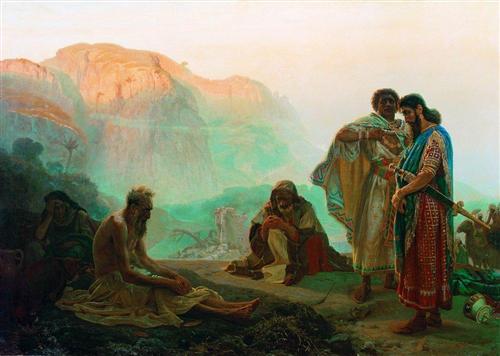
Job and His Friends - Ilya Repin

*   *   *   *

The upper image is courtesy of Understanding the Bible by John R.W. Stott — Reviews, ….  See also John Stott – Wikipedia, which added – as noted – that Stott was an Anglican cleric whom Time magazine ranked among the 100 most influential people in the world.

The lower image is courtesy of Job and His Friends – Ilya Repin – WikiArt.org.

On snake-handling, Fundamentalism and suicide – Part I

A snake-handler – who may answer to the name “Stumpy” – ostensibly following Mark 16…

*   *   *   *

A small minority of rural Christians practice “snake handling” as part of their religious ritual.  They do this based on a passage from Mark 16:16-18, part of Jesus’ “Great Commission:”

 And [Jesus] said to them, “Go into all the world and proclaim the gospel to the whole creation…    And these signs will accompany those who believe:  in my name they will cast out demons;  they will speak in new tongues;  they will pick up serpents with their hands;  and if they drink any deadly poison, it will not hurt them;  they will lay their hands on the sick, and they will recover.” (E.A.)

On the other hand, see for example Snake-Handling Pentecostal Pastor Dies From Snake Bite – ABC …, which arguably shows that such a practice may not be such a good idea.

Then there are the Christians who seek to have “quiverfulls” of children, based on another, more obscure Bible passage, to wit: Psalm 127:3-5:

Behold, children are a gift of the LORD, the fruit of the womb is a reward.   Like arrows in the hand of a warrior, So are the children of one’s youth.   How blessed is the man whose quiver is full of them…

All of which comes under the heading of taking the Bible too literally, not to mention “out of context.”  That can be a definite problem if you think the way to get into heaven is either handling snakes (“Stumpy”), or having quiverfulls of children.  On the other hand, if you’re focusing solely on the end result and not the instructive “journey,” you may have “already missed the point.”  See for example On three suitors (a parable), which included this prayer:

O God, if I worship Thee in fear of hell, burn me in hell;  if I worship Thee in hope of Paradise, exclude me from Paradise;  but if I worship Thee for Thine own sake, withhold not Thine everlasting beauty.

So the point – in case I’m being too subtle – is not to focus on getting into heaven as the “be-all and end-all.”   The point of your Christian life is to focus on the journey, and all the valuable lessons you can learn while you’re in your present incarnation, but we digress

But that does bring up the difference between focusing too exclusively on the “plain meaning” of the Bible – treating it as a set of definite statutes or rules to be followed, on pain of being excluded from heaven – as opposed to treating it as a Book of Wisdom, from which valuable life lessons might be gleaned (and the pathway to heaven paved, metaphorically).

In other words, you could say that the Bible message is both simple enough for a child to understand, yet so full of subtle mysteries that a lifetime can be spent on its study, yet still leave myriads of lessons yet to be learned.  (See 1st Corinthians 4:1, “This is how you should regard us, as servants of Christ and stewards of the mysteries of God.”)

But there is both another way, and an inherent danger in taking its “plain meaning” too literally.

For example, John R. W. Stott was an Anglican cleric whom Time magazine ranked among the 100 most influential people in the world.  He wrote a book, Understanding the Bible, and on pages 140-143, he made three key points, as discussed in Part II.

*   *   *   *

989766

*   *   *   *

The upper image is courtesy of Snake handling – Wikipedia.  The caption reads, “Snake handling at Pentecostal Church of God, Lejunior, Harlan County, Kentucky September 15, 1946 (National Archives and Records Administration). Photo by Russell Lee.”

As to the validity of such practices as a method of proving one’s faith, see Does MARK 16:17-18 mean that Christians should handle deadly …:

This passage can be understood two ways.  One way is to assume that Jesus followers are expected to handle deadly snakes…   Another way to understand this passage is to be reassured that when Christians accidentally come in contact with poisonous snakes, God will miraculously protect them…   Such an experience happened to the apostle Paul.  After being shipwrecked and escaping to the island of Malta, Paul was bitten by a deadly snake. [Acts:28:1-6].  Additionally, the Bible tells us that we should not tempt God by deliberately placing ourselves in potential danger [Matthew 4:5-7]. (E.A.)

Further information on the “Quiverfull Movement” can be found at sites including Quiverfull – Wikipedia; What Is Quiverfull? – Patheos, part of “No longer quivering,” an ostensible “gathering place for women escaping and healing from spiritual abuse;”  5 Insane Lessons from My Christian Fundamentalist Childhood …;  and/or QuiverFull .com :: Psalm 127:3-5.

(Please note that these were the first four entries listed under the “Google search,” and are not intended to be interpreted as any sort of personal “ranking” by the Scribe.”)

The lower image is courtesy of Understanding the Bible by John R.W. Stott — Reviews.  See also John Stott – Wikipedia. 

On the “Gospel of Marx”

148751 600 Gospel According to Marx cartoons


Conservative Michael Ramirez did the May 18 cartoon above, which led to responses like this:

Ramirez’s May 18 cartoon of Pope Francis and the so-called gospel of Marx is evidence that [he] is ignorant of the difference between Christ’s love of the poor and Marxist communism’s philosophy, which espouses not only atheism but oppression of all, poor and wealthy. Another very important point is that Christ invites us, does not force us – as communism would do – to share our goods with the poor and treat them with love and respect.  (E.A.)

See Drawing wrong conclusion – Spokesman Mobile – May 27, 2014.  (See also Another view of Jesus feeding the 5,000, on getting “normally-greedy people to share what they had.”)

But sometimes the best response comes right from the Bible; in this case, as found in the Daily Office Readings (DORs) for last Saturday, August 9, at The Lectionary – Satucket.com.

The New Testament reading was Acts of the Apostles, 4:32-5:11.  The New Century Translation included the headings “The Believers Share” and “Ananias and Sapphira Die:”

The group of believers were united in their hearts and spirit.  All those in the group acted as though their private property belonged to everyone in the group.  In fact, they shared everything. . .    And God blessed all the believers very much.  There were no needy people among them.  From time to time those who owned fields or houses sold them, brought the money, and gave it to the apostles.  Then the money was given to anyone who needed it. (E.A.)

This happened right after Pentecost, when the number of Believers in the new Church jumped from about 120 to over 3,000.  (See Pentecost – Wikipedia, the free encyclopedia.)

So anyway, the 8/9 reading went on about Joseph, “a Levite from Cyprus,” who sold his property and gave the money to the Apostles.  In contrast, Chapter 5 had Ananias and his wife Sapphira trying to snooker the Apostles (and by extension God  –  which by the way is never a good idea).  

Ananias sold some property and gave some money to the Apostles, but held some back with his wife’s approval.  (They may have been conservatives “but I’m just guessin’ you understand.”)  Somehow Peter figured it out and asked Ananias, “How is it that you have contrived this deed in your heart?  You have not lied to men but to God.”  At that point Ananias literally dropped dead.

They had just carried his body out when his wife Sapphira came in, and Peter confronted her:

Peter said to her, “How is it that you have agreed together to tempt the Spirit of the Lord? Hark, the feet of those that have buried your husband are at the door, and they will carry you out.”   Immediately she fell down at his feet and died.  When the young men came in they found her dead, and they carried her out and buried her beside her husband.  And great fear came upon the whole church, and upon all who heard of these things.

All of which supports my theory that it’s never a good idea to snooker God, and – come to think of it – maybe it’s not such a great idea to call the Pope a Marxist either.

On a related note the Gospel had Jesus cleansing the Temple with a whip of cords, as illustrated in On “chutzpah”.   Which leads me to wonder if it was all Jewish People or just the conservatives who were so dead set against Jesus.  (See also On Jesus: Liberal or Fundamentalist?)   So just for laughs let’s substitute “conservatives” for “Jews” in this portion of the August 9 Gospel:

And he [Jesus] told those who sold the pigeons, “Take these things away; you shall not make my Father’s house a house of trade. . .”   The Conservatives then said to him, “What sign have you to show us for doing this?”   Jesus answered them, “Destroy this temple, and in three days I will raise it up.”  The Conservatives then said, “It has taken forty-six years to build this temple, and will you raise it up in three days?”  But he spoke of the temple of his body. . .

(Hmmm.  We may be on to something.)  And by the way, the point of  Liberal or Fundamentalist was that Jesus was neither conservative nor liberal, but “right there ‘in the middle of the road.’”


Which leads to the point of this post:  It seems some Conservatives are still opposing the message of Jesus.


The upper image is courtesy of Gospel According to Marx by Political Cartoonist Michael …   For more on this cartoonist see Michael Ramirez – Wikipedia, the free encyclopedia.

The lower image – just to show how fair and balanced this blog is – is included in the web article Drawing wrong conclusion – Spokesman Mobile – May 27, 2014, which had a number of interesting comments on the Conservative/Christian dichotomy.  See also On Thomas Merton, which asked the musical question, “If Jesus was ‘orthodox’ why aren’t we all still Jewish?”

For purposes of clarity, as defined here a conservative is simply a person with a predetermined set of “one size fits all” answers for all life’s questions.   A liberal is different only in having a different set of predetermined “one size fits all” answers.  But what such people up doing – metaphorically – is keep pounding square pegs into round holes, but we digress. . .

Another point of this blog is that in contrast to having such a predetermined set of answers, the better approach is:   “Mind like parachute; work best when open.”  See Some Bible basics from Vince Lombardi and Charlie ChanIn turn, as defined herein someone with an open mind can’t be either a true conservative or true liberal, but rather an conservative-leaning moderate (for example).


The reader may also be interested in Was Jesus a Jewish Liberal or a Liberal Jew? – Patheos.

On “chutzpah”

El Greco’s Christ Driving the Money Changers from the Temple, which may have led an onlooker or two to say, “Geez!  That guy’s got a lot of chutzpah!”


The word for today  is Chutzpah.   It’s from the original Hebrew so it’s Bible-related.  And it’s modern for reasons including the chutzpah displayed these days, especially in political circles.  In 2011 the word – as used in a sentence – was the center of a hubbub when Michelle Bachman pronounced it “choot-spa.”  (See Michele Bachmann can’t pronouncechutzpah” – Salon.com.)  Another example:  Legal scholars say chutzpah was used “231 times in American legal opinions, 220 of those after 1980.”  See Chutzpah – Wikipedia, the free encyclopedia.

Wikipedia said it’s a Yiddish word referring to “the quality of audacity, for good or for bad,” as noted.  It comes “from the Hebrew word ḥutspâ (חֻצְפָּה), meaning ‘insolence’ or ‘audacity,'” which makes it even more Bible related.  (For that matter it may also refer to the kind of nerve it takes to argue with The Force That Created The Universe, a subject of prior blog-posts; On the Bible readings for August 3 and On arguing with God.)

Leo Rosten – who wrote The Joys of Yiddish – defined it as “that quality enshrined in a man who, having killed his mother and father, throws himself on the mercy of the court because he is an orphan.”  He further defined it as “gall, brazen nerve, effrontery, incredible ‘guts,’ presumption plus arrogance such as no other word and no other language can do justice to” (referring of course to the ancient Hebrew from which much of the Bible sprang).

Which makes it clear that our Church forebears seemed to have quite a bit of that personality trait;  people like Abraham, Moses and Jesus (seen above “cleansing the Temple”).

I mean, think about it.  Here’s this “Jesus religion” saying that little ol’ you can make a spiritual connection with the Force Which Created the Universe.  Beyond that, this religion says if you ask “Him” (anthropomorphism) to help you out, “He” will take time out from “His” busy schedule to personally intervene and straighten out the mess you’ve made out of your life.

How audacious is that?  The nerve of some people!

On that note, try Googling the term “personal relationship with God.”  I did that and got 50,400,00 results.  (That fifty million, four hundred thousand.)

One website had this comment on the type of Bible faith in which…

…the primary expression is between God and the individual.  Yet how often does the phrase “personal relationship with God” refer to faith/spirituality practiced in privacy?  Lots!  In a culture where everything in our lives is private – finances, sex, ethics, to name a few – religion and spirituality [are] expected to be private as well.

Which could lead to a thought that this personal relationship is tantamount to “being intimate” with The Force That Created The Universe, the Prime Mover, the Source of All Creativity.  Beyond that, you might even say that to begin or maintain this relationship you don’t need a formal church or specific set of rules to follow – for example – to “get into heaven.”  (But see On three suitors (a parable), as to the best type of personal prayer to achieve that end.)

So again, let’s get this straight.  This “Jesus religion” says you – as an individual – can have a personal relationship with the Prime Mover, the First Cause, the Source of All Being, and that if you play your cards right, this Ultimate Being will intervene to help you in your personal life. . .


Now that’s chutzpah!


The upper image is courtesy of Cleansing of the Temple – Wikipedia, the free encyclopedia.  And incidentally, the recessional hymn at The Scribe’s church for Sunday, July 27, was 616, “The Kingdom of God,” with a middle passage of the first verse saying “He” – meaning Jesus – “comes to break oppression, to set the captive free.”  Apparently you can’t do that without a little chutzpah, which may have been why Jesus so upset the orthodox of His day. 

(Which leads to another question:  Is “orthodox Christianity” a contradiction in terms?)


For references on the perception that Christians are negative, see On the Bible readings for August 3.

As to chutzpah as “the word used in a sentence,” the phrase was popularized recently by another  hubbub, in the 2014 National Spelling Bee.  A judge – asked to use the word “milkshake” in a sentence – referred to a 2003 song by the “American recording artist Kelis.”  Since this blog is ostensibly family-oriented, let’s just say that in the song milkshake was  “used as a metaphor for [that which] makes women special.'”  See Milkshake (song) – Wikipedia, the free encyclopedia.

(To which the Scribe has two comments.  First, “That judge showed a lot of chutzpah.”  Second, “It’s amazing what you can learn doing research for a blog,  if only you open your mind.)

Also as to the reference “used in a sentence,” see Spelling Bee Judge Quoted Kelis’ ‘Milkshake’ In Example …  and A Spelling Bee judge quoted Kelis’ ‘Milkshake’ to use a word …

See also the Contest Rules of the 2014 Scripps National Spelling Bee | …, which provide in part:

The speller may ask the pronouncer to say the word again, define it, use it in a sentence, provide the part of speech, provide the language(s) of origin and/or provide an alternate pronunciation or pronunciations.


As to the quoted portion referring to “where the primary expression is between God and the individual,” see davidwarkentin.blogspot.com/2010/09/last-thing-in-world-id-wan…..   

The lower image is courtesy of the Anthropomorphism – Wikipedia, the free encyclopedia, which included the caption, “In this illustration by Milo Winter of Aesop‘s fable, ‘The North Wind and the Sun,” an anthropomorphic North Wind tries to strip a traveler of his cloak.”

Other sources as to anthropomorphism, Prime Mover, etc., include: Prime mover – Wikipedia, the free encyclopedia, first cause (philosophy) — Encyclopedia Britannica, Cosmological argument – Wikipedia, the free encyclopedia, Unmoved mover – Wikipedia, the free encyclopedia, and/or Personal god – Wikipedia, the free encyclopedia.

On Thomas Merton

“Thomas Merton and the Dalai Lama, 1968. . .”


Thomas Merton was a Roman Catholic monk.  In his later years he found parallels between his orthodox Catholicism and those exotic Eastern religions that became all the rage back in the 1970s.   Near the end of his life – he died in 1968 – Merton traveled to India and Tibet and at one point interviewed the Dalai Lama, as shown above.

Merton also met with Chatral Rimpoche, “a Dzogchen master and a reclusive yogi known for his great realization and strict discipline.”  (See Chatral Rinpoche – Wikipedia, the free encyclopedia.)   Merton interviewed Rimpoche on the subject of meditation, and how difficult it was to reach the “perfect emptiness” that is one main goal of Eastern meditation:

“He said he had meditated in solitude for thirty years or more and had not attained to perfect emptiness and I said I hadn’t either.”

That brings up what might be called the ongoing Christian meditation, as it is practiced by most denominations.  One version begins each Sunday service with this summary:

Thou shalt love the Lord thy God with all thy heart, and with all thy soul, and with all thy mind.  This is the first and great commandment.  And the second is like unto it: Thou shalt love thy neighbor as thyself.

(See the Book of Common Prayer – “BCP” – at page 824, referred to in an earlier post as a “Cliff’s Note summary” of the entire Bible by Jesus.  See On “what a drag it is. . .”.)

But not too much later in this standard mainstream Sunday service, parishioners “confess their sins” by admitting candidly, “We have not loved thee with our whole heart; we have not loved our neighbors as ourselves.” (See the BCP at page 331, emphasis added.)

So what’s the point?

The point is this: both orthodox Christians and Eastern meditators like Chatral Rimpoche and Dalai Lama are – in their spiritual discipline – literally trying to do the impossible.

Both are trying to do what can’t be done, either meditating “perfectly” or loving God and all humanity with all your heart and soul and mind.  But to make a long story short, in practicing such  spiritual discipline you tend to become both a better person and closer to that “oneness” with The Force That Created The Universe that is the goal of true spirituality, as Jesus prayed:

I pray they will be one, Father, just as you are in me and I am in you.  I pray that they also will be in us, so that the world will believe that you sent me.  I’ve given them the glory that you gave me so that they can be one just as we are one.  I’m in them and you are in me so that they will be made perfectly one.  Then the world will know that you sent me and that you have loved them just as you loved me.

See John 17:21-23, emphasis added.  (And before you get all huffy, Mr. or Ms. Orthodox Christian, I’m not saying all religions are equal.  But see the notes below.)

There’s another point.  One biographer said Merton was helped in his spiritual quest by both Christian mysticism and his “wide knowledge of Oriental religions.”  As noted, Merton became fascinated with Zen Buddhism and Zen writer D. T. Suzuki.  He studied Taoism, “regular” Buddhism and Hinduism.  But dallying in these exotic disciplines didn’t weaken Merton’s Catholicism; if anything, they strengthened his faith.  As the biographer wrote:

[B]y approaching the spiritual quest at unexpected angles, they opened up new ways of thought and new ways of experiencing that invigorated and released him. . .

 Which leads to my theory:  The Bible is for liberating the human spirit, not shackling it.


The upper image is courtesy of Thomas Merton in Pictures, which included the caption quoted.

The lower image is courtesy of the Thomas Merton Center website; http://merton.org/App_Master/home/2b.jpg.  “The Thomas Merton Center [at Bellarmine University in Louisville KY] is the official repository of Merton’s artistic estate, which includes over thirteen hundred photographs and nine hundred drawings in addition to his writing.  The Center archives more than fifty thousand Merton-related materials.  See also Thomas Merton Center (Pittsburgh) – Wikipedia, the free …, “a non-profit grassroots organization in Pittsburgh whose mission is to educate, raise awareness and to ask the moral questions that surround issues of social justice, poverty, workers’ rights, racial discrimination, environmental and economic justice, peace and nonviolence.” 

Sounds like a pretty radical guy. . .


As to “the real Good News.”  The term Gospel is from “the Old English gōd-spell . . . meaning ‘good news’ or ‘glad tidings.’   The word comes from the Greek euangelion.”  See Gospel – Wikipedia, the free encyclopedia.  Unfortunately these days that Good News seems to have been transmogrified into bad news, as in “How can we get political power so as to control other people?”  (That seems to be the perception anyway.  See e.g. Why are Christians so negative and judgemental? – RZIM Europe, Do Christians spend too much time being negative? – Christian …, and 5 Negative Effects of Complaining for Christians – Patrick’s ….)

Merton’s conversations about meditation and/or his interviews with Eastern “masters” were related in Monica Furlong’s Merton  A Biography, Harper and Row, 1980, at pages “xx” and 324-26. 


Finally, not all Roman Catholics are enamored of Merton’s spiritual explorations.  See for example, Can You Trust Thomas Merton? | Catholic Answers, which said that Merton was controversial and that some of his ideas were dangerous, then asked:  “where do his ideas become suspect?  Does he stray from Catholic orthodoxy?”

Which raises a good question:  If Jesus was “orthodox,” why aren’t we all still Jewish?