Category Archives: Not your daddy’s Bible

On reading the Bible

Reading the Bible can provide you with “the marrow of lions…”

*   *   *   *

Here’s what Isaac Asimov said about “The Book” – and how often it’s been read:

The most influential, the most published, the most widely read book in the history of the world is the Bible.   No other book has been so studied and so analyzed and it is a tribute to the complexity of the Bible and the eagerness of its students that after thousands of years of study there are still endless books that can be written about it.* [E.A.]

So even after 2,000 years or so, “there are still endless books that can be written” about the Bible.  And – one might add – there could still be endless blogs written about it.

As for the photo caption above, it comes from Romain Rolland’s novel  Jean Christophe:

The Bible is the marrow of lions.   Strong hearts have they who feed on it…  The Bible is the backbone for people who have the will to live.

So that’s one thing this blog will  try to do:  Help you develop that “marrow of lions.”

To begin with, one key to reading the Bible is to remember that it’s not a history book in “modern sense.”  The people who wrote the Bible “lacked the benefit of of modern archaeological techniques, did not have our concept of dating and documentation, and had different standards of what was and not significant in history.” (Asimov.)

Then too it’s important to remember that the people who wrote the Bible had to keep in mind their primary audience.  In the case of Moses, that meant his fellow Hebrews who had far less education than he did.  As a result, he pretty much had to dumb it down.
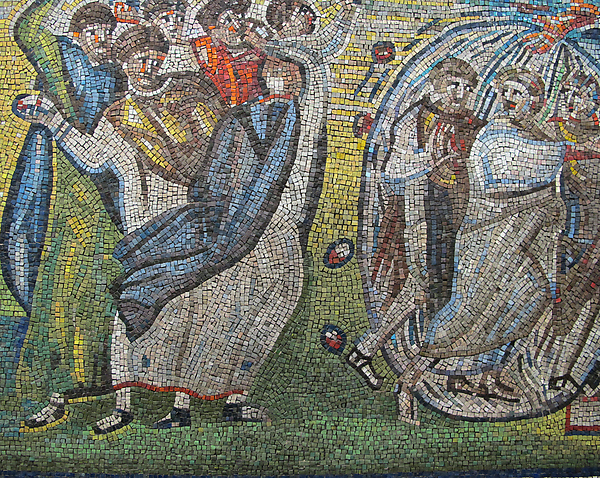
Stoning of Moses, Joshua and CalebIn other words, Moses had to write very carefully.  In the first place, he had to make sure his primary audience of soon-to-be desert cut-throats would listen to him.  Second, he had to insure they wouldn’t turn and stone him for heresy.  [See On Moses getting stoned, including the illustration at left.]

Thus in the Torah – the first five books of the Bible – Moses had to tell the history of the world from its Creation, up to where he and his fellow Hebrews were wandering in the wilderness.  In doing so he had to use language and concepts his “relatively-pea-brained contemporary audience could understand.”

The point being:  Moses’ ability to “tell the story he wanted was limited to his audience’s ability to comprehend.”  (See On the readings for June 15 – Part I.)

Which by the way is also pretty much the problem God has, in trying to communicate with us. (Or that we have when trying to communicate with Him.)  See for example Isaiah 55:8-9:

For my thoughts are not your thoughts,
    nor are your ways my ways, says the Lord.

That’s a good reason why you’re only cheating yourself if you choose to read and study the Bible only in a strict, narrow, or fundamental way.

One risk is that you create God in the image of you, instead of the other way around.  (See Genesis 1:27 and Genesis 5:1.)   And you risk limiting your appreciation of the majesty of God – the Force that Created the Universe – to your puny, “pea-brained” ability to comprehend.

So I’d say the better course is to admit that you can never fully comprehend “God.”

But you can try and glimpse Him, albeit “through a glass, darkly.”  See 1st Corinthians 13:12:

For now we see only a reflection as in a mirror; then [in heaven] we shall see face to face. Now I know in part; then I shall know fully, even as I am fully known.
Note first that the “through a glass, darkly” phrase is from the King James Translation.  (The one God uses.)  But  note also that Paul was saying no matter how long we study the Bible and follow The Faith, we can never fully comprehend “God.”  (At least not in this “incarnation.”)

Which doesn’t mean the effort won’t pay off.  (See On the Bible as “transcendent” meditation, and Spiritual boot camp.)  Then too, that doesn’t mean the best place to start your Bible training is not to take it literally.  Just like Army Basic Training, the best place to start is with the fundamentals:  “This is where individuals learn about the fundamentals of being a soldier…”

But no good soldier wants to be stuck as a buck private his whole time “in service.”  (Although there are some few who enjoy having no additional responsibility…)

That’s what this blog is about:  Developing into more than just someone who knows the bare “fundamentals.”  Which is another way of saying that by reading the Bible with an open mind, you can reap its full benefit and do all that God intended for you to do.

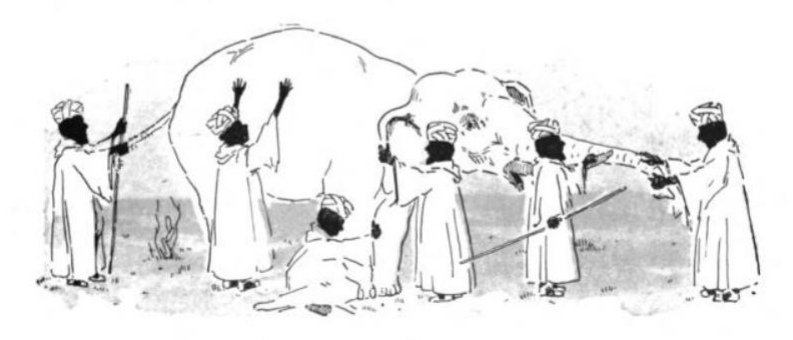
To put it yet another way:  If those six blind men had gotten together and compared notes, they would have gotten a much better picture of what they were seeking. . .

*   *   *   *
*   *   *   *

First note that I edited and/or updated this post on January 21, 2016.  That was in preparation for publishing my fourth collection of blog-posts, also titled “On Reading the Bible.”  (Which I haven’t gotten around to yet.)  In turn, this post was originally published on July 19, 2014, and was updated and/or edited again on October 22, 2018,

References to posts after July 2014 will be in brackets, as in “[See On Moses getting stoned.].”

*   *   *   *

The upper image is courtesy of Lion – Wikipedia.  The caption:  “A Male Lion at Bannargatta National Park, Bangalore, India.”

*   *   *   *

[Re:  The ancient Hebrews as “desert cut-throats.”  From the paragraph beginning “In other words, Moses had to write very carefully.”  Note first that this end-note was added as part of the 1/21/16 update, and thus is listed in brackets.  As to the reference, see Contradictions Of Christianity – Vanguard News Network Forum, which referred to “Yah being the ancient tribal god of the Habiru Sagaz or Desert Cutthroats, as jews [sic] were known in those times.”  The writer also noted the “hypocritical chameleon called Christianity,” which gives a flavor of that writer’s not-so-hidden agenda.  Be that as it may, see also Habiru – Wikipedia, noting the name from which “Hebrew” arguably sprang, and also The Mysterious Habiru – The History of Israel.  The point being:  After 40 years of Wandering in the Wilderness, those ancient Hebrews were not anything “civilized people” would want to mess with.  In further words, they were arguably the functional equivalent of the Bedouin – “desert dwellers” – if not today’s Hells Angels, at least in terms of fighting capacity.]

*   *   *   *

*  Asimov’s Guide to the Bible (Two Volumes in One),  Avenel Books (1981), at page 7, Introduction.

Note also that the term Gospel is from “the Old English gōd-spell . . . meaning ‘good news’ or ‘glad tidings.’   The word comes from the Greek euangelion.”  See Gospel – Wikipedia.

Jean-Christophe was a novel – written in 10 volumes and completed in 1912 – that earned Rolland the Nobel Prize for Literature in 1915.  As for the quote, see the web article Part VIII – Nystamp.org, under “Conflict with Evolution,” emphasis added.  Romain Rolland (1866-1944) was “a French dramatist, novelist, essayist, art historian and mystic,” awarded the Nobel Prize for Literature in 1915 “as a tribute to the lofty idealism of his literary production and to the sympathy and love of truth with which he has described different types of human beings.” 

The Isaiah 55 quote is from The Living Bible translation, emphasis added.   

The King James Bible image is courtesy of King Jame’s Bible – Image Results.

The lower image is courtesy of Blind men and an elephant – Wikipedia, the free encyclopedia.  Wikipedia noted that this parable “has crossed between many religious traditions and is part of Jain, Buddhist, Sufi and Hindu lore.”   In the Buddhist version, “The men cannot agree with one another and come to blows over the question of what it is like and their dispute delights the king.  The Buddha ends the story by comparing the blind men to preachers and scholars who are blind and ignorant and hold to their own views.”  See also Matthew 13:34 (ESV):  “All these things Jesus said to the crowds in parables; indeed, he said nothing to them without a parable.


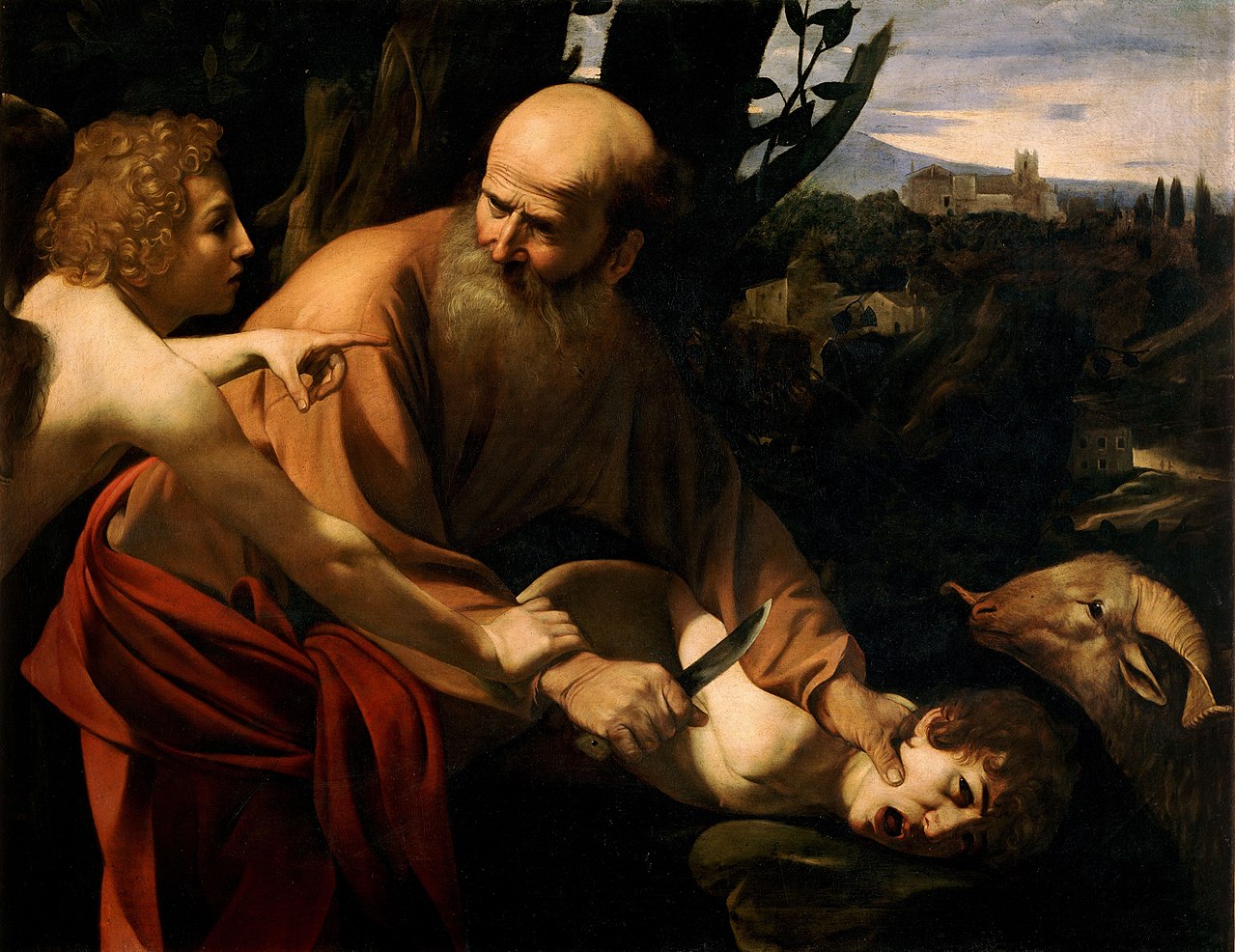
Abraham and Isaac – Where God CHANGED some “traditional values and attitudes…”

“The ‘Sacrifice of Isaac,’ where God finally said “Stop!  Let’s change some ‘traditional values…'”

*   *   *   *

The readings for June 29, 2014, are Genesis 22:1-14, Psalm 13, Romans 6:12-23, and Matthew 10:40-42.  The Genesis story tells of God apparently asking Abraham to kill his son.
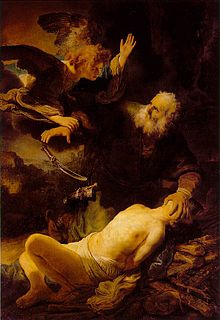
That is, In Genesis 22:1-14, “God tested Abraham,” by appearing to ask him to kill his first-born son Isaac.  That was the son – Isaac – that Abraham and his wife Sarah had been waiting and praying for “lo these many years.”   (As noted in On “Call me Ishmael” – June 22 Part I, “Abraham was 100 years old when Isaac was born, and Sarah was past 90” when Isaac was born.)

The story bothers a lot of people.  That’s because it apparently shows God ordering a father to kill his own son.  And that’s the view you would take if you took the lesson literally.   

But if you look at some other “prevailing wisdom,” you might get a wholly different take.  (See On “originalism,” noting that originalism is the view that interpretation “should be based on what reasonable persons living at the time . . . would have declared the ordinary meaning of the text to be.”)  In that view you would ask:  What would a reasonable man – under the “community standards” at the time – have thought of Abraham killing his son as a “sacrifice?”

Apparently it wouldn’t have bothered that “reasonable man” at all.  That’s because at that time and place, child sacrifice was quite common.  See Binding of Isaac – Wikipedia – illustrated at right – and citing “Hertz:”

[C]hild sacrifice was actually “rife among the Semitic peoples. . .  [I]n that age, it was astounding that Abraham’s God should have interposed to prevent the sacrifice, not that He should have asked for it.”  Hertz interprets the Akedah as demonstrating to the Jews that human sacrifice is abhorrent.

A note:  Akedah is Hebrew short-hand for the Abraham-Isaac story, and translates “The Binding.”  So to a reasonable Semite at the time – when the story occurred, or when Moses wrote it down, if not both – a father offering his son as a “sacrifice to the gods” was so common that the Akedah proved the noteworthy exception.

So at the time of Abraham, routine child sacrifice was a prevailing “traditional value.”

Which means this story would  be something like today’s “man bites dog” journalism.  That is, a story about “an unusual, infrequent event is more likely to be reported as news than an ordinary, everyday occurrence.”  See Man bites dog (journalism) – Wikipedia.

(Did the Scribe mention that he got a Master’s Degree in Journalism?)

So the Good News is not that God is as cruel as a literal reading of the story would indicate.  (I.e., from from a “plain reading.”)  The point God wanted to make was just the opposite of what a plain or “literal reading” would show.  God wanted to change some of the “prevailing practices” at the time.  On that note, the general definition of conservative is of a “person who is averse to change and holds to traditional values and attitudes.”

But in this case, God felt a prevailing practice needed to be changed.

*   *   *   *

Moving on, in Psalm 13, the writer first asked, “How long, O LORD?  Will you forget me for ever?”  But he ended on a note of hope, “I will sing to the LORD, for he has dealt with me richly; I will praise the Name of the Lord Most High.”  (Maybe because God didn’t require child sacrifice.)

In Romans 6:12-23, Paul wrote about the wages of sin; “For the wages of sin is death, but the free gift of God is eternal life in Christ Jesus our Lord.”  And the post D-Day and confession addressed this whole business of sin, a “business” that seems to turn off a whole lot of non-Christians.  (For example, the search “Christians hung up on sin” led to offerings including Advocatus Atheist: Why are Christians Hung Up on Sin?)  Anyway, here’s what  “D-Day” said:

When we “sin” we simply fall short of our goals; we “miss the target.”  When we “confess,” we simply admit to ourselves how far short of the target we were.   And maybe the purpose of all this is not to make people feel guilty all the time, as some seem to imply.

Note also Paul’s saying, in Romans 6:19, “I am speaking in human terms because of your natural limitations.”  In other words Paul – like Moses and indeed God Himself – is not limited by his (or His) ability to teach, but only by our ability to comprehend.

So Moses couldn’t tell “the truth” about such things as the earth revolving around the sun, because he had to tell the story of Creation “using language and concepts that his relatively-pea-brained contemporary audience could understand.” See On the readings for June 15 – Part I.  So also Paul – like God – had to keep in mind the “natural limitations” of his (His) audience.

And finally, in Matthew 10:40-42, Jesus spoke of the “reward of the righteous.”  That especially concerned the children who used to be so routinely offered as a sacrifice to the “old gods” in the time of Abraham.  As Jesus said, “Whoever gives even a cup of cold water to one of these little ones in the name of a disciple – truly I tell you, none of these will lose their reward.”

Note the difference – and the improvement – over some “traditional values and attitudes.”

*   *   *   *

“Christ with children by Carl Heinrich Bloch.”

*   *   *   *

The upper image is courtesy of Binding of Isaac – Wikipedia.  The full caption reads: “‘The Sacrifice of Isaac’ by Caravaggio, in the Baroque tenebrist manner.”  As to the wording of the caption, see “Or words to that effect” – Wiktionary, and also “Or Words to that Effect” – Adoremus Bulletin, quoting the character Richard Rich in the plan “A Man for All Seasons.”

Re:  Abraham – Wikipedia.  The caption for the image to the left of the lead paragraph is captioned:  “Abraham about to sacrifice Isaac. From a 14th-century missal.”

Note also this post was originally published on June 23, 2014, titled, “On the readings for June 29.”  I upgraded it, changed the title, added some images and otherwise upgraded it on October 16, 2018.

As to reasonable, see Reasonable person – Wikipedia:  “The reasonable person (historically reasonable man) is one of many tools for explaining the law to a jury.”

As to the Hertz reference, “Rabbi Joseph Herman Hertz, CH (September 25, 1872 – January 14, 1946) was a Jewish Hungarian-born rabbi and Bible scholar. He is most notable for holding the position of Chief Rabbi of the United Kingdom from 1913 until his death in 1946, in a period encompassing both world wars and the Holocaust.”

The lower image – and note the contrast between the upper and lower images – is courtesy of The Little Children – Wikipedia.

On “holier than thou”

*   *   *   *

Try this. Type “holier” in your search engine. “Holier than thou” will automatically pop up, and there’s probably some kind of object lesson there.  (“An example from real life that teaches a lesson or explains something.”)

Then too, an Internet “holier than thou” search will lead to the self-righteousness article in Wikipedia. It defines self-righteousness and/or a holier than thou attitude as a “feeling or display” – usually smug – “of moral superiority derived from a sense that one’s beliefs, actions, or affiliations are of greater virtue than those of the average person. Self-righteous individuals are often intolerant of the opinions and behaviors of others.”

Wikipedia also noted that the term is often considered derogatory:

…particularly because self-righteous individuals are often thought to exhibit hypocrisy due to the belief that humans are imperfect and can therefore never be infallible, an idea similar to that of the Freudian defense mechanism of reaction formation. The connection between self-righteousness and hypocrisy predates Freud‘s views, however, as evidenced by the 1899 book Good Mrs. Hypocrite: A Study in Self-Righteousness, by the pseudonymous author “Rita.”

In other words, the attitude has been around for a lot longer than 1899.   In fact it was around when Jesus walked the shores of Lake Galilee, which leads to another interesting note. The Wikipedia article on self-righteousness includes a link to The Mote and the Beam, the parable of Jesus illustrated in the painting above.  (There’s probably some kind of object lesson there too.) If you missed it, here’s Wikipedia on the story:

The Mote and the Beam (also called discourse on judgmentalism) is a proverbial saying of Jesus given in the Sermon on the Mount, in the Gospel of Matthew, chapter 7, verses 1 to 5. The discourse is fairly brief, and begins by telling his disciples not to judge others, arguing that they too would be judged by the same standard.

Specifically, Jesus said, “Why, then, do you look at the speck in your brother’s eye and pay no attention to the log in your own eye?   How dare you say to your brother, ‘Please, let me take that speck out of your eye,’ when you have a log in your own eye?  You hypocrite! First take the log out of your own eye, and then you will be able to see clearly to take the speck out of your brother’s eye.”  (This was right before Jesus told about “casting pearls before swine.”)

So how do you know if you’re self-righteous???  That’s the problem, you don’t.  If you’re self-righteous or have a “holier than thou” attitude, you won’t realize it.  That’s because – being self-righteous – you simply can’t admit the possibility that you are wrong.  You simply can’t be wrong on your take on the Bible, and more to the point, you simply can’t be wrong in telling people that you’re going to heaven and they aren’t.  (“Bleah!”)

(That’s where the “prevailing quacks” come in. See the Mencken note below.)

Or maybe it’s like what a former mentor, Father Watson, said about the Unforgiveable Sin.  He said if you’re worried that you may have committed the Unforgiveable Sin (or the Eternal Sin), you probably haven’t.  In other words, just by being aware you may have committed the Unforgiveable Sin can assure you that you haven’t.

In the same way, just being aware that you may be self-righteous – or may have a “holier than thou” attitude – is a strong indication that you probably don’t have either problem.

Of course I could be wrong!

http://3.bp.blogspot.com/-XZJhPXe2I7M/TLqFa9FQUfI/AAAAAAAAABk/brh__nKDJik/s1600/ducksign.jpg


The upper image is courtesy of the “Mote and beam” Wikipedia article.   The full caption: “A [circa] 1619 painting by Domenico Fetti entitled The Parable of the Mote and the Beam.”

“Object lesson.”  See Object lesson – Merriam-Webster Online, and also object lesson – Wiktionary.

As to Father Watson’s take, see also What is the “unforgivable sin … Power to Change: “Thus, if you are worried that you have committed blasphemy against the Holy Spirit, you could not possibly have done it.”  (Emphasis in the original.)

As to what God really wants – rather than being self-righteous or “holier than thou” – see the end of On the June 22 readings – Part II: from Micah 6:8 (in the Living Bible); God “has told you what he wants, and this is all it is: to be fair, just, merciful, and to walk humbly with your God.”

The lower image is courtesy of “http://3.bp.blogspot.com/-XZJhPXe2I7M/TLqFa9FQUfI/AAAAAAAAABk/brh__nKDJik/s1600/ducksign.jpg.”   The image refers H. L. Mencken’s quote indicating the job of both journalists and Christians is to “challenge the prevailing quacks,” as noted in his Minority Report:

The only way that democracy can be made bearable is by developing and cherishing a class of men sufficiently honest and disinterested to challenge the prevailing quacks.   No such class has ever appeared in strength in the United States.  Thus, the business of harassing the quacks devolves upon the newspapers.  When they fail in their duty, which is usually, we are at the quacks’ mercy.

Did the Scribe mention that he has a Master’s Degree in journalism??

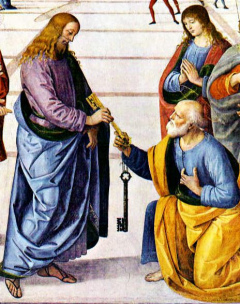
On sharing the “Keys to the Kingdom”

http://1.bp.blogspot.com/--1vhjKxrU9U/UGeCj3_8C8I/AAAAAAAAIng/uG8Bh0ZvmMY/s1600/jesus-handing-keys-to-apostle-peter.jpg


Roman Catholics like to claim theirs is the one-and-only true church, based on Matthew 16:13-19, where Jesus asked His disciples, “Who do people say that the Son of Man is?”

The guesses included John the Baptist, Elijah, Jeremiah, or one of the other prophets of old.  Then Jesus said, “But who do you say that I am?”

Simon Peter said in reply, “You are the Messiah, the Son of the living God.”  Jesus said to him in reply, “Blessed are you, Simon son of Jonah. . .   I say to you, you are Peter, and upon this rock I will build my church, and the gates of the netherworld shall not prevail against it.  I will give you the keys to the kingdom of heaven. Whatever you bind on earth shall be bound in heaven; and whatever you loose on earth shall be loosed in heaven.” (E.A.)

So far so good.  Jesus gave Peter the “keys to the kingdom,” as shown in the painting-detail above.  (Actually a fresco in the Sistine Chapel.)  And so – Jesus told Peter – “Whatever you bind on earth shall be bound in heaven; and whatever you loose on earth shall be loosed in heaven.” (See Power of the Keys – Wikipedia, and CATHOLIC ENCYCLOPEDIA: Power of the Keys – New Advent.)

But note what happened a couple chapters later, in Matthew 18.  That chapter began with the  disciples – all 12 of them – coming to Jesus and asking, “Who is the greatest in the kingdom of heaven?”  That’s when Jesus called a child and “put him in the midst of them” – all 12 of them – and said, “Truly, I say to you, unless you turn and become like children, you will never enter the kingdom of heaven.”  Jesus spoke on sin and “woe to the man by whom the temptation comes!”  He added the metaphor – not to be taken literally – about plucking your eye out if it caused you to sin, because “it is better for you to enter life with one eye than with two eyes to be thrown into the hell of fire.”  Later He added this, speaking to all 12 disciples:

Truly, I say to you, whatever you bind on earth shall be bound in heaven, and whatever you loose on earth shall be loosed in heaven.

Wait.  What?  Weren’t those the same words that Jesus spoke to only Peter, a chapter or two before?  And wasn’t that the same power that Jesus had given only to Peter?

What happened?

One thing that happened came just a few verses later in Matthew 16, beginning at verse 21.  That’s where Jesus started to tell His disciples He had to go to Jerusalem, suffer at the hands of “the elders and chief priests and scribes,” and be killed, and on the third day be raised:

And Peter took him and began to rebuke him, saying, “God forbid, Lord! This shall never happen to you.” 23 But [Jesus] turned and said to Peter, “Get behind me, Satan!  You are a hindrance to me; for you are not on the side of God, but of men.” (E.A.)

(In the words of the King James Bible – the one God uses – the phrase was “Get thee behind me, Satan.”)  As to why Jesus said that, consider Why did Jesus say to Peter, “Get behind me Satan”?   But the fact remains that Jesus did say that, and so – not long after saying that – He took the exclusive power He’d given to Peter and made it the power of all 12 disciples.

As to the effect of that change, see for example A Natural Law Manifesto – Right Reason, which indicated in pertinent part that “the statute passed later is presumed to have superseded the law enacted earlier.”  See also 7 Modification of Contracts – Shefsky & Froelich, which indicated that an “agreement that is complete on its face supersedes all prior agreements on the same
subject matter.”  (Did the Scribe mention that he was a lawyer in his prior life?)

So, in Matthew 16:16 Jesus gave Peter the exclusive power of the “keys to the kingdom.”  Then a few verses later Jesus sternly rebuked Peter for becoming “an unwitting spokesperson for Satan.” (See the “Why did” site above.)  Later still Jesus either effectively modified His “statute” or His “contract” and – using the same language – changed the power of “binding and loosing” by giving it to all 12 disciples instead of just Peter alone.

The effect of all this is to nullify the strong implication – promoted by the whole “St. Peter and the Keys” thing – that only Roman Catholics will get into heaven.  Of course Southern Baptists say pretty much the same thing, on the theory that infant baptism has no practical effect and that in order to get into heaven you have to be baptized as an adult. (See Baptists – Wikipedia.)

But what does the Bible say?  For one thing the Apostle Paul said, in Philippians 2:12, “work out your own salvation with fear and trembling.”  Which is of course perfectly consistent with what he said much earlier, in Romans 10:9, “If you declare that Jesus is Lord, and believe that God brought him back to life, you will be saved.”  (Emphases added.)

Maybe that’s why they call it “Good News. . .”

*   *   *   *

*   *   *   *

As to the keys to the kingdom, see also Delivery of the Keys (Perugino) – Wikipedia, the …, describing a fresco in the Sistine Chapel, in Rome.  The image at the top of this post is a detail of that fresco.

As to “Roman Catholics.”  Here’s the distinction.  “Small-c” catholic means universal or comprehensive; “especially :  broad in sympathies, tastes, or interests <a catholic taste in music>”.  See Catholic – Definition and More from the Free Merriam-Webster.  A more earthy example might be:  “That guy certainly has catholic tastes in women.  He’ll do anybody.”

But see also Cafeteria Catholicism – Wikipedia, which noted in part:

The term cafeteria Catholicism is applied to those who assert their Catholic identity yet dissent from Catholic doctrinal or moral teaching or who are viewed as dissenting by those using the term.  Examples include Catholics who are accused of dissenting from Church teachings on human sexuality (the so-called “pelvic issues”). . .

The site also noted that the term “is most often used by conservative Catholics critical of progressive Catholics.”  On that note see About this Blog, which said “those who read the Bible strictly, narrowly and/or ‘fundamentally'” – or you could read in conservatively – “are not only cheating themselves, they’re also driving other people away from the Faith of the Bible in droves.”

As to good news and gospel:  “The word gospel derives from the Old English gōd-spell [5] (rarely godspel), meaning ‘good news’ or ‘glad tidings.’   The word comes from the Greek euangelion, or ‘good news.’   The gospel was considered the ‘good news’ of the coming Kingdom of Messiah, and of redemption through the life and death of Jesus, the central Christian message.” Gospel – WikipediaThe lower image is courtesy of that article, which featured the caption, “The first page of the Gospel of Mark in Armenian, by Sargis Pitsak, 14th century.”

On the Christian repertoire

“The Dalai Lama with US President Barack Obama at the White House. . .”


According to Wikipedia, “Buddhism is one of the largest religions in the United States behind Christianity, Judaism and nonreligious.”    (A BTW:  The latter category raises a whole ‘nother set of issues and possibly a future blog-post or two.)

In 2012, the U-T San Diego  – a daily paper published in San Diego, California with a circulation of some 250,000 on weekdays and over 400,000 on Sundays – estimated the  number of Buddhists in America at some “1.2 million people, of whom 40% are living in Southern California.”

(Which explains a lot.  See for example Urban Dictionary: Land of Fruits and Nuts.)

Anyway, Buddhism is based on the teachings of Siddhartha Gautama – “commonly known as the Buddha” – who lived and taught in the “eastern part of the Indian subcontinent sometime between the 6th and 4th centuries BCE” [using the pointy-headed liberal alternative to “BC,” so as not to offend].   Here’s one thing the Buddha once said that may be of interest here:

Do not believe on the strength of traditions even if they have been held in honor for many generations. . .     Believe nothing which depends only on the authority of your masters or of priests.  After investigation, believe that which you yourself have tested and found reasonable, and which is good for your good and that of others.

But the Apostle Paul said pretty much the same thing in First Thessalonians 5:21: “Prove all things; hold fast that which is good.”   See also First John 4:1, “Do not believe every spirit, but test the spirits to see whether they are of God.”  And see also Philippians 2:12, where Paul added, “Work out your own salvation, with fear and trembling.”

That part about “fear and trembling” might strike some nonreligious as the kind of “negative vibe” that is such a turn off about religion in general, and especially Christianity.  But if you think about it, such “fear and trembling” makes sense.  Consider the stakes; after you die, will you be eternally happy or eternal maggot food?   Accordingly, what rational person wouldn’t work toward a possible afterlife with a certain amount of due diligence?

Getting back to the Christian repertoire, consider what Chief Crowfoot once said, “What is life? It is the flash of a firefly in the night. It is as the little shadow that runs across the prairie and loses itself in the sunset.”  But again, in the Bible, “James the Just” said pretty much the same thing: “For what is your life?  It is even a vapor, that appeareth for a little while, and then vanisheth away.”  James 4:14, in the King James Version (the one God uses.)

The point of all this is pretty simple: there’s nothing in the vast panoply of religious and/or spiritual choices in America and beyond that isn’t already in the the Christian repertoire.

And speaking of Baby-boomers – those of us who came of age in the 1970s when we first started hearing about a host of exotic Eastern alternatives – consider one of the best-selling “me” books in the “me generation,” How to be Your Own Best Friend.

Considered groundbreaking at the time, there’s also nothing in it that isn’t in the “Christian repertoire.”   For example, page 22 of The Scribe’s copy said that in trying to find happiness, most people look in the wrong place; “The source is not outside us; it is within.”  And later, “We must realize that the kingdom is in us; we already have the key.”  But that too was already in the Bible, when Jesus said, “The kingdom of God is within you.” (Luke 17:21)

Moving right along, one of the primary objectives of yoga, Zen, and those other Eastern disciplines seems first to “kill the ego.”   See for example the book How to Meditate, noted previously in Spiritual boot camp.   See too How to Meditate at page 55:  “I will teach you the best way to say Torah.  You must be nothing but an ear which hears what the universe of the word is saying in you.  The moment you hear what you yourself are saying, you must stop.”

So maybe reading and studying the Bible “in the proper manner” means pretty much the same thing; losing of your “self” in study.  In turn, the goal there is to become “one” with the Original Source, the Universal Mind, or what we Westerners call “God.”   That seems to be what Jesus was referring to as He prayed in John 17:20-23, in the Upper Room on the evening before He was crucified, asking God’s help for those who would believe in Him:

“I ask . . . on behalf of those who will believe in me . . . that they may all be one.  As you, Father, are in me and I am in you, may they also be in us, so that the world may believe that you have sent me.  The glory that you have given me I have given them, so that they may be one, as we are oneI in them and you in me, that they may become completely one. . .”

And finally, that also seems to be just what one “Common Prayer” meant when it said that Christians – through the sacrament of sharing Holy Communion – are in the process of becoming “very members incorporate in the mystical body of thy Son.”


So who says Christianity can’t be “mystical?”


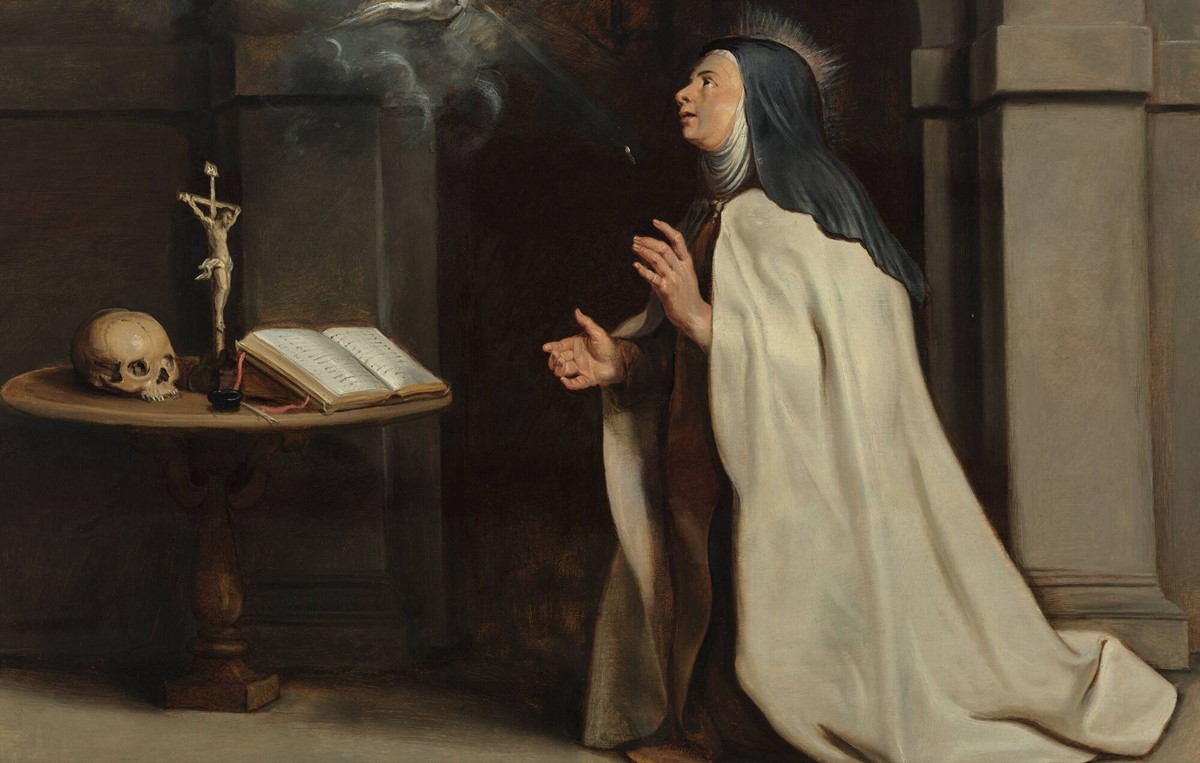
The Appearance of the Holy Spirit before Saint Teresa. . .”


Sources:

Buddhism in the United States – Wikipedia, the free encyclopedia.

Buddhism – Wikipedia, the free encyclopedia.

Epistle of James – Wikipedia, the free encyclopedia.

Due diligence – Wikipedia, the free encyclopedia.

The full cite for How to be Your Own Best Friend, by Mildred Newman and Bernard Berkowitz, “with Jean Owen,” Ballantine Books (1971).

Me generation – Wikipedia, the free encyclopedia.

As to the “kill the ego” and “becoming ‘one’” quotes, see Richard Hittleman’s Guide to Yoga Meditation, Bantam Books (1969), at pages 38 et seq.

Re: “becoming one.”  See especially John 17:21, John 17:22, John 17:23, and John 17:26.

As to “members incorporate in the mystical body…”  See the Book of Common Prayer, at page 339.

The St. Teresa image is courtesy of the article, Mysticism – Wikipedia, the free encyclopedia.  The full caption reads:  “The Appearance of the Holy Spirit before Saint Teresa of Ávila, Peter Paul Rubens.”  As noted in some previous posts, the terms “mystic” or “mysticism” seem to throw Southern Baptists and other conservative Christians into apoplexy.  (“Try it sometime!!!”)  But seriously, the term mysticism originally “referred to the biblical, the liturgical and the spiritual or contemplative dimensions in early and medieval Christianity.”  (Talk about “original intent. . .”)   Further, an internet search will lead to the definition of “mystic” as “a person who seeks by contemplation and self-surrender to obtain unity with or absorption into the Deity or the absolute. . .”

See also Teresa of Ávila – Wikipedia, the free encyclopedia, which noted in pertinent part, “Teresa’s writings, produced for didactic purposes, stand among the most remarkable in the mystical literature of the Catholic Church.”  And that’s not to mention Thomas Merton – Wikipedia, the free encyclopedia, the “American Catholic writer and mystic” who “authored books on Zen Buddhism and Taoism” such as Zen and the Birds of Appetite.

On boasting


The Scribe just started re-reading his “Centennial edition” of John Steinbeck’s East of Eden.

Steinbeck started the book by describing the Salinas Valley in California where he grew up, and especially the Salinas River.  He wrote that the Salinas River in the summer was all dried out, and so “was not a fine river at all, but it was the only one we had and so we boasted about it.”  He added, “You can boast about anything if that’s all you have.”

Finally he said, “Maybe the less you have, the more you are required to boast about it.”

*   *   *   *

Maybe the reverse is true.  Maybe the more you have, the less you should feel the need to boast.

And you would think that would be especially true of Christians, but apparently “boasting” by some was a problem even in St. Paul’s time.  See for example First Corinthians 4:7 (NJB):

Who made you so important?  What have you got that was not given to you?  And if it was given to you, why are you boasting as though it were your own?

Of course some Conservative Christians even today might respond, “I earned everything I have, with hard work and the sweat of my brow.”   But that raises a question: “Who gave you the brow? And who gave you the sweat?”  See also 1st John 1:9-10 (ESV):

“If we say we have no sin, we deceive ourselves…  If we say we have not sinned, we make [God] a liar, and his word is not in us.”

In other words, what does a hard-core Christian have that wasn’t ultimately “given?”  It could be said that he or she has done nothing but accept a free gift available to all.  (Not to mention any “talents” he or she may have developed, talents that were also ultimately a gift from God.)

So maybe now is a good time for a bit less of the “us against them” rhetoric that seems to be the focus of so many Christians these days (at least judging by “that darned liberal media”), and more about the ministry of reconciliation Paul mentioned in 2d Corinthians 5:18.

Another example:  Type the words “Christian hypocrite” into your computer search engine and you’ll get “About 3,340,000 results.”   That’s over three million, three hundred thousand results, so something is definitely “wrong with this picture.”  But Paul may have foreseen that as well, when he wrote in Romans 2:24, in the New International Verson, “As it is written: “God’s name is blasphemed among the Gentiles because of you.”

So maybe this is a good time for a little less bragging and a little more showing. . .


The “East of Eden” book-cover image is courtesy of http://upload.wikimedia.org/wikipedia/en/5/56/EastOfEden.jpg.   The quoted passages are from the John Steinbeck Centennial Edition of East of Eden, Penguin Books, at page 4.

As for the “Christian hypocrite” search-engine type-in, see for example, Why Are Christians So Hypocritical? – Explore God:  “Christians are notorious for being hypocritical…   A recent study found that among the various perceptions of Christians, the third most common is that they’re hypocritical.  Eighty-five percent of respondents between the ages of sixteen and twenty-nine voiced this reaction to Christians.”  And notwithstanding the website’s thoughtful analysis, this public perception does present a problem that The Scribe and his Blog are trying to alleviate.

The lower image is courtesy of http://www.exploratorium.edu/exhibits/wig/images/wrong_picture.jpg.  As to “what’s wrong with the picture,” the site explained, “for one thing, the members of this track team all have the same face.  Unless we are paying close attention to facial features, hair plays a big part in forming an image of individuals.”

There’s probably some kind of lesson there too…


Christians are notorious for being hypocritical. Why is that?

A recent study found that among the various perceptions of Christians, the third most common is that they’re hypocritical.1 Eighty-five percent of respondents between the ages of sixteen and twenty-nine voiced this reaction to Christians.

– See more at: http://www.exploregod.com/why-are-christians-so-hypocritical#sthash.UlgvilBz.dpuf

Christians are notorious for being hypocritical. Why is that?

A recent study found that among the various perceptions of Christians, the third most common is that they’re hypocritical.1 Eighty-five percent of respondents between the ages of sixteen and twenty-nine voiced this reaction to Christians.

– See more at: http://www.exploregod.com/why-are-christians-so-hypocritical#sthash.UlgvilBz.dpuf

A recent study found that among the various perceptions of Christians, the third most common is that they’re hypocritical.1 Eighty-five percent of respondents between the ages of sixteen and twenty-nine voiced this reaction to Christians.2 – See more at: http://www.exploregod.com/why-are-christians-so-hypocritical#sthash.UlgvilBz.dpuf

On “originalism”

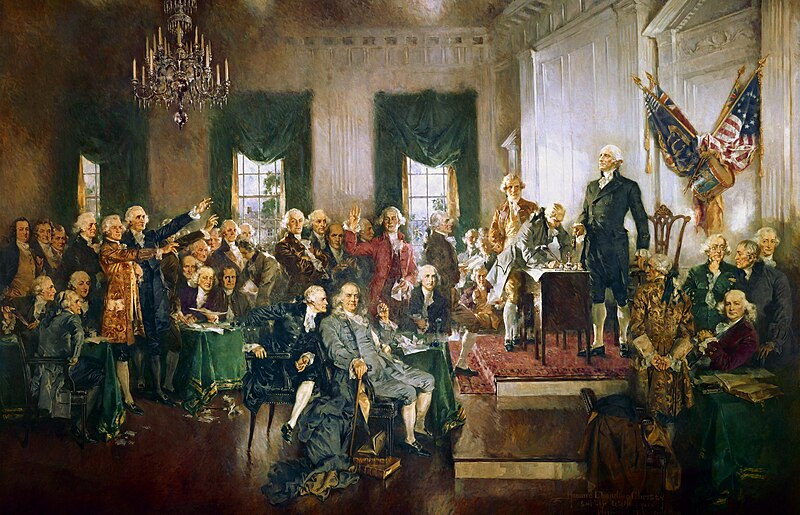
File:Scene at the Signing of the Constitution of the United States.jpg

Should our freedoms be limited those available to the Founding Fathers?


Here’s a proposition:  The people who would interpret the United States Constitution strictly, narrowly or “fundamentally” are generally the same type who would do the same thing with the  Bible.   On that note see Originalism – Wikipedia, and how “originalism” might turn out to be a good way to read and explore the Bible.

In the context of United States constitutional interpretation, originalism is a principle of interpretation that tries to discover the original meaning or intent of the Constitution…  The term originated in the 1980s….

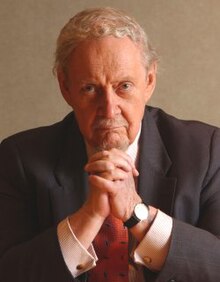
Robert Bork.jpgWikipedia also noted that originalism is popular among political conservatives, and is “prominently associated with Antonin Scalia, Clarence Thomas and Robert Bork.”  (The guy at right, who looks like the guy in high school voted “most likely to throw the book at you.”)  Then there is the “original meaning theory,” closely related to “textualism.”

Textualism in turn is a theory of statutory interpretation, “holding that a statute‘s ordinary meaning should govern its interpretation, as opposed to inquiries into non-textual sources such as …   the problem it was intended to remedy, or substantive questions of the justice and rectitude of the law.”  See Textualism – Wikipedia.

Getting back to the idea of originalism, it is the view “the view that interpretation of a written constitution or law should be based on what reasonable persons living at the time of its adoption would have declared the ordinary meaning of the text to be.  It is with this view that most originalists, such as Justice Scalia, are associated.”

So what would “reasonable persons” at the time the Bible was written have thought about – say – writers like Moses, or Jeremiah?  Might not a reasonable Egyptian at the time of Moses think he was merely a felon – and a murderous one at that – who had fled the justice due from the land of his birth?  And might not a reasonable king at the time of Jeremiah think he was merely some upstart trouble-maker – if not a traitor to his country – who deserved to be cast into that well?

Then too, if the Bible can be seen as a “constitution,” could one of the best ways to read and interpret it be to examine the background and motives of the people who wrote it?    Hmmmm…

Then there’s the theory that the “primary alternative to originalism is most commonly described as the Living Constitution;  a view that the Constitution is ‘evolving, changing over time, and adapts to new circumstances.'”

Which raises another question?  Is the Bible – to you – an evolving source of empowerment, capable of “adapting to new circumstances?”   Or is the Bible – to you – dead, “frozen in time,” the source only of a cubbyhole into which you must try to shape and fit yourself?

Put another way:  Is the Bible to you a set of spiritual wings, or is it more like a spiritual straitjacket?  And if to you the Bible is frozen in time, a spiritual straitjacket, how on earth are you supposed to “sing to the Lord a new song?”  (Like it says in Psalm 96:1, Psalm 98:1, Psalm 144:9, not to mention Isaiah 42:10 and Revelations 5:9.)

http://ecx.images-amazon.com/images/I/51smUOfD0aL.jpgFor some answers to these questions see THE BASICS, above.
Or check the blurb at the bottom of the main, featured, and/or lead post, about the Three Great Promises of Jesus:  The first is that God will accept anyone.  (John 6:37.)  The second is that God wants us to live abundantly.  (John 10:10.)   And the third is that God wants us to do even greater miracles than Jesus did.  (John 14:12).   Which brings up this “musical question:”

How can we do greater works than Jesus if we interpret the Bible in a cramped, narrow, or limiting manner?   For that matter, why does the Bible so often tell us to “sing to the Lord a new song?”   (For example, Isaiah 42:10 and Psalms 96:1, 98:1, and 144:9.)

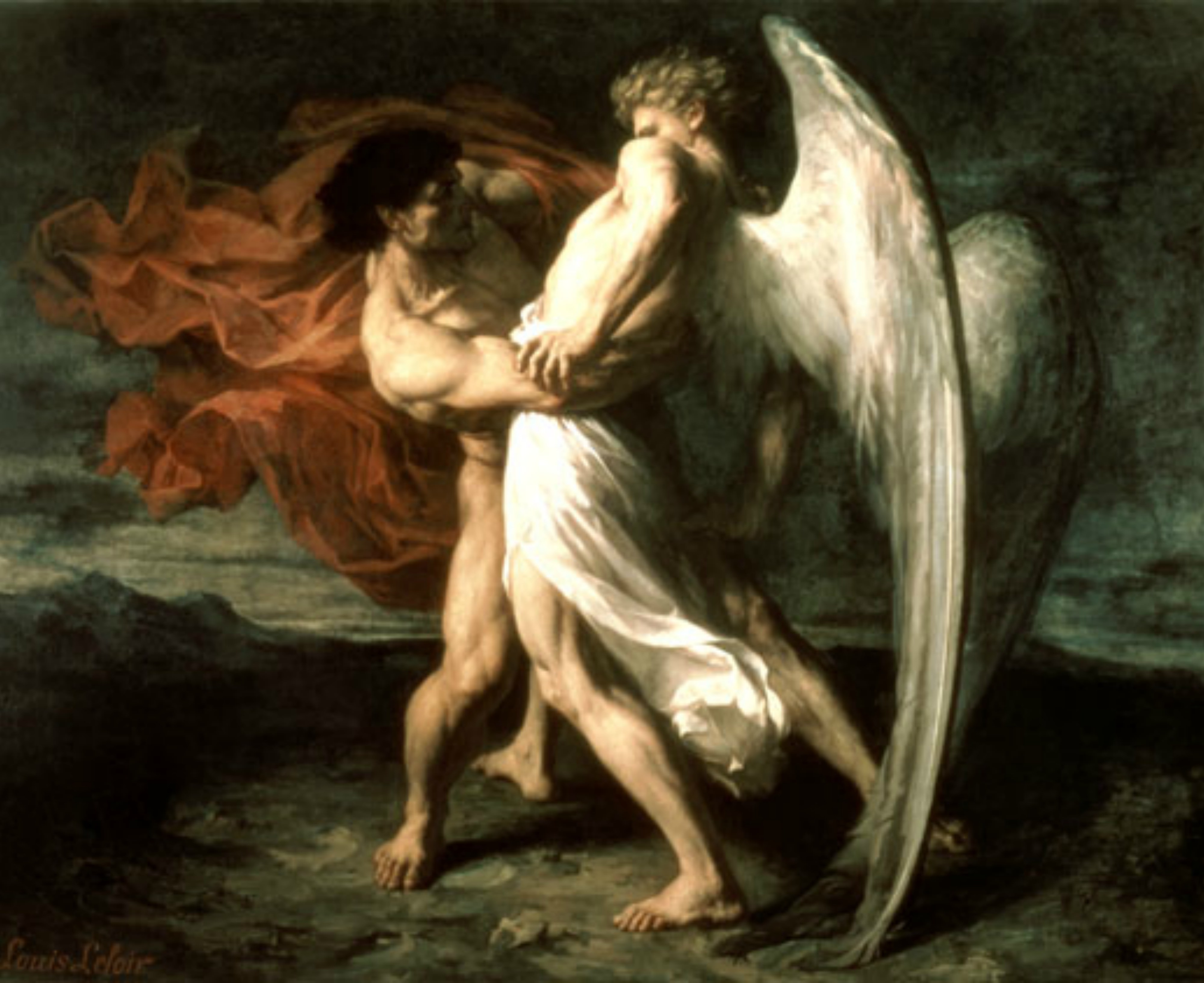
The short answer is:  You can’t.  And another short answer could be that – sometimes – it might be a good idea to just go ahead and “argue with God.”  Like it says in More on “arguing with God” – and St. Mark as Cinderella, from last April 22.  And which included the image below:

 *   *   *   *

File:Leloir - Jacob Wrestling with the Angel.jpg

 Jacob wrestling with the Angel…”

 *   *   *   *

 The upper image, “Scene at the Signing of the Constitution of the United States,” is courtesy of Wikipedia.  The 1940 painting was by Howard Chandler Christy (1873–1952).

The lower image, courtesy of Wikipedia, is Jacob Wrestling with the Angel, by Alexander Louis Leloir(1865).  Leloir (1843-1884), was a a French painter specializing in genre and history paintings. His younger brother was painter and playwright Maurice Leloir.

On praying in public

http://www.themonastery.org/blog/wp-content/uploads/2012/02/Jesus-Prayer.png

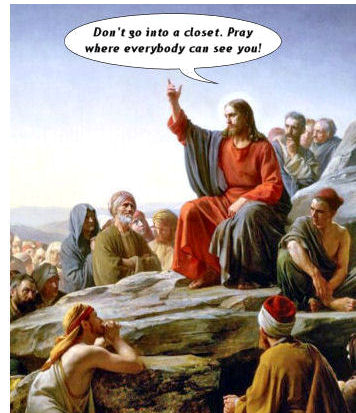
An illustration of the rhetorical device of irony


The caption above is ironic because Jesus said exactly the opposite – literally – in Matthew 6:6.  In the King James Version – the Bible that God uses – Jesus said in Matthew 6:6, “And when thou prayest, enter into thy closet…”

Matthew 6:6 is part of the Daily Office Reading (DOR) for Monday, May 19.  The full reading was Matthew 6:1-6, and 16-18, which began with Jesus saying, “Beware of practicing your piety before others in order to be seen by them.”  Instead, “when you give alms, do not let your left hand know what your right hand is doing.”

That passage gave rise to the  common English expression, “the left hand doesn’t know what the right hand is doing.”   And while the phrase is now “generally a term of derision for an organization where different members are pursuing opposing or contradictory goals,” in the passage in Matthew, Jesus arguably presented such “lack of coordination as an ideal.”

(So much for “strictly” interpreting the Bible.)

Jesus began on the matter of praying in public one verse earlier, in Matthew 6:5:

“…whenever you pray, do not be like the hypocrites; for they love to stand and pray in the synagogues and at the street corners, so that they may be seen by others.  Truly I tell you, they have received their reward.  6But whenever you pray, go into your room and shut the door and pray to your Father who is in secret…”

That brings up the recent Supreme Court decision, Town of Greece v. Galloway.  It prompted a blog-post by Frank Kirkpatrick of the Huffington Post, The Hollowness of Public Prayer.  Kirkpatrick noted an alternative to trying to distinguish merely-ceremonial prayer from prayers with substance, as the Supreme Court seemed to do.  “Far better to prohibit any and all prayers, substantive and ceremonial, from public gatherings. Let the faithful pray before they come to the meetings or afterwards or perhaps silently during them.”

Then there’s school prayer.  One website said, “Perhaps no aspect of the church-state controversy arouses more emotion and discussion than the subject of prayer in the public schools.”  See School Prayer: News – Secular Web, and School prayer – Wikipedia, the free encyclopedia.   But see also Prayer in School Affects all of Society | Creation Today:  “Since prayer was eliminated from public schools, the quality of education has shown a steady statistical decline.  Is there a link between the two?

(As to, “is there a link?” see Post hoc ergo propter hoc – Wikipedia, the free encyclopedia.  Under that reasoning, it could be said since the Roman Empire collapsed shortly after Emperor Constantine converted to Christianity, that was the cause of the collapse, but we digress…)

To review: on the one hand some say that praying should be done in private, while others say that public prayer – especially prayer in schools – would both set a necessary standard for students, and prevent the declining morality that’s been so evident in the years since 1962.

But what does the Bible say?

We know that from the DOR Gospel for Monday, May 19, 2014, to wit, Matthew 6:6:  “whenever you pray, go into your room [or closet] and shut the door…”

So what’s the “plain meaning” of this passage?

Christians who interpret the Bible “conservatively” – strictly or literally – should say that in a passage like this, the plain meaning of what Jesus said is perfectly clear.  As one website said, “The Bible must be interpreted literally which is the way language is normally and naturally understood.”  Or there is the Golden Rule of Interpretation:  “When the plain sense of Scripture makes common sense, seek no other sense; Therefore, take every word at its primary, ordinary, usual, literal meaning…”  See Do You Interpret the Bible Literally? – Middletown Bible church.  (Or you could just type “Bible plain meaning” in your search engine.)

That should be the end of the story, if you consistently apply the strict and conservative “plain meaning” of the words of Jesus in Matthew 6:6.  (See also, for example,  “The Bible says it, I believe it, that settles it, God said it, I believe it, that settles it : Dictionary of …, or – in a YouTube version – Homosexuality & The Bible 1: God Said It, I Believe It, That Settles It

But that great philosopher Henny Youngman might have summed it up best by saying:


Take school prayer…  Please!


Henny Youngman.jpg

The upper image is courtesy of http://d8rew5imyp13e.cloudfront.net/blog/wp-content/uploads/2012/02/Jesus-Prayer.png.   As to “alms,” see the Wikipedia article and/or alms definition of alms by the Free Online Dictionary, …

On “the left hand doesn’t know what the right hand is doing.”   See the Wikipedia article, Matthew 6:3 – Wikipedia, the free encyclopedia.


On “take school prayer…”    This refers to a classic Henny Youngman joke.  Youngman (1906-1998) was known for his one-liners, and his best-known was ‘Take my wife… please.’”   Henny Youngman – Wikipedia, the free encyclopedia.

An FYI:  The joke relied on the principle of dislocation, as used in comedy, but also in magic and the martial arts in general. See, Shinogi – Budotheory.ca, which mentioned three types of dislocation: positional, temporal, and functional.  And a magician of course is also known as an illusionist.  See the Wikipedia article, Magic (illusion) – Wikipedia, the free encyclopedia, and also Alex Davies – Dislocation.  Finally, see The Internet Classics Archive | The Art of War by Sun Tzu, which noted the saying of Sun Tzu (q.v.), the ancient Chinese philosopher who said, “The fundamental principle of the Art of War is deception,” or in other words, dislocating your opponent.

So anyway, in the classic one-liner – told literally “a century ago” – the audience was led to expect Youngman to say “for example” when he began; as in, “Take my wife… for example.”  But instead of saying “for example,” Youngman dislocated his audience by saying, “Take my wife…  Please!


On sin and cybernetics

http://www.releasetheape.com/wp-content/uploads/2012/12/arrow-target1-890x556.png

You can’t hit the target without “negative feedback…”

*   *   *   *

In his 1969 book Psycho-cybernetics, Maxwell Maltz compared the human subconscious mind to a goal-striving guidance system.  That is, the human subconscious is like a self-guided missile aimed (metaphorically) “at an enemy ship or plane.”

Maltz said such “missiles” need information to process positive and negative feedback.  If the missile is on the right course it gets positive feedback, and makes no change and stays on the the proper course.  But if it strays, it needs negative feedback to get back on course.

He said any goal-striving mechanism – e.g. the human subconscious – needs a corrective, so if the missile is too far to the right, it compensates by moving to the left.  If the device overcompensates (too far to the left), the device moves the missile back to the right.  As Maltz said, “The torpedo accomplishes its goal by going forward, making errors, and continually correcting them.  By a series of zigzags, it literally ‘gropes’ its way to the goal.”

(Wouldn’t it be nice if a Christian felt equally free to “go forward and make errors,” on the way to his or her objective, without “feeling guilty?”)

Maltz said the more visible corrections in humans can be seen in the way a baby learns to walk or pick up toys, or (at a later stage) in a teenager learning how to drive.  And hopefully, that kind of “self correction” goes on throughout our lives

We also seem to do just that whenever we try to improve or do something we “should do.”

Take dieting, “please.” We start with good intentions but usually try to lose too much weight too soon.  Then we lose heart (feel guilty) because we couldn’t stick to our diet through “will power.” Then “we” go off on an eating binge that puts back most of the weight we lost in the first place.  Then we start feeling really guilty, and go back on the diet.  Thus we literally grope our way toward the goal (target) of losing weight.

Which is another way of saying that most people don’t diet successfully the first time.  They succeed by getting a little better each time.  In time, they eat less when they binge and get a bit more realistic when they return to the diet.  With both positive and negative feedback, the good dieter gropes his way forward.

Which raises a question.  To paraphrase Maltz, what would happen if a missile didn’t get any negative feedback?  Would the missile or arrow ever hit the target if it never knew when it “strayed?”  The answer:  Without negative feedback, it wouldn’t.

Maybe the same thing applies to “sin,” and those who think the whole idea is too troublesome to worry about.  (Maybe the same kind of people who think those who go to church every week are too negative – and hypocrites to boot – because they’ve visibly failed to get better.) And maybe there’s something positive about the negative idea of “sin.”  Maybe we – like “guided missiles” – need to know when and where we “stray off course.”

Maybe that’s what this whole business of confession and sin is all about.  When we “sin” we simply fall short of our goals.  We “miss the target.”  And when we “confess,” we simply admit to ourselves how far short of the target we were, rather than blithely ignoring the problem or acting as if we need no improvement.

But those who realize their mistakes – and make corrections – will get that much closer to the target next time.  And maybe the purpose of all this is not to make people feel guilty, as some who-call-themselves-Christians seem to imply.

Maybe the concepts of sin, repentance and confession are simply tools to help us get closer to the target next time out, even if we never become “perfect.”

Maybe the concepts of sin, repentance and confession are simply tools to help us realize the purpose Jesus had for us, to wit:  to “live life in all its abundance.” (See John 10:10)

*   *   *   *

The “arrow” image is courtesy of http://www.releasetheape.com/wp-content/uploads/2012/12/arrow-target1-890×556.png.

On Maltz and his book, see Psycho-Cybernetics – Wikipedia.  

On that note – and perhaps anticipating the protests of religious conservatives – Maltz hastened to add that he was not saying “’You’ are a machine,” but rather that each person possesses a machine, in the form of the subconscious mind, in much the same way a person’s physical body can be viewed as a “machine.”  In his or her subconscious mind, each person has a tool, “put there by the Creator,” to achieve success in everyday life.  

On broadminded, spelled “s-i-n”

File:Louvin.jpg

*   *   *   *

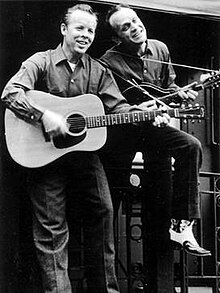
In 1952 the Louvin Brothers – seen above – recorded a song, “That word broad-minded is spelled s-i-n.”  The song in part: “I read in my Bible, they shall not enter in.  For Jesus will answer, Depart, I never knew you.”  (But see John 6:37:  “whoever comes to me I will never cast out.”)

That’s followed by the refrain, “That word broadminded is spelled s-i-n.”

Which brings up two ways to interpret the Bible.  One is the hellfire-and-brimstone approach of the song and/or album above.  That approach sees the faith of the Bible as both exclusive and excluding.  The other approach focuses on a loving God, as seen in the promise Jesus made in John 10:10, that He came so His followers could live life “in all its abundance.”  Which raises the question: Can you live a life of abundance while being narrow-minded?

One word for “strictly” interpreting the Bible is the fundamentalism of the Louvin Brothers song.   But maybe its all a matter of context…

Louvin Brothers.jpgThe strange thing about Ira Louvin – at right in the picture at left – is that he “was notorious for his drinking, womanizing, and short temper.” (Or maybe it wasn’t so strange after all.)  Ira ended up getting married four times, and his third wife Faye ended up shooting him six times.  (Four times in the chest.)  That was after one of the times he allegedly beat her up.
But we digress…

Wikipedia defined Fundamentalism as a strict adherence to specific theological doctrines, and said the term “usually has a religious connotation indicating unwavering attachment to a set of irreducible beliefs.” The article added that the term was coined from the Five Fundamentals, set down between 1910 and 1920.

Those Five Fundamentals were: 1) That the written Bible was inspired by God “and the inerrancy of Scripture as a result of this;” 2) That Christ was “virgin born;”  3) That Christ’s death was the atonement for sin;  4) That Christ had a “bodily resurrection;”  and 5) That Christ’s miracles were a “historical reality.”

One sticking point for many people is the idea of Biblical inerrancy.  That’s the “doctrinal position that the Bible is accurate and totally free of error…  Conservative Christians generally believe that God inspired the authors and redactors of the Bible. Hence, they wrote material that was error-free.” (See the Wikipedia article.)

But there is another way to read and interpret the Bible.

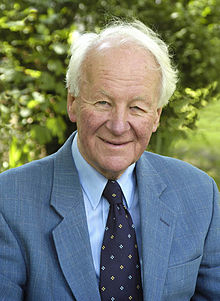
John stott.jpgAnd to many people it offers a better path to the type of abundance Jesus promised in John 10:10.  That Bible path is exemplified by John R. W. Stott – at right – in his book Understanding the Bible.

Stott was an Anglican cleric whom Time magazine ranked among the 100 most influential people in the world.  And he made three keys points about reading and studying the Bible.

One key point disputed the idea that “every word of the Bible is literally true.”  Stott said the Bible is without error “in all that it affirms.”  He added that the words of the Bible were true “only in context.”  He cited the Book of Job, noting that the first 37 chapters consisted of dialogue between Job and his ostensible comforters.

On the other hand, the truth of the book comes only in the last five chapters.  “The book as a whole is God’s word, but the first thirty-seven chapters can be understood only in the light of the last five.” (E.A.)  Consider – for example – Job 3 :1-22, summarized as follows:

Job opened his mouth and cursed the day of his birth…  “Why did I not perish at birth, and die as I came from the womb…  For now I would be lying down in peace; I would be asleep and at rest… Or why was I not hidden away in the ground like a stillborn child, like an infant who never saw the light of day…  Why is light given to those in misery, and life to the bitter of soul, to those who long for death that does not come, who search for it more than for hidden treasure, who are filled with gladness and rejoice when they reach the grave?”

(Emphasis added.)  So – if you wanted to justify suicide, for example – Job 3 might be just the ticket.  But that would be true only if you took that chapter – standing alone and out of context – as the “inerrant word of God.”  That is, only if you believe that every word in the Bible must be taken as literally true, regardless of context.

Put another way, Job expressed those sentiments in Chapter 3, at one of the low points in his life.  (And don’t we all have those.)  But Chapter 3 could definitely be “taken out of context.”

*   *   *   *

JOB HEARING OF HIS RUIN

“Job Hearing of His Ruin…” 

*   *   *   *

The album image is courtesy of Wikipedia.  For the lyrics, see Louvin Brothers – Broadminded Tabs, Chords – Cowboy Song Lyrics.  To see an older Charlie Louvin singing the song, see also, That word,” Broadminded” is spelled S-I-N. – YouTube.

For more, see: The Louvin Brothers – Wikipedia.  Note that the “s-i-n” song was not included in the “Charted Singles” section, which began with 1955’s “When I stop dreaming.”  Note also:  “In 1963, fed up with Ira’s drinking and abusive behavior, Charlie started a solo career, and Ira also went on his own…  Ira died on June 20, 1965, at the age of 41. He and his fourth wife, Anne Young, were on the way home from a performance in Kansas City…   A drunken driver struck their car head-on, and both Ira and Anne were killed instantaneously. At the time, a warrant for Ira’s arrest had been issued on a DUI charge.”   (You might say, on the difference between Ira’s public and private persona, it “could be spelled ‘h-y-p-o-c-r-i-t-e,'” but that would be a bit too snippy for this Blog.  Suffice it to say, Ira was merely human, like the rest of us.)

See also John Stott – Wikipedia, the free encyclopedia.

The “Job” image is courtesy of BIBLICAL ILLUSTRATIONS OF GUSTOV DORE: JOB HEARING OF HIS RUIN.

As for Jesus saying, “Depart, I never knew you,” that was a reference to Matthew 7:21-23:

Not everyone who says to Me, ‘Lord, Lord,’ shall enter the kingdom of heaven, but he who does the will of My Father in heaven.  Many will say to Me in that day, ‘Lord, Lord, have we not prophesied in Your name, cast out demons in Your name, and done many wonders in Your name?’  And then I will declare to them, ‘I never knew you; depart from Me, you who practice lawlessness!’  (Emphasis added.)  

As is usually the case, it helps to have the full reading, to ensure things aren’t “taken out of context…”

And another, Matthew 7:1 warns, “Do not judge, or you too will be judged.  For in the same way you judge others, you will be judged, and with the measure you use, it will be measured to you.”  Which is why I always try to give other people a break, so God might “judge me” the same way…  

*   *   *   *