Category Archives: Feast Days

On Pentecost and St. Barnabas – 2025

*   *   *   *

Commemorating the descent of the Holy Spirit – on the very first Pentecost Sunday

*   *   *   *

Welcome to “read the Bible – expand your mind:”

The Book of Common Prayer says that by sharing Holy Communion, Christians become “very members incorporate in the mystical body” of Jesus. The words “corporate” and “mystical” are key. They show that a healthy church has two sides, with the often-overlooked “mystic” side posing the question, “How do I experience God?” This blog will try to answer that.

It has four main themes. The first is that God will accept anyone. (John 6:37.) The second is that God wants us to live lives of abundance.(John 10:10.) The third is that Jesus wants us to read the Bible with an open mind. (As Luke 24:45 says: “Then He [Jesus] opened their minds so they could understand the Scriptures.”) The fourth theme – another one often overlooked – is that Jesus wants us to do even greater miracles than He did. (John 14:12.) 

And this thought ties them together:

The best way to live abundantly and do greater miracles than Jesus is: Read, study and apply the Bible with an open mind. For more see the notes or – to expand your mind – see the Intro.

In the meantime:

June 12, 2025 – Last June 8 was Pentecost Sunday. The following Wednesday, June 11, was the Feast Day for St. Barnabas, who some call the “Apostle of Second Chances.” There’s more on St. Barnabas in a bit, but first a word or three about Pentecost. The word comes from the Greek for “50th day,” and it’s always celebrated 50 days after Easter Sunday.  (Seven weeks and a day.) And it’s been around a long, long time. (Over 2,000 years?) See Pentecost – Wikipedia:

Pentecost is the Greek name for the Feast of Weeks, a prominent feast in the calendar of ancient Israel celebrating the giving of the Law on Sinai. This feast is still celebrated in Judaism as Shavuot. Later, in the Christian liturgical year, it became a feast commemorating the descent of the Holy Spirit upon the Apostles and other followers of Jesus Christ … as described in the Acts of the Apostles [verses 1-13 et seq.].

Other notes: It commemorates the descent of the Holy Spirit on the Apostles and other followers of Jesus Christ while they were in Jerusalem celebrating the Feast of Weeks. (Described in the Acts of the Apostles 2:1–31.) It’s also called the Birthday of the Church.

Before the events of the first Pentecost … a few weeks after Jesus’ death and resurrection, there were followers of Jesus, but no movement that could be meaningfully called “the church.”  Thus, from an historical point of view, Pentecost is the day on which the church was started.  This is also true from a spiritual perspective, since the Spirit brings the church into existence and enlivens it.  Thus Pentecost is the church’s birthday.

(What is Pentecost?  (Patheos).) Another name for Pentecost is Tongue Sunday, partly because of the “tongues of fire,” as told in Acts 2:3. But another reason was the “speaking in tongues” – glossolalia – that occurred that day. Acts 2:4: “All of them were filled with the Holy Spirit and began to speak in other tongues as the Spirit enabled them.” But those there weren’t just babbling, as some today seem to think. Instead they spoke in concrete, known languages. As a result, people from many different nations could understand them. See Acts 2, verses 8-11:

“How is it that we hear, each of us, in our own native language? Parthians, Medes, Elamites, and residents of Mesopotamia, Judea and Cappadocia, Pontus and Asia, Phrygia and Pamphylia, Egypt and the parts of Libya belonging to Cyrene, and visitors from Rome, both Jews and proselytes, Cretans and Arabs – in our own languages we hear them speaking about God’s deeds of power.”

(See also 1st Corinthians 14:19, on the potential abuse of that “gift,” where the Apostle Paul said that while he was glad he could speak in tongues, in church “I would rather speak five intelligible words to instruct others than ten thousand words in a tongue.”)

So as of Wednesday, June 11, “Happy Umpteenth Birthday, Church!”

Moving on to St. Barnabas, he wasn’t one of the original 12 apostles, but is regarded as one of the first 70 (or 72) Disciples. He was also one of the most respected men in the first-century Church, “after the Apostles themselves.” But his biggest contribution may have been welcoming Paul – originally called Saul – into the early church, despite Paul’s “baggage.”

“Saul” was a leading persecutor of the early church, as told in Acts 8:3: “Saul began to destroy the church. Going from house to house, he dragged off both men and women and put them in prison.” Then came Acts 9:1-2, where Saul, “still breathing out threats of murder … went to the high priest and requested letters to the synagogues in Damascus, so that if he found any men or women belonging to the Way, he could bring them as prisoners to Jerusalem.”

But on the way – to drag Christian prisoners back to Jerusalem – Saul-Paul had his Damascus Road Experience. The result? From being a hard-core enemy of the early Church, Paul became “second only to Jesus” in spreading the Gospel to the far corners of the known world. Which might never have happened if it hadn’t been for the intervention of Barnabas.

The Bible first mentions him in Acts 4:36:  “Joseph, a Levite, born in Cyprus, whom the apostles called Barnabas (son of encouragement), sold a field he owned, brought the money, and turned it over to the apostles.” And the site Barnabas the Apostle – Justus added that even after Paul’s Damascus Road experience, most Christians in Jerusalem “wanted nothing to do with him. They had known him as a persecutor and an enemy of the Church. But Barnabas was willing to give him a second chance.” (Which is pretty much what Jesus is all about.)

In short, if it hadn’t been for Barnabas willing to give Paul a second chance, he might never have become that Church’s most important early convert, if not the “Founder of Christianity.” But then came an ironic twist, after Barnabas gave that new “Apostle Paul” his Second Chance:

Paul and Barnabas went on a missionary journey together, taking Mark with them. Part way, Mark turned back and went home. When Paul and Barnabas were about to set out on another such journey, Barnabas proposed to take Mark along, and Paul was against it, saying that Mark had shown himself undependable. Barnabas wanted to give Mark a second chance [as he had with Paul] and so he and Mark went off on one journey, while Paul took Silas and went on another. Apparently Mark responded well to the trust given him by the “son of encouragement,” since we find that Paul later speaks of him as a valuable assistant (2 Tim 4:11; see also Col 4:10 and Phil 24) .

So again, we too might just call Barnabas “the Apostle of Second Chances.”

Then too Barnabas was known for a power to heal and to encourage others. See The Power of Encouragement: Lessons From the Life of Barnabas. As noted, the original Apostles called him “Son of Encouragement,” and that’s a trait we could use more of today. (Also a power to heal some of today’s wounds in the national discourse.) And we could use someone in power who would use that power to lift our spirits and encourage and support us to be our best.

Even it – for that to happen – it may take a Damascus Road experience. Therefore,

Keep on praying!

*   *   *   *
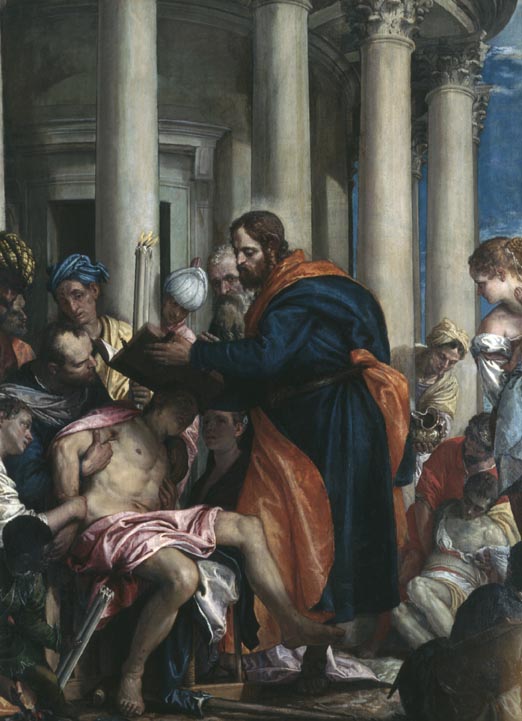
Barnabas curing the sick– and giving second chances… 

*   *   *   *

The upper image was first courtesy of Pentecost Sunday Images – Image Results. But see also El Greco – Pentecost, 1610 at Prado Museum Madrid Spain. The caption – gleaned from past posts – is from Wikipedia, in turn gleaned from the following: “The Christian High Holy Day of Pentecost is celebrated on the 50th day (the seventh Sunday) from Easter Sunday. It commemorates the descent of the Holy Spirit upon the Apostles and other followers of Jesus Christ while they were in Jerusalem celebrating the Feast of Weeks, as described in the Acts of the Apostles (Acts 2:1–31).”

The Book of Common Prayer reference: The “corporate-mystical” prayer is on page 339, the post-communion prayer for Holy Eucharist, Rite I.

Feast days are designated days on the liturgical (church) calendar “set aside to commemorate events, saints, or doctrines that are important in the life of the Church. These can range from Solemnities, which are the highest-ranking feast days like Easter and Christmas, to optional memorials that celebrate lesser-known saints.” Feast Days: Celebrating the Church’s Calendar.

For this post – as to Pentecost Sunday – I borrowed from 2015’s On Pentecost – “Happy Birthday, Church,” from Pentecost 2020 – “Learn what is pleasing to the Lord,” On Pink Floyd – and Pentecost Sunday, 2021, and On Pentecost Sunday – 2024. As to St. Barnabas I borrowed from 2014’s On St. Barnabas, On D-Day and St. Barnabas – 2021, and June ’24, St. Barnabas and second chances. See also Barnabas – Wikipedia. The Lectionary site St Barnabas, Apostle adds this Collect:

Grant, O God, that we may follow the example of your faithful servant Barnabas, who, seeking not his own renown but the well­being of your Church, gave generously of his life and substance for the relief of the poor and the spread of the Gospel; through Jesus Christ our Lord, who lives and reigns with you and the Holy Spirit, one God, for ever and ever. Amen.

“70 or 72.” See Who were the 70 (or 72) disciples in Luke 10? – GotQuestions, and Seventy disciples – Wikipedia: “The number of those disciples varies between either 70 or 72 depending on the manuscript.”

Re: Paul as “second only to Jesus.” See articles including How Much Did Paul Influence Christianity? | Cold Case Christianity: “Few individuals have had as much impact on Christianity as the Apostle Paul. Traditionally credited with authoring thirteen or fourteen books in the New Testament,” he was a man of immense influence, “second only, perhaps, to Jesus.” And some have gone so far as to describe him as the “founder of Christianity.”

On Barnabas and encouragement, see also The Power of Encouragement: St. Barnabas – eicatholic.org.

Re: “Therefore.” According to the Britannica Dictionary the word is somewhat formal” and means “for that reason : because of that.” Examples:The cell phone is thin and light and therefore very convenient to carry around.” Or “Payment was received two weeks after it was due; therefore, you will be charged a late fee.”

The lower image is courtesy of Barnabas – Wikipedia. The caption: “‘Barnabas curing the sick‘ by Paolo VeroneseMusée des Beaux-Arts de Rouen, c. 1566.”

*   *   *   *

As noted in the opening blurb, this blog has four main themes. The first is that God will accept anyone. (John 6:37, with the added, “Anyone who comes to Him.”) This is a consistent theme throughout the Bible. From the Old Testament, Psalm 9:10, “You never forsake those who seek you, O Lord.” (In the Version in the Book of Common Prayer.) The second is that God wants us to live abundantly.  (John 10:10.) The third is that we should do greater miracles than Jesus. (John 14:12). A fourth theme: The only way to do all that is read the Bible with an open mind:

…closed-mindedness, or an unwillingness to consider new ideas, can result from the brain’s natural dislike for ambiguity. According to this view, the brain has a “search and destroy” relationship with ambiguity and evidence contradictory to people’s current beliefs tends to make them uncomfortable… Research confirms that belief-discrepant-closed-minded persons have less tolerance for cognitive inconsistency

So in plain words, I take issue with what I came to call “Christian first graders.” Those who stay in a kind of elementary school, and maybe even never go beyond first grade. See John the Baptist, ’24 – and “Christian First Graders,” for more detail. But the key point: “The Bible was designed to expand your mind,” not keep it narrow. Also, the idea that “Jesus was anything but negative. His goal was for you to grow and develop into all that you can be.” (For more on that see ABOUT THE BLOG, above.)

literalists who never go “beyond the fundamentals.” But the Bible can offer so much more than their narrow reading can offer…  (Unless you want to stay a Bible buck private all your life…) Now, about “Boot-camp Christians.” See for example, Conservative Christian – “Career buck private?”  The gist of that post is that starting the Bible is like Army Basic Training. You begin by“learning the fundamentals.” But after boot camp, you move on to Advanced Individual Training.” 

http://www.toywonders.com/productcart/pc/catalog/aw30.jpg

However, after boot camp, you move on to Advanced Individual Training. And as noted in “Buck private,” one of this blog’s themes is that if you want to be all that you can be, you need to go on and explore the “mystical side of Bible reading.*” In other words, exploring the mystical side of the Bible helps you “be all that you can be.” See Slogans of the U.S. Army – Wikipedia, re: the recruiting slogan from 1980 to 2001. The related image at left is courtesy of: “toywonders.com/productcart/pc/catalog/aw30.jpg.”

Re: “mystical.” Originally, mysticism “referred to the Biblical liturgical, spiritual, and contemplative dimensions of early and medieval Christianity.” See Mysticism – Wikipedia, and the post On originalism.  (“That’s what the Bible was originally about!”) See also Christian mysticism – Wikipedia, “In early Christianity the term ‘mystikos’ referred to three dimensions, which soon became intertwined, namely the biblical, the liturgical and the spiritual or contemplative… The third dimension is the contemplative or experiential knowledge of God.” As to that “experiential” aspect, see also Wesleyan Quadrilateral – Wikipedia, on the theological reflection method using four sources of spiritual development: scripturetradition, reason, and “Christian experience.”

For an explanation of the Daily Office – where “Dorscribe” came from – see What’s a DOR?

*   *   *   *
Ascension Day 2025 – and a Visitation…

*   *   *   *

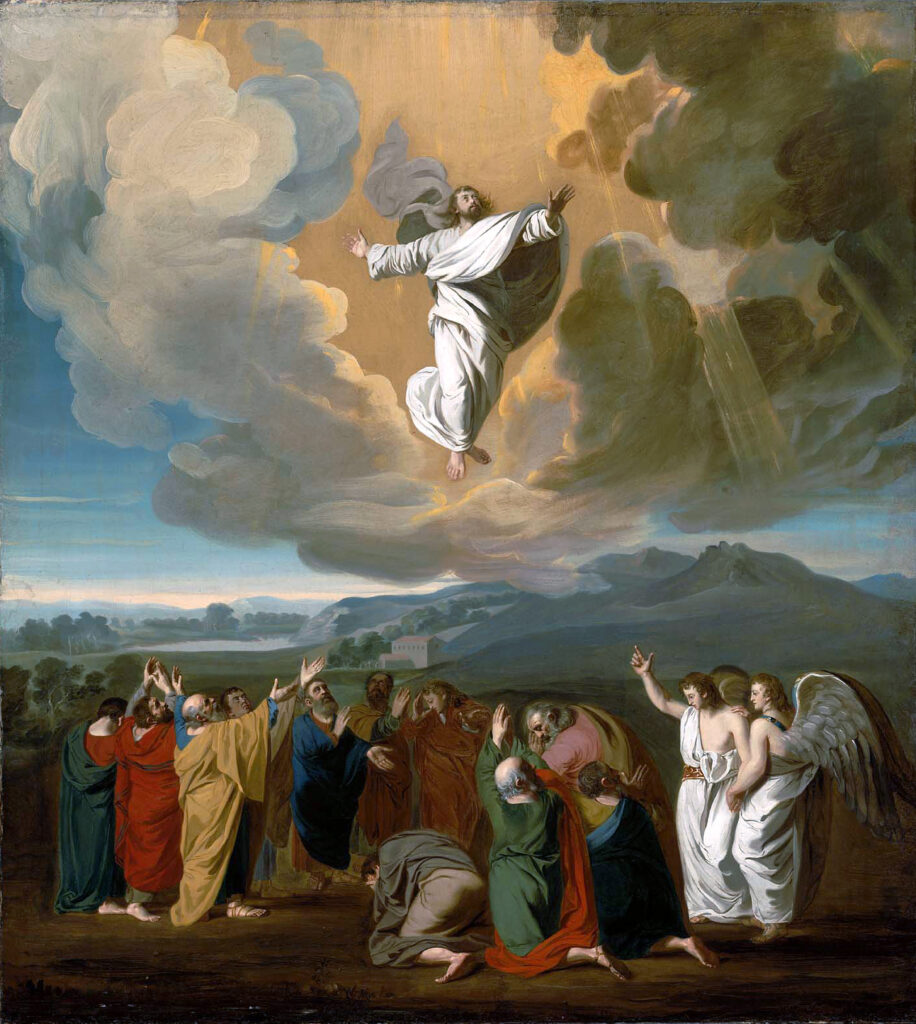
John Singleton Copley on Jesus Ascending, after He “opened [His Disciples’] minds…”

*   *   *   *

May 31, 2025 – The last post said the next major feast days are Ascension Day – this year Thursday, May 29 – and two days later the Visitation of the Blessed Virgin. (Mary’s visit to the expectant mother of John the Baptist.)  And that this post would cover those two feasts, so here goes.

First off, Ascension Day always comes on a Thursday, 40 days after Easter. It’s a major Feast, and it’s ecumenical. (“Universally celebrated.”) More precisely, it’s celebrated on the 40th day of Eastertide, the 50-day church season running from Easter Day to Pentecost Sunday. And in terms of importance it ranks up there with the Passion, Easter, and Pentecost.

The standard Gospel reading for the day, Luke 24:44-53, tells the story:

Jesus said to his disciples, “These are my words that I spoke to you while I was still with you… Then he opened their minds to understand the scriptures, and he said to them, “Thus it is written, that the Messiah is to suffer and to rise from the dead on the third day…”   Then he led them out as far as Bethany, and, lifting up his hands, he blessed them. While he was blessing them, he withdrew from them and was carried up into heaven

Note the words saying Jesus “opened their minds to understand the scriptures,” followed by words that the disciples “returned to Jerusalem with great joy.” (That’s the euaggelion, the Good News!) I found two good articles on the subject. The first, Why Does the Ascension of Jesus Matter? – BibleProject, says that we as Christians are “invited to ascend into this way of living,” that is, ascend to where the “followers of Jesus become the place in the world where Heaven and Earth overlap.” (Emphasis added.) The second, The Ascension of Jesus – What was the Meaning and Significance, said the event was the “climatic, crowning event of [Jesus’] exaltation, and the necessary precursor to his continuing work through the Spirit and the church.”

Then too there’s the Wikipedia article, Ascension of Jesus. It refers to the Apostle’s Creed, which says in part that Jesus “ascended into heaven, and is seated at the right hand of God the Father almighty.” This idea “provided an interpretative frame for Jesus’ followers to make sense of his death and the resurrection appearances.” Or as theologian Justus Knecht wrote:

Our Lord went up Body and Soul into heaven in the sight of His apostles, by His own power, to take possession of His glory, and to be our Advocate and Mediator in heaven with the Father. He ascended as Man, as Head of the redeemed, and has prepared a dwelling in heaven for all those who follow in His steps.

In other words, if Jesus hadn’t “ascended to Heaven,” we wouldn’t have a place to stay when we get there. (By faith, expressed in Romans 10:9, “If you declare with your mouth, ‘Jesus is Lord,’ and believe in your heart that God raised him from the dead, you will be saved.” Period.)

Turning to the Visitation, where Mary visited the mother of John the Baptist (this year celebrated Saturday, May 31): It’s discussed in Visitation (Christianity) – Wikipedia:

The Visitation is the visit of Mary with Elizabeth as recorded [in] Luke 1:39–56.  It is also the name of a Christian feast day[,] celebrated on 31 May…  Mary is pregnant with Jesus and Elizabeth is pregnant with John the Baptist.  Mary left Nazareth immediately after the Annunciation and went “into the hill country” [of Judah] to attend to her cousin.

Wikipedia added, “In the Gospel of Luke, the author’s accounts of the Annunciation and Visitation are constructed using eight points of literary parallelism to compare Mary to the Ark of the Covenant.” (Which I didn’t know.)  And the Blessed Virgin Mary article added that Elizabeth greeted Mary with the words, “Blessed are you among women, and blessed is the fruit of your womb.” Mary responded with what became known as Magnificat. In turn:

John the Baptist, still unborn, leaped for joy in his mother’s womb. Thus we are shown, side by side, the two women, one seemingly too old to have a child, but destined to bear the last prophet of the Old Covenant … and the other woman, seemingly not ready to have a child, but destined to bear the One Who was Himself the beginning of the New Covenant, the age that would not pass away. (Emphasis added.)

 In turn the Magnificat echoes several Old Testament passages, including allusions to “the Song of Hannah,” in 1st Samuel 2:1-10. (Not to mention “the Book of Odes, an ancient liturgical collection,” but not to be confused with the Odes of Solomon.)

Note also that another big feast day is coming up on June 8, the Day of Pentecost, also called Whitsunday. I’ll cover that in the next post, but in the meantime consider this painting of Mary reciting the Magnificat with John the Baptist’s parents “looking on in the background.”

*   *   *   *

*   *   *   *

The upper image is courtesy of the Wikipedia article, Ascension of Jesus, with the full caption:  “Jesus’ ascension to heaven depicted by John Singleton Copley, 1775.”  

The Book of Common Prayer reference: The “corporate-mystical” prayer is on page 339, the post-communion prayer for Holy Eucharist, Rite I.

Feast days are designated days on the liturgical (church) calendar “set aside to commemorate events, saints, or doctrines that are important in the life of the Church. These can range from Solemnities, which are the highest-ranking feast days like Easter and Christmas, to optional memorials that celebrate lesser-known saints.” Feast Days: Celebrating the Church’s Calendar.

For this post I borrowed from The Visitation – 2016, 2017’s Ascension Day 2017 – “Then He opened their minds,” also Mary’s Visitation – and Pentecost – 2017, and On Ascension Day, 2024. A side note: In the 2024 post I explored the idea of “life after life,” especially “after a grueling event years ago. My nephew was riding in a car, the car plunged into the Chattahoochee River north of Atlanta, and he was trapped inside… That tragic death shook my faith.” Strangely enough – to some anyway – I found comfort in the First law of thermodynamics, which says energy is neither created nor destroyed, it simply changes form. (I came to figure the human soul is a form of energy.) See also On “her spirit returned” – and Ascension Day, from 2023. It explored at greater length such topics as Ensoulment and Jeremiah 1:5, “Before I formed you in the womb I knew you.”

The lower image is courtesy of Mary’s Magnificat James Tissot – Image Results, and more especially Magnificat of Our Lady Painting by James Tissot—A Catholic Commentary. (“Catholic Art Blog[:] The Moment of the Magnificat,” by Patrick Werick (July 21, 2011),” which noted: “French artist and illustrator James Tissot captures the moment the blessed Virgin Mary recites the Magnificat while visiting her relations Elizabeth and Zacharias (notice them looking on in the background):”

Tissot was known for spending time in the Holy Land and painting a plethora of scenes from the life of Jesus Christ. What particularly sets him aside from other artists’ renditions of the life of Christ is his authenticity in displaying accurately the ethnic garb and customs that were in place while Jesus walked the earth. 

See also The Magnificat (Le magnificat) – Brooklyn Museum, and James Tissot – Wikipedia.

*   *   *   *

*   *   *   *

“If anyone serves Me, the Father will honor him” – Easter ’25

*   *   *   *

Yes, Jesus rose from the grave for us, but first came the Cross, then the Harrowing of Hell

*   *   *   *

April 16, 2025 – We’re in the middle of Holy Week, 2025, and let’s face it: We’ve had a lot happier Easters to celebrate than the one coming up. (See e.g., Trump’s second term so far: A story of chaos, confusion and reversals.) But as good Christians we try to “stay above the fray,” with Jesus, as the only place to be. (Even though these days, it’s a real pain.)

Or so I thought until I did the Daily Office readings for Tuesday, April 15.

First off, there was that passage from the Gospel, John 12:26, the one that become the title for the post: “If anyone serves Me” – Jesus – “the Father will honor him.” Which serves as a reminder of our Christian duty during what seems to be an upcoming Time of Troubles. And a reminder of the mantra we should remember in the coming years: “I believe in Jesus Christ, the rule of law, and the Constitution.” But back to the Daily Office readings for Tuesday, April 15.

Aside from John 12:26, the main readings included Jeremiah 15:21, “I will deliver you out of the hand of the wicked, and redeem you from the grasp of the ruthless.” Then came the psalms, including Psalm 12:78, “Oh Lord, watch over us and save us from this generation forever. The wicked prowl on every side, and that which is worthless is highly prized by everyone.”

All of which sounded both familiar, and relevant, then came the first part of Psalm 94:

The Lord is a God who avenges. O God of vengeance show yourself. Rise up, O Judge of the earth; give the arrogant their just desserts. How long shall the wicked, O Lord, how long shall the wicked triumph? They bluster in their insolence; all evildoers are full of boasting. They crush your people, O Lord, and afflict your chosen nation.

And finally came the end, Psalm 94:23: “He will turn their wickedness back upon them and destroy them in their own malice; the Lord our God will destroy them.”

Not exactly the usual sentiments to express the joy of Jesus’ resurrection – The Lord is risen indeed!” – but again, they seem both familiar and relevant, no matter what your political persuasion. (“Wink wink nudge nudge.”) But seriously, let’s get back to the real meaning of Easter.

But first some background. The name Easter came from a pagan figure called Eastre (or Eostre), “celebrated as the goddess of spring by the Saxons of Northern Europe. Her earthly symbol was the rabbit, known as a symbol of fertility.” And that’s how we got the Easter Bunny and Easter egg hunts. But let’s talk about what Easter Sunday is really about.

Isaac Asimov noted that many skeptics – even to this day – still don’t believe in Easter. They say “the tale of the resurrection must be put down to legend.”  But he added that if the story had ended with the burial of Jesus – standing alone – it was highly likely “that Jesus’ disciples would gradually have forgotten their old teacher.” In turn, they couldn’t have attracted many new disciples “to gather in His memory,” as they did in the years following His death. (As described in the Acts of the Apostles – Wikipedia.) In sum (Asimov noted), the history of the world would have been “enormously different” without the Easter event:

[E]ven if we take the rationalist view that there was no resurrection in reality, it cannot be denied that there was one in the belief of the disciples and, eventually, of hundreds of millions of men – and that made all the difference. (E.A.)

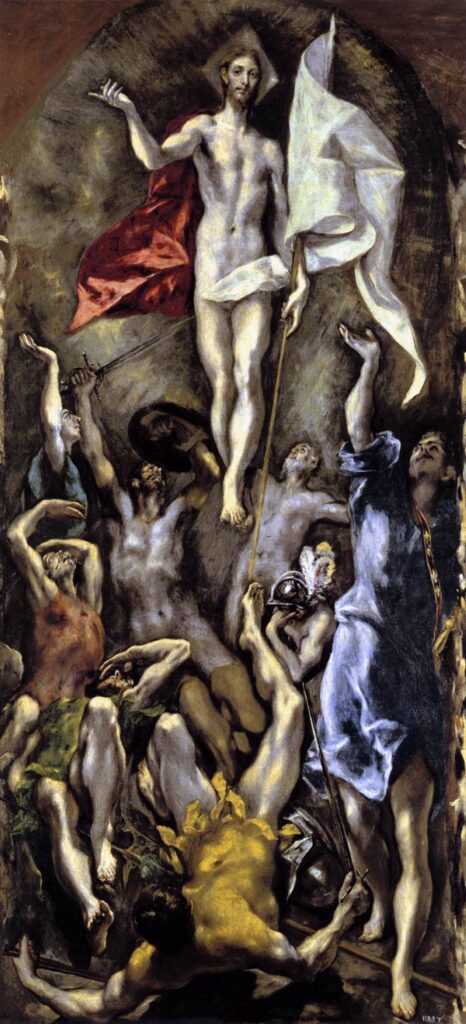
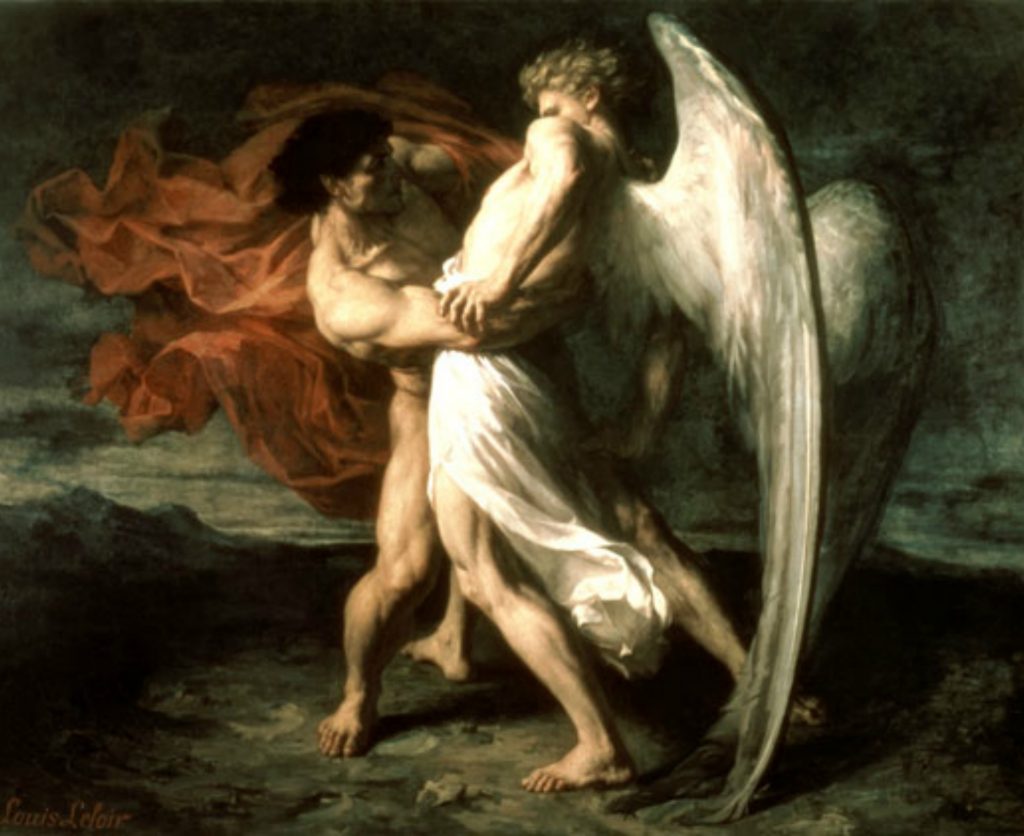
(See also Resurrection of Jesus – Wikipedia.) So Asimov’s point seems to be that even though the “rationalists” among us can’t be persuaded by and through any direct evidence of the Resurrection, they can’t deny the circumstantial evidence. That is, the evidence provided by those millions of lives transformed by their belief in Jesus. (Not to mention the rule of law and the Constitution.) In other words, by rising from the grave Jesus showed His power to save us from all those “slithery coils” shown in the upper image, whatever form they may take.

Something to remember during the upcoming Easter Season, along with Psalm 94:23.

*   *   *   *

 The Risen Jesus – “holding the white banner of victory over death.”

*   *   *   *

The upper image is courtesy of Harrowing Of Hell Image – Image Results. See also Harrowing of Hell – Wikipedia: “the period of time between the Crucifixion of Jesus and his resurrection. In triumphant descent, Christ brought salvation to the souls held captive there since the beginning of the world.”

The Book of Common Prayer reference: The “corporate-mystical” prayer is on page 339, the post-communion prayer for Holy Eucharist, Rite I.

Feast days are designated days on the liturgical (church) calendar “set aside to commemorate events, saints, or doctrines that are important in the life of the Church. These can range from Solemnities, which are the highest-ranking feast days like Easter and Christmas, to optional memorials that celebrate lesser-known saints.” Feast Days: Celebrating the Church’s Calendar.

Strictly speaking, Time of Troubles (per Wikipedia), referred to “a period of political crisis in Russia which began in 1598 …  period of deep social crisis and lawlessness following the death of Feodor I, a weak and possibly intellectually disabled ruler who died without an heir.”

Re: The “first part of Psalm 94.” I combined the translations from the Book of Common Prayer and the New International Version, in “Bible Hub.” (“Poetic license.”)

Re: “Nudge Nudge,” etc. See Wikipedia: “a sketch from the third Monty Python’s Flying Circus episode … featuring Eric Idle (author of the sketch) and Terry Jones as two strangers who meet in a pub.”

For this post I borrowed from 2015’s On Easter Season – AND BEYOND, 2016’s On Eastertide – and “artistic license” – which included a section on Rabbit Trails – along with 2017’s Frohliche Ostern – “Happy Easter” and Happy Easter – April 2020! (Was that the last happy one?)

About those rabbit trails, a fellow-blogger said while going down rabbit trails in “can be fun and interesting,” they can also interfere with resolving the topic at hand. But also noted this distinction:

You would never use that phrase to describe a leisurely trip when you explored a side path and had an interesting adventure.  That’s more like taking the road less traveled[,] which is a literary reference to a poem by Robert Frost, “The Road Not Taken.” (E.A.)

Re: Asimov. The quotes – including on Matthew – are from Asimov’s Guide to the Bible (Two Volumes in One),  Avenel Books (1981), at pages 896-97 and 932-33. Also, from a past post:

Asimov (1920-1992) was “an American author and professor of biochemistry at Boston University, best known for his works of science fiction and for his popular science books.  Asimov was one of the most prolific writers of all time, having written or edited more than 500 books and an estimated 90,000 letters and postcards.” His list of books included those on “astronomymathematics, the BibleWilliam Shakespeare’s writing, and chemistry.”  He was a long-time member of Mensa, “albeit reluctantly;  he described some members of that organization as ‘brain-proud and aggressive about their IQs.’”  See Isaac Asimov – Wikipedia.

The lower image is courtesy of Resurrection, 1584-94 by El Greco. I borrowed the caption from Easter Season – AND BEYOND, along with the origins of Easter information therein, including Asimov. And about that ending paragraph, see also The Proof Of The Pudding – Meaning & Origin Of The Phrase.

*   *   *   *

Some 2025 Mid-Lenten meditations…

*   *   *   *

Was Mary cool and collected at the Announcement – or did she “shrink back in terror?”

*   *   *   *

Last Thursday, March 20, was the Feast Day for St Joseph. This past Tuesday, March 25, was the Feast of The Annunciation. And here we are in mid-Lent, so let’s get right to “St. Joe:”

Christian tradition places Joseph as Jesus‘ foster father… Joseph is not mentioned [at] the Wedding at Cana at the beginning of Jesus’ mission, nor at the Passion at the end. If he had been present at the Crucifixion, he would under Jewish custom have been expected to take charge of Jesus’ body, but this role is instead performed by Joseph of Arimathea

Which makes you wonder, “Whatever happened to Joseph?” And for that matter, is he a good role model for this and every Lent? Struggling away in obscurity for so many years, and largely remembered today “only” because when push came to shove he set aside some pretty substantial doubts and did the right thing? I’d say so, but let’s get to what little we do know.

For some possible answers, check out Question of Faith: What happened to St. Joseph – Catholic Telegraph, or – for a lot of Bible passages on the issue – What ever happened to Joseph, Jesus’ stepfather? One thing we do know: Joseph is the patron saint of workers, along with fathers in general and also “the dying.” (Those at or approaching death.) As for that “worker” definition, the prevailing view is that he was a carpenter, but the original Greek term was tektōn.

Commonly translated “carpenter,” it can also mean mason, craftsman or a builder in wood, stone or metal. (Not to mention “fabricating and joining.”) In other words, tekton can refer to a highly skilled laborer “adept at doing all kinds of work.” (One theory has Joseph – with Jesus and maybe another son – helping build the massive amphitheater for Herod Antipas at Sepphoris, 3.7 miles from Nazareth.) But the important thing for us is that Joseph “did the right thing,” which included putting up with Jesus when he was a teenager.

Which brings up the question: Did Jesus as a teenager know He was the First-born Son of God? If so, He could see into the future, and know – absolutely – everything that ever was or would be. Yet there He was, stuck in a backwater, hayseed town. Worst of all He had to take orders from older people who didn’t know a fraction of what He knew about “real life.” Of course:

Since every teenager in the world has felt exactly the same way – since the beginning of time – how could the people of Nazareth know this teenager was any different?

But we digress, except to note that those teen years alone were probably enough to earn Joseph a sainthood. Which is also true of Mary, which brings up the The Annunciation.

The full title is Annunciation to the Blessed Virgin Mary, and it started with the birth of Jesus. Early Church Fathers – thinking backward nine months – figured that since Jesus was born on December 25, He had to be conceived the previous March 25. (A note: late December was about the time that dark winter days started getting lighter again, bringing “great joy and gladness when the sun started returning.” There was also that Roman Saturnalia thing going on about the same late-December, celebrating “a reprieve from death and a return to life.”)

The feast itself celebrates “the announcement by the angel Gabriel to the Virgin Mary that she would conceive and become the mother of Jesus, the Son of God, marking his Incarnation.”

Which brings up another prevailing view, that Mary was all calm and collected when she got this startling news. “Ho hum, no big deal!” But according to Luke 1:29, Mary was “greatly troubled” or “confused and disturbed,” depending on the translation. In the original Greek, Mary was διαταράσσω (diatarassó), meaning to “disturb thoroughly, to agitate greatly, to trouble deeply.” But her look can also be described as terrified: “Look at her facial expression. This is not one of acquiescence or pleasure. This is a look almost of horror at what she has just been told.”

Consider too what Garry Wills said: “For me, the most convincing pictures or sculptures of the Annunciation to Mary show her in a state of panic … shrinking off from the angel, looking cornered by him.” He noted especially some 14th century paintings, “where Mary is made so faint by the angel’s words that she sways back and must grab a pillar to keep herself upright.”

As if that wasn’t enough, Mary got another warning when she presented the newborn Jesus at the Temple. That’s when Simeon told her, “you, Mary, will suffer as though you had been stabbed by a dagger.” (Luke 2:35. Or that “a sword will run through this woman’s heart.”) All that could explain why Mary may have had a look “almost of horror at what she has just been told” by Gabriel. Which is something to meditate during this Lent 2025. (If you’re feeling alarmed, agitated or perplexed at world events going on around us.)

That shouldn’t be a surprise, since trying to be a good Christian has always been a real pain, but “It is to vigor, not comfort that you are called.” On the other hand there’s 1st Corinthians 10:13, “The temptations in your life are no different from what others experience. And God is faithful. He will not allow the temptation to be more than you can stand. When you are tempted, he will show you a way out so that you can endure.” Something else to keep in mind…

*   *   *   *

Another view of the Annunciationby Johann Schröder

*   *   *   *

The upper image is courtesy of Rossetti Annunciation – Image Results. See also The Annunciation by Dante Gabriel Rossetti – my daily art display:

Take a while and look at Mary’s expression. How do you read Rossetti’s depiction of this young woman? Look at her facial expression. This is not one of acquiescence or pleasure. This is a look almost of horror at what she has just been told. This terrified look adds a great deal of power to Rossetti’s  painting. Mary herself in Rossetti’s painting looks much younger than we are used to seeing in similar scenes. She exudes a youthful beauty but only seems to be a mere adolescent with her long un-brushed auburn hair contrasting sharply with her white dress. She is painfully thin and her hesitance and sad look tinged with fear endears her to us. 

For a fuller view of Rossetti’s interpretation – of Mary “shrinking back,” maybe in terror – see the bottom image at On the Annunciation (2022) – and Mary “shrinking back.”

The Book of Common Prayer reference: The “corporate-mystical” prayer is on page 339, the post-communion prayer for Holy Eucharist, Rite I.

Feast days are designated days on the liturgical (church) calendar “set aside to commemorate events, saints, or doctrines that are important in the life of the Church. These can range from Solemnities, which are the highest-ranking feast days like Easter and Christmas, to optional memorials that celebrate lesser-known saints.” Feast Days: Celebrating the Church’s Calendar.

Re: “Mid-Lent.” This year from Wednesday, March 5th, to Thursday, April 17. (Lent 2025 – Calendar Date.) So we are pretty much in the middle; March 26 or 27, depending on your “reckoning.” Which brings up the Daily Office readings for Monday, March 24. They included Paul’s letter to the Romans (4:1-12), with a lot on how Abraham believed “and it was reckoned to him as righteousness.” Which to me always sounded hillbilly-ish, so I finally checked it out. It turns out the Hebrew word “chashab,” a primitive root, is defined as to think, plan, reckon, account, consider, devise, or to “esteem:”

The Hebrew verb “chashab” primarily conveys the act of thinking, planning, or considering. It is used to describe the process of mental calculation or devising plans… In ancient Hebrew culture, the concept of “chashab” was integral to both daily life and spiritual practice. The ability to think and plan was highly valued, as it was essential for survival, governance, and religious observance. The term reflects a worldview where thoughtful consideration and intentional planning were seen as reflections of wisdom and prudence.

(See Strong’s Hebrew: 2803. חָשַׁב.) Which leads to two thoughts: That’s one reason I love blogging. I get to go chase down those educational “Rabbit Trails.” Second thought: The many ways this one word can be translated makes it hard to think literalism is a good way to approach the Bible.

On Joseph as “tekton,” see Carpenters, Builders, and Masons – Bible Hub, What did St. Joseph actually do as a carpenter? – Aleteia, and Was Joseph a carpenter, stone mason or metallurgist?

Re: The Sepphoris project: “Several scholars have suggested that Jesus, while working as a craftsman in Nazareth, may have traveled to Sepphoris for work purposes, possibly with his father and brothers.” See also Sepphoris | Did Jesus ever visit Sepphoris – itsgila.com. As for Herod Antipas, he is not to be confused with “Herod the baby-killer,” also know – perhaps ironically – as Herod the Great.

On the teenager thing see 2014’s On Jesus as a teenager, and 2016’s On Jesus as a teenager – REDUX.

Re: The word translated from Luke 1:29, see Strong’s Greek: 1298. διαταράσσω (diatarassó).

Re: “What Garry Wills said.” See What Jesus Meant: Wills, the 2007 book, an “illuminating analysis for believers and nonbelievers alike … a brilliant addition to our national conversation on religion.” (Said Goodreads.) The quote is from page 1 of my Penguin Books edition, “The Hidden Years.”

Also, for this post I borrowed from St. Joseph’s Day – 2022, and – from 2015 – The Annunciation “gets the ball rolling,” along with later posts such as On the Annunciation (2022) – and Mary “shrinking back,” and On the Annunciation and the end of Lent – 2023.

Re: Luke 2:35. The “sword will run through this woman’s heart” quote came from the translation Wills used. Most other Bible Hub translations say the sword will pierce Mary’s “own soul;” including the King James Bible. (The one God uses.) 

Re: “To vigor, not comfort.” Here’s the full quote on the life of a new Christian:

Hearing now and again the mysterious piping of the Shepherd, you realize your own perpetual forward movement…  Do not suppose from this that your new career is to be perpetually supported by agreeable spiritual contacts, or occupy itself in the mild contemplation of the great world through which you move. True, it is said of the Shepherd that he carries the lambs in his bosom; but the sheep are expected to walk, and to put up with the bunts and blunders of the flock. It is to vigour rather than comfort that you are called.

From Evelyn Underhill’s Practical Mysticism, Ariel Press, 1914, at page 177.

As for 1st Corinthians 10:13, see also Romans 10:9, “that if you confess with your mouth, ‘Jesus is Lord,’ and believe in your heart that God raised Him from the dead, you will be saved.” Period. No ifs, ands or buts. (In other words, The Prize Is Worth the Price.)

The lower image is courtesy of Annunciation – Wikipedia. The caption:  “The Annunciation – Johann Christian Schröder.” 

*   *   *   *

Ash Wednesday, 2025 – and a reflection on Psalm 22…

*   *   *   *

That would be 40 days metaphorically – with Sundays off for a break from the desert…

*   *   *   *

These are the times that try men’s souls.” And that’s not just because we’re starting another season of Lent. But for now, let’s focus on that Lenten period of discipline, fasting and repentance – but mostly as a time for looking ahead to ultimate victory. (And deliverance.) Which brings up a post I did back on April 9, 2017, Psalm 22 and the “Passion of Jesus.”

It noted that Psalm 22 begins, “My God, my God, why have you forsaken me?” We know that part because Jesus quoted it on the cross, as told in Matthew 27:46 and Mark 15:34: “About the ninth hour, Jesus cried out in a loud voice, ‘Eli, Eli, lema sabachthani?'” (In the original Aramaic.) What many don’t realize is that Verse 1 goes on:  “Why are you so far from saving me, so far from my cries of anguish?” Which is a feeling many of us can empathize with these days…

But first some background: Scholars think that Psalm 22 was written about 600 years before Jesus was born, in the pre-exilic period; before the Babylonian Exile and so before the Babylonian destruction of Jerusalem in 587 B.C. (Or B.C.E. if you prefer.) Which means Psalm 22 seems to be a bit of foreshadowing, “an indication of what is to come.”

On that note, later in the psalm verse 16 notes, “they pierce my hands and my feet.” (Or feet and wrists, depending on the translation of the Greek word “xeiros.”) This was mirrored in John 19:37, “As another Scripture says: ‘They will look on the One they have pierced.’” (See also Isaiah 53:5, “He was pierced for our transgressions, He was crushed for our iniquities; the punishment that brought us peace was upon Him, and by His stripes we are healed.”)

Then there’s verse 18: “They divide my clothes among them and cast lots for my garment.”  That verse was mirrored in Matthew 27:35:  “When they had crucified Him, they divided up His garments by casting lots.” (Which sounds like more foreshadowing.)

So, what does all this mean? For one thing it means that despite all the anguish Jesus had to go through, He knew that eventually there would be a happy ending. (“Thinking long-term?”) For another, there’s 1st Corinthians 3:21, “Let no one boast of human leaders,” a thought that could prove useful in those coming days. Then there’s Second Timothy 1:7, “For God did not give us a spirit of cowardice, but rather a spirit of power and of love and of self-discipline.” All of which Jesus showed – power and love and self-discipline – when He faced His own ordeal.

Which brings up the question, “Can we do anything less?” In our own ordeal, whether that’s limited to the upcoming time of Lent, or maybe something beyond that? But back to the basics. Ash Wednesday marks the start of the Season of Lent, about which Wikipedia said:

According to the canonical gospels of MatthewMark and LukeJesus Christ spent 40 days fasting in the desert, where he endured temptation by Satan. Lent originated as a mirroring of this, fasting 40 days as preparation for Easter.

Lent in turn is a season devoted to “prayerpenance, repentance of sins, almsgiving, atonement and self-denial.” But getting back to Jesus “wandering in the Wilderness” for 40 days, those 40 days mirrored the 40 years the Hebrews also spent “wandering around.” (Led by Moses.) But here’s more good news: Eventually those wandering Hebrews found the Promised Land. In much the same way, after 40 long days of penance, Lent leads us to the much-anticipated celebration of Easter, and the Resurrection of Jesus Christ. (“The Lord is risen … Indeed!”)

And here’s another bit of good news. It’s not 40 straight days of self-denial.

That’s because there are actually 46 days of Lent. 46 days between Ash Wednesday and Easter Sunday. And why is that? Because Sundays don’t count. Sundays in Lent are basically “days off,” when you can still enjoy whatever it is you’ve “given up.” For example, if you’ve given up chocolate for Lent, you can still enjoy some chocolate treats on Sundays during Lent.

But back to the Lenten time of discipline, fasting and repentance. One thing that’s especially hard to practice in these times of polarization is that Jesus was Radical in his love for all people. (Even – as I noted before – for those “real pains.” As Paul noted in Romans 5:6, Christ died for the Ungodly, whoever you think they may be.) Jesus simply never got involved in politics. He focused instead on healing the divisions so prevalent during His time on earth.

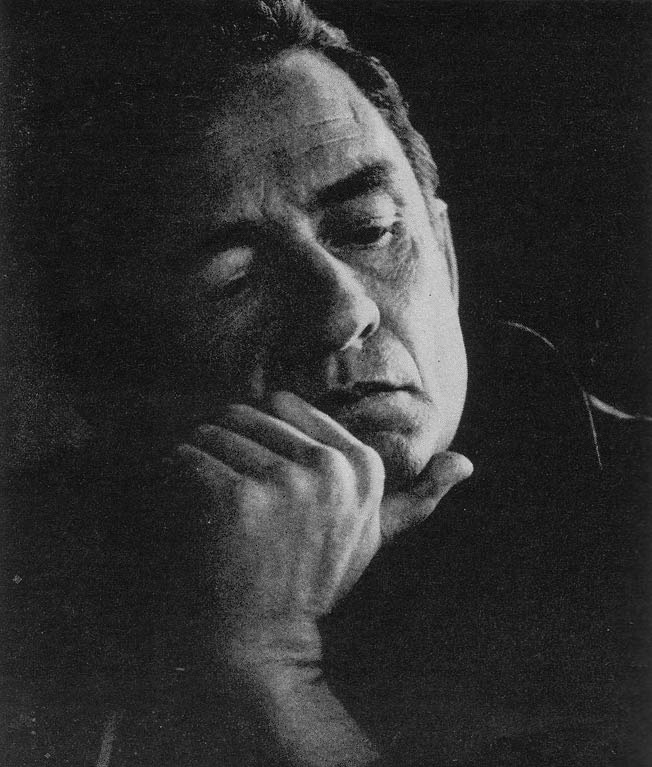
Which is the kind of radical love Johnny Cash tried to show. The writer of Cash’s Religion and Political Views said, “I like to think that Johnny was above politics and more about people and peace and happiness and cooperation.” Or as Cash’s daughter Rosanne said, her dad didn’t care “where you stood politically.” He could “love all stripes, and that’s why all stripes claim him.”

Something to contemplate during this Lent 2025, as we look ahead to Easter.

*   *   *   *

*   *   *   *

The upper image is courtesy of 40 Days … Image Results.

The Book of Common Prayer reference: The “corporate-mystical” prayer is on page 339, the post-communion prayer for Holy Eucharist, Rite I.

Feast days are designated days on the liturgical (church) calendar “set aside to commemorate events, saints, or doctrines that are important in the life of the Church. These can range from Solemnities, which are the highest-ranking feast days like Easter and Christmas, to optional memorials that celebrate lesser-known saints.” Feast Days: Celebrating the Church’s Calendar.

Re: The quote “these are the times,” see The American Crisis – Wikipedia, about a series of pamphlets by “philosopher and author Thomas Paine, originally published from 1776 to 1783 during the American Revolution.” The main crisis came in the winter of 1776 (before Washington’s victory at Trenton), when American spirits were low and the cause of American democracy seemed destined for extinction. (Not that there’s any connection to current events.)

Re: Lent. See What is Lent? Guide to It’s Meaning and Purpose – Christianity, and Lent – Wikipedia.

For this post I referred to Ash Wednesday – 2022, and Ash Wednesday and Lent – 2023. And a note: The 2017 post “Passion of Jesus” included details about the crucifixion process, including the “translation difficulty” involving the original Greek word usually translated as hand:  

“The word xeiros, which we translate to ‘hand’ has a wider semantic range.” Then there is the fact that – anatomically speaking – the “bones and tendons of the hand simply do not have the strength to hold the weight of the body without the nail ripping through. The easiest and strongest place to hammer a nail is through the wrist, between the ulna and radius bones.”

The lower image is courtesy of Johnny Cash – Wikipedia. See also Man in Black (song) – Wikipedia. (I borrowed it from the February 2017 post, Moses at Rephidim: “What if?”)

St. Matthias, 2025 – and the tough life of an Apostle…

*   *   *   *

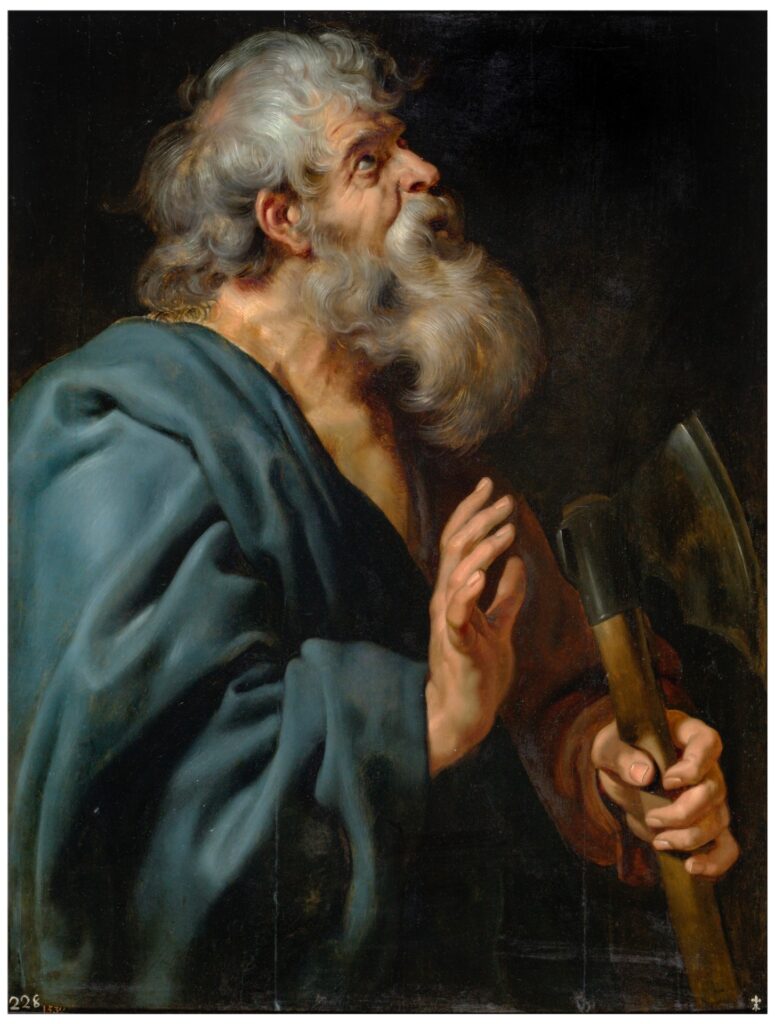
St Matthias – the Apostle who replaced Judas Iscariot – “(c. 1611) by Peter Paul Rubens...”

*   *   *   *

Monday, February 24, 2025, is the Feast of St. Matthias, the Apostle who replaced Judas:

[A]ccording to the Acts of the Apostles, [he] was the apostle chosen by the remaining eleven apostles to replace Judas Iscariot following Judas’ betrayal of Jesus and suicide.  His calling as an apostle is unique in that his appointment was not made personally by Jesus, who had already ascended to heaven, and, it was made before the descent of the Holy Spirit upon the early Church.

See Saint Matthias – Wikipedia. (Note that this St. Matthias is not to be confused with St. Matthew, the Gospel-writer whose Feast Day is September 21.) He is also called “Unremarkable Matthias” or the “Overlooked Apostle.” See The Overlooked Holy Apostle, Matthias.

Isaac Asimov described how Matthias became an Apostle:

Peter arranged to have a new individual selected to take the place of Judas Iscariot in order to bring the number of the inner circle back to the mystical twelve that matched the twelve tribes of Israel. Two were nominated, Joseph Barsabbas and Matthias. To choose between the two, lots were used, as told in Acts 1:26, “and the lot fell upon Matthias; and he was numbered with the eleven apostles.” Neither Joseph Barsabbas nor Matthias are mentioned anywhere else in the New Testament.

Since there’s no other mention of Matthias in the Bible, we know next to nothing about him. But there are theories. For example, Wikipedia suggested that “Matthias was originally Zacchaeus.” (Remember, the tax collector Zacchaeus who climbed a sycamore tree so he could see Jesus? He had a hard time both as he was short and because of the crowd of people.)

So, was Saint Matthias really Zacchaeus, who fell from a sycamore tree?

Whatever the answer, the now-defunct article – Overlooked Apostle – went into great detail about how much Matthias suffered – and how he ultimately died. Like, he preached in Macedonia and Ethiopia, where “the heathen dragged him over the ground, beat him, hung him from a pillar and tore his stomach with an iron blade and burned him with fire.” Another town he preached in was a “city of the man-eaters,” cannibals. When Matthias came in “the men of that city took hold of him and thrust out his eyes and made him drink poison and sent him to the prison where he sat for thirty days waiting to be eaten and die.” But the Lord appeared to him and got his eyesight back for him, as well as other prisoners who’d suffered the same fate. The site also said Matthias was rescued by the Apostle Andrew; “as Andrew approached the gates of the prison, the doors opened of their own accord.” (But see also Matthias the Apostle – Wikipedia, which said “information concerning the ministry and death of Matthias is vague and contradictory, and that Hippolytus of Rome said Matthias “died of old age in Jerusalem.”)

That Wikipedia account may be true but it’s also a whole lot more boring! (And which indicates how internet users need to Lateral Read and check sources, including but not limited to claims seeming outrageous – or “not boring.”) Getting back to the now-defunct “Overlooked” article, it said eventually Matthias returned to Galilee where he was stoned to death. “The Jews, filled with malice and anger, seized Matthias and presented him to the High Priest, Annas.” The High Priest, who “hated all Christians and was responsible for the death of James, the first bishop of Jerusalem, ordered that Matthias be stoned.” One point of note: Overlooked Apostle said that when Matthias was taken to be stoned, he cried out, “You hypocrites, rightly did the Prophet David speak to those like you: ‘they shall hunt down the soul of the righteous man, and the innocent blood shall they condemn.’” (Which sounds strangely pertinent these days.)

After Matthias spoke these words, two witnesses who claimed he’d blasphemed picked up stones to be the first to stone him. But first, Matthias asked that these stones be buried with him as a testimony of his suffering for the Lord. So they stoned him to death, and as an added insult, also beheaded him to express that he was an enemy of Rome. So whether St. Matthias died by being first stoned and then beheaded, or had his eyes gouged out, then “sat for thirty days waiting to be eaten and die,” the lesson is: Being an apostle was no piece of cake!

Another lesson? Maybe there’s a reason the “Overlooked” piece is NOW DEFUNCT, but the main point remains: Trying to be a good Christian has never been a “piece of cake.” (And these days it’s mostly a pain in the ass.) As to who was Matthias, and how did he die? That’s one puzzle we Good Christians can work on this Lent. (As a spiritual discipline?) There’s also that whole controversy, “should I judge my fellow Christians?” I’ll explore that topic in a near-future post, in which I’ll revisit the March 2019 post, On the Bible’s “dynamic tension,” featuring Charles Atlas

Stay tuned…

*   *   *   *

*   *   *   *

The upper image is courtesy of Saint Matthias – Wikipedia. The caption, as noted: “‘St Matthias’ (c. 1611) by Peter Paul Rubens.

The Book of Common Prayer reference: The “corporate-mystical” prayer is on page 339, the post-communion prayer for Holy Eucharist, Rite I.

“Feast days” are designated days on the liturgical (church) calendar “set aside to commemorate events, saints, or doctrines that are important in the life of the Church. These can range from Solemnities, which are the highest-ranking feast days like Easter and Christmas, to optional memorials that celebrate lesser-known saints.” Feast Days: Celebrating the Church’s Calendar.

Bibliography for this post: 2015’s On St. Matthias – and “Father Roberts”,” 2017’s The “Overlooked Apostle,” Ruth and Mardi Gras, and 2022’s St. Matthias, Zacchaeus, and the tough life of an Apostle.

Re: “Isaac.” The quote is from Asimov’s Guide to the Bible (Two Volumes in One), Avenel Books (1981), page 998. Asimov was “an American author and professor of biochemistry at Boston University, best known for his works of science fiction and for his popular science books. Asimov was one of the most prolific writers of all time, having written or edited more than 500 books and an estimated 90,000 letters and postcards.” His list of books included those on “astronomymathematics, the BibleWilliam Shakespeare’s writing, and chemistry.” He was a long-time member of Mensa, “albeit reluctantly; he described some members of that organization as ‘brain-proud and aggressive about their IQs.’” See Isaac Asimov – Wikipedia.

Re: That “mostly a pain in the ass” comment. Which may be true of this earthly incarnation, but there is that “you have already won your game of life” part. (John 6:37 and Romans 10:9.)

The lower image is courtesy of Dynamic Tension Charles Atlas – Image Results. See also Dynamic Tension – Wikipedia, and Charles Atlas – Wikipedia.

*   *   *   *

The Presentation and the Poker player – 2025

*   *   *   *

The Beatles “reinvent themselves” – with fictional alter egos – leading to spiritual growth…

*   *   *   *

January 31, 2025 – This Sunday, February 2, we remember The Presentation of the Lord; Jesus, presented at the Temple in Jerusalem. There’s more on that later, but first a note on some upcoming posts, up to and possibly into Lent, about a guy some people call Crazy Nick.

In 1967 the Beatles turned themselves into Sgt. Pepper’s Lonely Hearts Club Band. They were tired of being “the Beatles,” so they invented a fictional alter ego to get away from it all. They’d pretend to be someone else, a make-believe band that would allow them to grow, to reinvent themselves and to explore new spiritual horizons. In 1993 I too created a fictional alter ego, as a kind of thought experiment. I created a character I came to call Nick, in honor of Ernest Hemingway’s Nick Adams stories. Like the Beatles’ Sgt. Pepper’s Band, my imaginary “Nick” gave me freedom to explore new horizons, and maybe find some new spiritual insights.

My 1994 novel describing him was a fantasy of sorts. A sports fantasy but also one about reading the Bible to help get good things from God. My imaginary Nick honestly thought he could help his favorite sport teams win. His thought: “Suppose a devout Christian sports fan found a way to work with God to try and help his team win. What lessons would he learn?”

Like Sgt. Pepper’s Band my imaginary Nick gave me the freedom to explore new horizons and find new spiritual insights. One thing I learned in the 30-plus years since that first novel in 1994: There is no magic formula. Nick has suffered heartbreak way more often than not, but there have been successes – detailed in later posts – along with some “aha!” spiritual breakthroughs.

Another thing I learned from Nick: That even if you lose – when your team doesn’t win, or gets embarrassed on the field – the very idea of working with and interacting with the Force that Created the Universe is powerful stuff. (“He’s trying to tell me something!”)

A third thing I learned: Being a good Christian – trying to get good things from God – can be a lot like learning to become a professional poker player. You know you won’t win every hand. No reasonable pro poker player would expect that. But if you learn how to play your cards right, you can expect to make a reasonably comfortable living at it. (And for any Bible-Cons – conservatives, or maybe Modern-Day Pharisees – reading this and getting all upset, let me just add, “That’s a metaphor!” Or maybe an allegory or parable; I get those mixed sometimes.)

I’ll write more on lessons learned from Crazy Nick in the upcoming pre-Lent and Lenten seasons, but meanwhile: Back to The Presentation. It’s part of the season of Epiphanytide, leading up to the Last Sunday after the Epiphany on March 2, and the First Sunday in Lent on March 9.)

Counting forward from December 25 as Day One, we find that Day Forty is February 2. A Jewish woman is in semi-seclusion for 40 days after giving birth to a son, and accordingly it is on February 2 that we celebrate the coming of Mary and Joseph with the infant Jesus to the Temple at Jerusalem…

In other words, the day celebrates an early episode in the life of Jesus, “to officially induct him into Judaism.” (In many churches it’s also called Candlemas, as illustrated at right.) Luke described the episode at 2:22–40: “Mary and Joseph took the Infant Jesus to the Temple in Jerusalem … to complete Mary’s ritual purification after childbirth.”

Luke explicitly says that Joseph and Mary take the option provided for poor people (those who could not afford a lamb) (Leviticus 12:8), sacrificing “a pair of turtledoves, or two young pigeons.”  Leviticus 12:1–4 indicates that this event should take place forty days after birth for a male child, hence the Presentation is celebrated forty days after Christmas.

In other words, they were there “in obedience to the Torah (Leviticus 12, Exodus 13:12-15.” (On Purification after Childbirth, “if she cannot afford a lamb, she is to bring two doves or two young pigeons, one for a burnt offering and the other for a sin offering.”)

Other tidbits from past posts: Mary did this even though she’d “borne Christ without incurring impurity” – the usual impurity involved in conception – but “went to the Temple in Jerusalem to fulfill the requirements of the Law of Moses.” (To set a good example, like Jesus insisting that John baptize Him.) Another tidbit: This first Presentation put Jesus on the long road to His second one, at the hands of Pontius Pilate, showing Him to the mob.

A reminder that from the time of His first Presentation – at just over a month old – Jesus’ life was one long journey to that second presentation. (On the eve of making the sacrifice that would literally change history, if not “split history in two.”) 

And it all began with “Simeon and Anna recognizing the Lord Jesus.” (Shown below.)

So, what does this have to do with any lessons I might have learned from Crazy Nick? Just that I published my first novel about him in 1994. A year later I published my first book in the Not your daddy’s Bible mode, “Jesus Christ, Public Defender.” (Of which more in future posts.) Years later – in April 2014 – I started this blog, with a series of posts that I’ve left untouched and uncorrected, so you can judge how much I’ve progressed. (If at all. See for example On Jonah and the bra-burners, from 2015.) You might call that a presentation of my own…

*   *   *   *

The Presentation, where “Simeon and Anna Recognize the Lord Jesus…” 

*   *   *   *

The upper image is courtesy of Sgt Pepper’s Lonely Hearts Club Band Image – Image Results. For the original album cover see Sgt. Pepper’s Lonely Hearts Club Band – Wikipedia.

The Book of Common Prayer reference: The “corporate-mystical” prayer is on page 339, the post-communion prayer for Holy Eucharist, Rite I.

“Feast days” are designated days on the liturgical (church) calendar “set aside to commemorate events, saints, or doctrines that are important in the life of the Church. These can range from Solemnities, which are the highest-ranking feast days like Easter and Christmas, to optional memorials that celebrate lesser-known saints.” Feast Days: Celebrating the Church’s Calendar.

Re: 1994 novel. I did a sequel of sorts, “30 years’ feedback,” in 2024.

Re: Magic formula. Merriam-Webster defines the term as “a simple and sure way to an end.”

Re “powerful stuff.” The reference is to the George Jones lyric in his song White Lightning:

Well a city slicker came and he said I’m tough – I think I want to taste that powerful stuff – He took one slug and he drank it right down I heard him moanin’ as he hit the ground – Mighty mighty pleasin you’r pappy’s corn squeezin…

BTW: That’s another metaphor, like the one about the Poker player.

Re: Today’s Pharisees. See Self-Test: Are You a Modern-Day Pharisee? – Dr. Eitan Bar:

Today, the term “Pharisee” has become synonymous with legalism, judgmentalism, and a condescending attitude toward others. While Phariseeism was once a specific religious movement, its spirit lives on in modern times through people who prioritize rules over relationships, law over love, and condemnation over compassion.

For this post I borrowed from or referred to On the FIRST “Presentation of the Lord,” from 2017. (That post closed with a picture of Donald Trump and this note: “I ran across a Bible passage apropos to current events. The Daily Office Readings for February 1[, 2017] included Isaiah 54:15: ‘If anyone stirs up strife, it is not from me.'” Also, “The LORD is a God of knowledge” – The Presentation, 2019, with a quote from Matthew 5:22, “If you call someone an idiot, you are in danger of being brought before the court. And if you curse someone, you are in danger of the fires of hell.” (From the NLT translation.)) Also from The “Presentation of our Lord” – 2020, On the Presentation of Jesus – 2/2/22, and Jesus “Presented” – 2024.

Re: Other posts on Jonah. See also 2024’s On Bra-burners and the True Test of Faith, and 2020’s Jonah: “Ain’t about no stinkin’ whale!”

About the presumptive audacity of calling this a “presentation of my own,” see 1st Corinthians 11:1, “You are to imitate me, just as I imitate Christ.”

The lower image is courtesy of Simeon And Anna Recognize The Lord Jesus – Image Results.  See also Simeon and Anna Recognize the Lord in Jesus – Rembrandt, and the “Simeon” link in the Wikipedia article on the Presentation, or at “Rembrandtonline.” For another interpretation, see “Simeon the Godreceiver by Alexei Egorov. 1830–40s.”

*   *   *   *

On Peter and Paul, working together – 2025

*   *   *   *

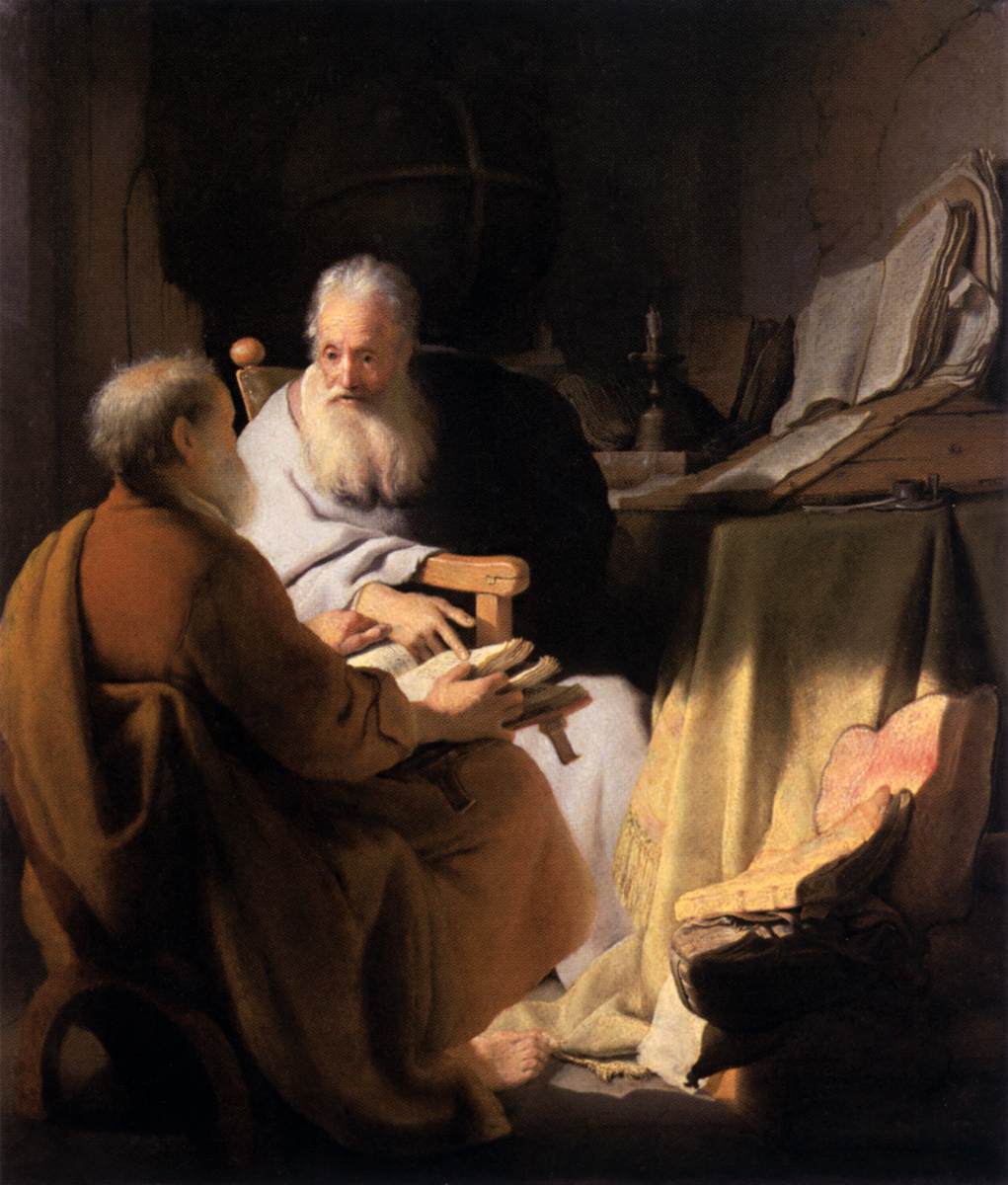
“Scholars Disputing” – Peter and Paul – but they ended up working for the common good… 

*   *   *   *

January 25, 2025 – Last Saturday, January 18, was the Feast Day for Peter confessing. This Saturday, today, is the Feast for Paul converting. That’s different from the mid-summer – June 29 to be exact – when one Feast Day celebrates the two Apostles together. But here on the other side of the church year – in the bleak midwinter – we remember the two men separately:

On January 18 we celebrate the Confession of Peter:  “Thou art the Christ, Son of the Living God.”  A week later on January 25 we celebrate the Conversion of St. Paul.  Then comes June 29, when we celebrate both men…

One point of remembering Peter and Paul separately is that these two “Pillars of the Church” took completely different paths to the same destination. (“All roads lead to Jesus?”) And often had what may be called “spirited” disputes. See Galatians 2:11-14, and especially Galatians 2:11, “When Peter came to Antioch, I told him to his face that he was wrong.” Then there’s 2d Peter 3:16, where Peter described Paul’s unique and often wordy way of writing:

He writes this way in all his letters, speaking in them about such matters. Some parts of his letters are hard to understand, which ignorant and unstable people distort, as they do the rest of the Scriptures, to their own destruction.

As for me, I’ve often thought Paul “writes like a lawyer,” what with his long non-stop sentences that stretch into full paragraphs, and I’m not the only one: “Admittedly, some of Paul’s writings are complicated and difficult to understand. Peter himself said as much.” 

As for the different paths to the same destination, Peter was one of the original 12 disciples, and the first “to confess Jesus as Messiah.”  (See the matching accounts in the three Synoptic GospelsMatthew 16:13-20Mark 8:27–30 and Luke 9:18–20.) On the other hand, Saul of Tarsus – later “Paul” – started out as the most ardent enemy and persecutor of the early Christian Church. (Acts 8:3: “Saul was going everywhere to destroy the church. He went from house to house, dragging out both men and women to throw them into prison.”)

In other words, Peter came to his position of authority from “inside the church.” Paul on the other hand was pretty much dragged kicking and screaming into his position of authority.

In plain words, Paul’s Damascus Road experience “changed him from a Christ-hating persecutor of Christians to the foremost spokesman for the faith.” (Wouldn’t it be nice if God could intervene that way today, in a way that would bring more people to Jesus? “Is that a pig flying?”)

But seriously, once upon a time in America the most ardent politicians did feel free to “sup with their enemies.” Like Ronald Reagan and Ted Kennedy, at left. They were able to do that despite intense political viewpoints. For example, Kennedy said of Reagan:  “He’s absolutely professional.  When the sun goes down, the battles of the day are really gone.” Or as one writer said, Kennedy learned from experience to “operate within the politics of symbolism:”

Heated rhetoric was part of the game of government. When the day was over, win or lose, everyone could have a drink together.*

Then there was Ronald Reagan and Tip O’Neill. As one site noted, despite equally intense political differences, President Reagan and House Speaker O’Neill offered a model of political friendship, despite those starkly different ideologies. That was especially evident after the assassination attempt. O’Neill was one of the first people Reagan let in to see him at George Washington University Hospital. When O’Neill entered the room he walked over to the bed, “grasped both the president’s hands, and said, God bless you, Mr. President.’”

The president still seemed groggy … with lots of tubes and needles running in and out of his body. But when he saw Tip, he lit up and gave the speaker a big smile, and said, ‘Thanks for coming, Tip.’ Then, still holding one of the president’s hands, the speaker got down on his knees and said he would like to offer a prayer for the president, choosing the 23rd Psalm.” Then O’Neill kissed Reagan on the forehead.

Another tidbit: Reagan often answered O’Neill’s calls, “Tip, is it after 6 p.m.?” The point being that Reagan and O’Neill might fight like cats and dogs during work hours, but “after 6, these two enemies enjoy each other’s company.” So, wouldn’t it be wonderful if making America great again meant a return to those “traditional family values?” On the other hand you might say that’s all part of being a good Christian. (Romans 5:6 and Matthew 5:44.)

Which leads to this question: What would happen if two American conservative and liberal politicians today could likewise come together and work for the common good? And that brings up the topic of being “restored.” That can mean bringing “back to health, good spirits, etc.”  Or “to bring back to a former, more desirable condition.” Say what you want about the bad old days, they never seemed to be this bad. (Or is that just another Old Geezer speaking…)

Which brings up 2017’s “Wouldn’t it be nice if WE could be ‘restored?’” Which ended with this:

Wouldn’t it be nice if we too – here in America – could also be “restored?” To a time when people of all types and backgrounds worked together for the common good?

Which should be one big job of a good Christian. 2d Corinthians 5:18: God “reconciled us to Himself through Christ, and gave us the ministry of reconciliation.” Along with bringing more people to Jesus, not driving them away, so from where the sun now stands let there be “Happy Reconciling.” And getting back to an America where more politicians act like Tip and Ron…

*   *   *   *

*   *   *   *

The upper image is courtesy of www.canvasreplicas.com/Rembrandt.htm.  See also Two Scholars Disputing by REMBRANDT Harmenszoon van Rijn.

The Book of Common Prayer reference: The “corporate-mystical” prayer is on page 339, the post-communion prayer for Holy Eucharist, Rite I.

“Feast days” are designated days on the liturgical (church) calendar “set aside to commemorate events, saints, or doctrines that are important in the life of the Church. These can range from Solemnities, which are the highest-ranking feast days like Easter and Christmas, to optional memorials that celebrate lesser-known saints.” Feast Days: Celebrating the Church’s Calendar.

For this post I borrowed from Peter confesses, Paul converts (2016), and – especially – from 2017’s “Wouldn’t it be nice if WE could be ‘restored?'” Along with On Saints Peter and Paul, January ’23, and Paul gets his sight back, Peter confesses – 2024. See also Peter, Paul – and other “relics.” 

Also, for future review see “Some hard parts about being a good Christian,” from last October, 2024.

On Paul’s style of writing, “Admittedly…” See Understanding Paul’s Difficult Scriptures

Re:  Heated rhetoric as “part of the game.” (Of politics.) See On Reagan, Kennedy – and “Dick the Butcher,” in  my companion blog.  The Reagan-Kennedy photo is courtesy of boston.com/bigpicture … ted_kennedy. The caption:  “Senator Edward Kennedy talks with President Ronald Reagan, left, on June 24, 1985, as they look over an American Eagle that graced President John F. Kennedy’s desk during a fund raising event for the John F. Kennedy Memorial Library at McLean, Virginia.  (AP Photo/Charles Tasnadi).” The quotes – of Kennedy and Reagan, and about Kennedy and “heated rhetoric” – are courtesy of Battle for Justice: How the [Robert] Bork Nomination Shook America, by Ethan Bronner, Anchor Book edition (1989), at pages 103-104. 

The Ronald Reagan and Tip O’Neill quotes are from the GodBuddies website, Men Helping Men Become Better Men. (Geez, what a radical idea.) The full link adds – of Reagan and O’Neill, A Real-life Friendship. See also restored, from the Free Dictionary.

The link From where the sun now stands refers to Nez Perce Chief Joseph’s resolve to “fight no more forever.” (It just sounds poetic.) But here it means to never stop fighting, by every legal means, to preserve America’s democracy and true Christian freedom. (Okay, I’m climbing off the soap box now…)

The lower image is courtesy of the Ronald Reagan and Tip O’Neill link in the main text. 

*   *   *   *

On Judgment (Good or Bad) – and Thanksgiving 2024

*   *   *   *

*   *   *   *

November 30, 2024 – This year Thanksgiving came a mere 23 days after a much-anticipated – and in some quarters much dreaded – set of Election Day results.

But we knew going in that no matter who got elected, the next four years would be as polarizing as the last four years have been. (Depending on whose ox is being gored.) Which brings up the topic of making judgments, as your future expressed opinions may pertain to those results. (And maybe defending “truth, justice and the American Way,” as you define those terms.)

On the one hand Jesus said in Matthew 7:1, “Judge not, that ye be not judged.” (In the King James Bible, the one God uses.) On the other hand, Ezekiel 3:16-27 warns that if we see someone doing something wrong and don’t warn them, we’ll both be punished. (The one who sins and the one who failed to warn him.) But if we warn that erring person and they ignore the warning, that person will be punished but we won’t. (“They will die for their sin; but you will have saved yourself.”) But doesn’t that type of Bible duty require some type of judgment?

Fortunately we have the internet to turn to for answers, like the article Two Types of Judgments – DBT Center of the South Bay: “We all make judgments, so why is it sometimes bad to be stating judgments?” It turns out that there are two types of judgments; “judgments that are discriminating, and judgments that are evaluative.” I would have thought the “discriminating” type would be bad, but it’s actually the good one: “Judgments that are discriminating (i.e. I prefer X over Y) reflect personal preferences and subjective opinions. They are considered judgments that are effective in terms of not projecting one’s perception as a complete conclusion.”

When judgments are evaluative (i.e. This is horrible) it is stating something as a whole and objectively. It is taking the facts of a situation and adding personal preferences, values, and opinions to make it an objective truth. This type of judgment is ineffective because others may view the same situation differently, whether it is marginally different or completely different.

By using “discriminating” judgments – and opinions – you leave room for other people’s interpretations and perceptions. In other words, “don’t project your own perceptions as a complete conclusion.” In more blunt terms, when expressing your opinions don’t think you’re perfect like Jesus. (The only person in history who can say His opinions are infallible.)

And that’s what Jesus meant when He said, “Judge not, that ye be not judged.” But just to be on the safe side you might want to add, “That’s my stupid opinion anyway. What’s yours?” That way you might avoid being “weighed in the balances and found wanting,” as shown in the painting below. But this post is also supposed to be about Thanksgiving, so here are some snippets.

For one thing, the idea behind the holiday goes back long before Plymouth Rock and the Pilgrims. For Native Americans, “gathering to give thanks was already a familiar custom, taking place not just annually, but 13 times throughout the lunar, calendar year – a cycle known as the Thirteen Moons. As one Wampanoag said, “Thanksgivings are a big part of our culture. Giving thanks is how we pray.” (The Wampanoags were the tribe who helped the Pilgrims survive their first winter in 1620-21. Of the 102 who landed in November 1620, less than half survived. Of the 18 adult women, only four survived. “And you think today’s politics are bad?”)

Anyway, as it turns out there’s a very good reason why special days of thanksgiving have been around a long time. “As more researchers dig into the science of gratitude, they’ve found the feeling likely played a key role in helping our ancestors band together and survive.”

So, “Who knew there was a science of gratitude?” But there is, and it has a definite healing effect: Whether thanking others, ourselves, Mother Nature or the Lord, “gratitude in any form can enlighten the mind and make us feel happier.” Which explains why our annual Thanksgiving in all its forms has been around so long: “That legacy continues today, as being in the mood for gratitude shapes who we are as a species and how we connect with the people around us.” And we could use a lot of positive shaping and connecting over the next four years…

*   *   *   *

Be thankful! (Don’t end up “weighed in … and found ‘negatively judgmental…'”)

*   *   *   *

The upper image is courtesy of Judgment Image – Image Results, and came with the page The Proper Use of Biblical Judgment – pastorfulmer.com, including another take on Matthew 7:1:

This is a verse from the Bible that is often thrown about with great liberty! Rather than being used as it is presented by the Lord in this text, it seems to be used more as a shield against any form of questioning or examination… When people try to deflect by using the text of Matthew 7:1, realize that it’s probably because they just don’t want to be held accountable for something. 

Re: DBT, “Dialectical Behavior Therapy (DBT) is an evidence-based therapy that uses dialectical strategies and mindfulness to help change behaviors that prevent people from leading a life worth living.”

The Book of Common Prayer reference: The “corporate-mystical” prayer is on page 339, the post-communion prayer for Holy Eucharist, Rite I.

“Feast days” are designated days on the liturgical (church) calendar “set aside to commemorate events, saints, or doctrines that are important in the life of the Church. These can range from Solemnities, which are the highest-ranking feast days like Easter and Christmas, to optional memorials that celebrate lesser-known saints.” Feast Days: Celebrating the Church’s Calendar.

For more on the Ezekiel quote, see Ezekiel 3:16-27 — Commissioned as the Lord’s Watchman.

The “snippets” came from the post, Thanksgiving 2023 – and an “epileptic Rabbit Trail.” For another snippet see On Thanksgiving 2022 – and an Unknown American Icon (on John Howland – a Pilgrim who almost drowned on the Mayflower‘s voyage over from England – and later “peopled America with his progeny.” He died at the ripe old age of 80 and populated America with 2 million descendants.”) Or see other Thanksgiving posts, from 2015 to 2019, and others.

The lower image is courtesy of Mene Mene Tekel Upharsin Image – Image Results. See also Belshazzar’s feast – Wikipedia.

*   *   *   *

Also, an interesting read from November 26, 2024, How these older voters who backed Harris are engaging in “quiet resistance.”

“Some hard parts about being a good Christian…”

*   *   *   *

Have you been “arguing with God” about the upcoming election? Begging? Pleading?

*   *   *   *

October 30, 2024 – Halloween is coming up, and this year it seems highly appropriate.

That’s because five days after Halloween comes the election, and a day after that half the voters will feel like they’ve gotten a treat. The other half will feel bitter, like they’ve been “tricked.” (Interesting etymology, the word can mean a “cunning or skillful act or scheme intended to deceive or outwit someone.” Or some country?) Which brings up some of the harder parts of trying to be a good Christian.

Regardless of who wins, our ongoing political polarization will likely continue. Which brings up one duty for good Christians, from 2d Corinthians 5:18: “All this is from God, who reconciled us to himself through Christ and gave us the ministry of reconciliation.” (As in, to “restore friendly relations between.”) Thus the first big question: “Shouldn’t the group that claims to be more Christian make the first move to reconciling, and ending that polarization?”

But that’s not the hardest part. The hardest part of being a good Christian is the part that says “love your enemy,” what Jesus said to do in Matthew 5:44. (“Geez, what a Radical! No wonder He ended up crucified…”) Beyond that, Paul said in Romans 5:6 that Christ died for The Ungodly. So whoever you think that”ungodly” political enemy is, that’s exactly who Jesus died for.

Which means that no matter how rude or obnoxious a political opponent may act, you are duty-bound – as a good Christian – to say to yourself, “Somewhere in there is a child of Christ. Someone else that Jesus died for.” So like I said, many times being a good Christian is a real pain. (Maybe that’s why so many “Christians” today don’t follow Matthew 5:44?)

Which brings up praying, “of which I’m sure God has heard a lot of” over the past few months. Millions of people asking God – or begging, or pleading – to help Their Guy win. (Which makes me wonder, “Does He ever get tired all that whining?”) Which brings up the next big question: How should we pray when it comes to the upcoming election?

For starters there’s Romans 8:26: The Holy Spirit “helps us in our weakness. We do not know what we ought to pray for, but the Spirit himself intercedes for us through wordless groans.” Of course we could just pray, “Lord, please help My Candidate win,” but wouldn’t that be the same as asking Him to help your favorite sports team win? And that wouldn’t work in court.

Lawyers can’t just go in and ask a Judge for a particular result as a special favor. They have to give a compelling rationale, a good reason for the Judge to grant the request. So one effective prayer might be to ask for the result that will bring more people to Jesus. On the flip side, we could pray that God won’t help a candidate whose election will drive even more people away from The Faith. (Church membership has been declining for years now. “I wonder why?”)

In other words, “arguing with God.” Giving Him reasons to grant your request, like Abraham did in Genesis 18:16-33. (“Abraham pleads for Sodom.”) Or like Moses did in response to God’s threat in Exodus 32:10. (To destroy Israel because of the Golden Calf.) Or like Jacob did back in Genesis 32:22-32. (Just don’t be surprised if you end up with your name changed.) Bottom line? We need to figure out some good legal arguments to help “Our Guy” get elected.

But in the end it may come down to “Father, if you are willing, please take this cup of suffering away from me[;] nevertheless not My will, but Yours, be done.” (Luke 22:42.)

Still, wouldn’t it be nice if that “more Christian group” took those hard starting steps toward stopping our widespread, ongoing polarization? If Americans started reconciling with each other? (Per 2d Corinthians 5:18.) Then we wouldn’t be so much like those Blind men and an elephant in the parable. Each one was partly right but they were all mostly wrong. Why? Because instead of comparing notes and sharing insights – what we used to call Dialectic – they each insisted that their view was the only Truth, the one and only accurate description. I’ll write more on Halloween and “All Saints” in a few days. Meanwhile, something to think about…

*   *   *   *

*   *   *   *

The upper image, courtesy of Wikipedia, is Jacob Wrestling with the Angel, by Alexander Louis Leloir (1865).  Leloir (1843-1884), was a a French painter specializing in genre and history paintings. His younger brother was painter and playwright Maurice Leloir. The original caption: Jacob wrestling with the Angel’ – as a result of which his name got changed to Israel.”

The Book of Common Prayer reference: The “corporate-mystical” prayer is on page 339, the post-communion prayer for Holy Eucharist, Rite I.

“Feast days” are designated days on the liturgical (church) calendar “set aside to commemorate events, saints, or doctrines that are important in the life of the Church. These can range from Solemnities, which are the highest-ranking feast days like Easter and Christmas, to optional memorials that celebrate lesser-known saints.” Feast Days: Celebrating the Church’s Calendar.

Re: Polarization in America. The link Political Polarization is Not Unique to the U.S., but its Causes are noted, “what is missing from our politics is a simple respect from both sides, at a minimum because people on both sides of a debate can be right.” I addressed that idea in 2018’s On St. James (“10/23”) – and the 7 blind men. (Each man was partly right but mostly wrong, because each insisted his view was the only valid one.) Then there’s U.S. is polarizing faster than other democracies, study finds. But see also Local Government Navigates Negative Impact of Political Polarization Better than Federal Government: “An overwhelming majority of local government leaders (87 percent) believes polarization is hurting the country but far fewer (31 percent) see negative effects in their own communities.”

Re: Decline in attendance. See The Real Reason Churches Are in Decline | Church & Culture, The State of Church Membership: Trends and Statistics [2024], and Behind Gallup’s portrait of church decline.

Re: God as Judge. 76 Bible Verses about God, As Judge – Online Bible.

Re: Case study and rationale. Law School Case Briefs: Your Ultimate Guide – Barbri: “why the court arrived at its holding. This section of the case brief may be the most important, because you must understand the court’s reasoning to be able to analyze it and apply it to other situations — such as those you will see on the bar exam and in real life scenarios when you are a practicing attorney.”

Re: “Arguing.” From 2014, On arguing with God. From April 2016, More on “arguing with God” – and St. Mark as Cinderella. And April 2018, “Trump-humping” – and Christians arguing with each other.

Re: Luke 22:42. I combined the New International and New King James Versions to make the quote more relevant. Also, in a sense Jesus mirrored what Shadrach, Meshach and Abednego said when threatened with being thrown into the flames: If our God whom we serve is able to deliver us, he will deliver us from the furnace of blazing fire and out of your hand, O king. But if not…” From my April 2015 post, Shadrach “et al.” and the Fiery Furnace.

Just as an aside, in November 2021 – and in my companion blog – I posted Donald Trump – the newest “Undead Revenant?” It mentioned that at the time “Trump’s star seems to be rising once again,” thus raising the possibility that he just might get elected to a second term.

But once again I tried to look on the bright side. That “freed from a need to pander to his wacko base,” Trump might develop a conscience and start thinking seriously about his legacy.

Which might still happen, but I hope we don’t have to find out. (Which may not be a good-Christian thought, but like I said, it’s a real pain sometimes.)

The lower image is courtesy of Blind Men And The Elephant – Image Results. See also Blind men and an elephant – Wikipediafor more on the parable. I used the image to lead off last year’s Between Halloween and Thanksgiving – 2023! My caption:If these Men had compared notes – not argued – they’d have a better understanding– a more accurate view of the elephant, and by extension, a better way of understanding God. (By sharing insights instead of yelling at each other.) For another “between” post see Psalm 137, “If I forget thee, O Jerusalem” – 2021, from November 12, two years ago.

*   *   *   *